
There are a few things you can do before your appointment to help make your visit as smooth as possible.
Your first appointment
To book an appointment in our outpatient clinic, you first need to be referred to the hospital by your GP or another healthcare provider.
What happens after your GP refers you?
For some specialties, including Urology, Rheumatology, Gastroenterology, and Hepatology, referrals are reviewed through our Single Point of Access (SPOA) service.
When your GP refers you to Addenbrooke's Hospital, a team of specialists, led by a consultant, will look at your referral. They will decide what the best next step is for you.
If your GP has referred you urgently, or because they think you may have cancer, your referral will follow the appropriate urgent pathway.
What could happen next?
Depending on your needs, you may:
- be offered an appointment with a specialist at Addenbrooke's
- be asked to have tests first, at Addenbrooke's or at a local test centre closer to home (called a Community Diagnostic Centre)
- be referred to a service in your local area that can look after you
- have your care managed by your GP, with advice from our specialist.
Our aim is to make sure you receive the right care, in the right place, at the right time. Not everyone needs a hospital appointment to get the right care. Sometimes the quickest way to get tests, treatment or advice is through your GP or a local service.
How will I hear from you?
If you need an appointment or test with us, we will contact you with the details.
If our specialist sends advice to your GP, your GP practice will contact you.
If your symptoms get worse while you are waiting, please contact your GP practice. If you need urgent medical help and are unsure what to do, contact NHS 111. In a life-threatening emergency, call 999.
Do you need any additional support?
If you have any accessibility, communication or other support needs, please tell your GP practice when they make your referral so this information can be shared with our specialist teams.
If you are offered an appointment, you can also let us know about any support you need to attend, for example if you find it difficult to hear, see or communicate with others.
Contact CUH Accessibility:
- Email: cuh.accessibility@nhs.net
- Telephone: 01223 256998 (option 1)
Please let us know about any support you need before your appointment where possible.
What to bring
Please bring:
- your appointment letter or appointment card
- your current address
- your GP's name and address
- your child's school address, if the appointment is for a child
Information about your health
You will be asked about your medical history during your appointment.
It may be helpful to make a note of:
- any medical conditions you have
- any allergies
- any questions you would like to ask
You should also bring a list of any medicines you are taking, including:
- medicines prescribed by your GP or hospital
- medicines bought over the counter
- herbal remedies
- homeopathic remedies
Include the name of each medicine, what it is for and how often you take it.
Making notes
You may find it helpful to bring a pen and paper so you can make notes during your appointment.
Information we may ask you for
You will be asked some demographic questions when you arrive. NHS organisations are required to collect certain information at each appointment.
We apologise for any inconvenience this may cause.
Travel and finding your clinic
Leave plenty of time to travel to the hospital and find your clinic.
If you are not sure where to go when you arrive, please ask a member of staff for help.
Chaperones
You may wish to consider whether you would like a chaperone present during your appointment.
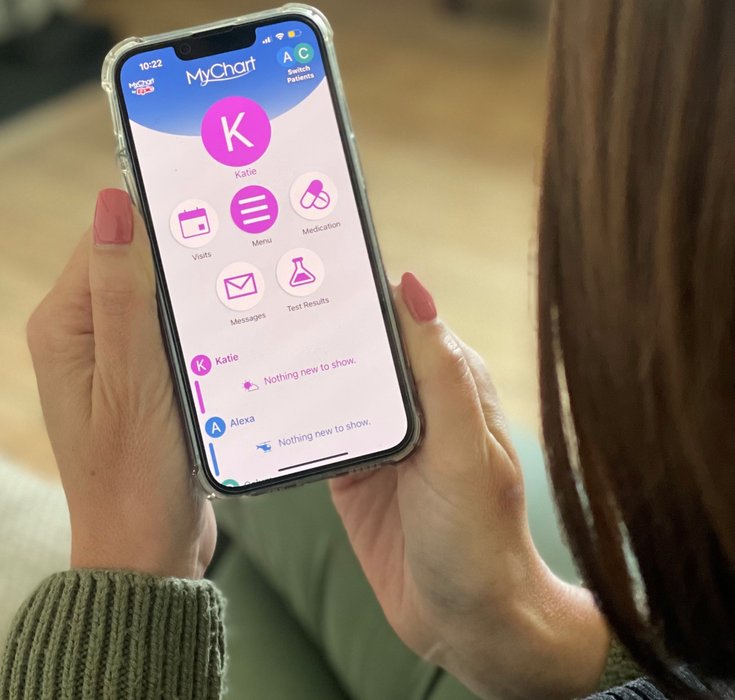
MyChart
Sign-up to MyChart