
Hypo symptoms (not an exhaustive list)
Early hypo symptoms:
- Sweating
- Dizziness
- Feeling tired
- Feeling hungry
- Tingling lips
- Feeling shaky or trembling
- A fast or pounding heartbeat (palpitations)
- Becoming easily irritated, tearful, anxious or moody
- Turning pale
If early symptoms have been missed, more symptoms may include:
- Weakness
- Blurred vision
- Unusual behaviour, slurred speech or clumsiness
- Confusion or difficulty concentration
- Feeling sleepy
- Seizures or fits
- Collapsing or passing out
If hypo symptoms have been missed and/or glucose sensor alarms have not been heard, the child or young person’s hypoglycaemia could become more severe causing them to fall in and out of consciousness, fall completely unconscious or have a fit/seizure.
Your next steps
- Place the child or young person into the recovery position.
- Call for help from those around you (if possible).
- Call 999 and state you have a child with type 1 diabetes who is unconscious/fitting due to severe hypoglycaemia and you need an ambulance that carries GlucaGen. (Or someone could make this call on your behalf if possible).
- Ideally confirm that the child or young person is unconscious due to hypoglyacaemia by completing a finger prick (as very high glucose levels could also cause unconsciousness and GlucaGen wouldn’t help).
Then give GlucaGen HypoKit (see steps 5 onwards, below)
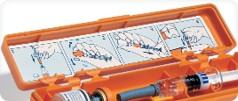
5. Open kit, flip off orange dust cap on bottle containing powder.
6. Insert syringe with water into bottle and gently swirl until solution is clear.
7. Withdraw required amount (see below under GlucaGen Hypokit dose).
8. Inject into the upper outer aspect of the thigh.
9. Place the syringe and needle back into the orange box to safely store the Sharps. If possible, note the time GlucaGen was given.
10. Measure blood glucose (BG) with a finger prick
Fifteen minutes later the child or young person should have recovered. They may feel sick or vomit after having GlucaGen HypoKit, this can be a usual response so try not to worry. If BG above 4mmol/L and the child or young person is able to tolerate oral fluids, offer clear fluids and simple carbohydrates (for example toast / plain biscuits). If glucose still below 4mmol/L, give usual hypo treatment by mouth.
If child or young person has not recovered 15 minutes later and is still unconscious, you can give another dose of GlucaGen.
GlucaGen HypoKit dose
- Children below 25kg or younger than 8 years need half the syringe (0.5mg or 0.5mL)
- Children above 25kg or older than 8 years need the whole syringe (1mg or 1mL)
Helpful resource video for GlucaGen HypoKit
- Newly Diagnosed - DigiBete Type 1 WebsiteDigiBete Type 1 Website (opens in a new tab)
(scroll down to the video entitled ‘How to give an injection of glucagon’)
We are smoke-free
Smoking is not allowed anywhere on the hospital campus. For advice and support in quitting, contact your GP or the free NHS stop smoking helpline on 0800 169 0 169.
Other formats
Help accessing this information in other formats is available. To find out more about the services we provide, please visit our patient information help page (see link below) or telephone 01223 256998. www.cuh.nhs.uk/contact-us/accessible-information/
Contact us
Cambridge University Hospitals
NHS Foundation Trust
Hills Road, Cambridge
CB2 0QQ
Telephone +44 (0)1223 245151
https://www.cuh.nhs.uk/contact-us/contact-enquiries/