

Diabetes advanced technologies are devices designed to support the management of diabetes by monitoring glucose levels and delivering insulin as well as providing information to help you make informed treatment decisions and improve glycaemic control. Examples of them are Continuous Glucose Monitor (CGM) and insulin pump therapy devices applied to the skin like infusion sets/ cannulas or pods.
This information is for anyone using continuous glucose monitors (CGM) or insulin pump infusion sets/ cannulas/ pods. Maintaining skin integrity and diabetes device placement can be a significant concern for people who use these devices. Using adhesive technology can cause ongoing skin problems for some users, including a rash or irritation which are often the reason for device discontinuation. The purpose of this leaflet is to provide information on skin care in preparation for initiating diabetes technologies that require adhesive devices, as well as how to prevent and manage potential of skin reactions.
Skincare is an essential part of diabetes management as CGM devices and insulin pump infusion sets/ cannulas/ pods, can lead to skin injury and irritation, scarring and lipodystrophy. These reactions typically require prolonged exposure to develop however they may occur more rapidly upon subsequent exposure [HT1] due to the reactivation of immune memory cells.These reactions can be a response to chemical components in the adhesive of the CGM or insulin pump infusion sets or pods.
Device placement
Secure device placement is essential for optimal performance[ST1] and helps extend wear by preventing detachment. Both devices are inserted into subcutaneous tissue on flat areas of the body, with common sites including the back of the upper arm, abdomen, upper buttocks and thighs, according to manufacturer recommendations and individual preference. Careful site selection, skin preparation, correct insertion technique and systematic rotation help maintain accurate glucose monitoring and consistent insulin absorption while reducing the risk of skin irritation, lipohypertrophy, infection or premature device failure. Attention to secure adhesion and avoidance of areas exposed to friction or pressure can also help prevent early detachment, thereby prolonging wear time and ensuring optimal device performance.
1. Choose healthy skin
Always place your device on healthy skin. Avoid areas with cuts, scabs, scrapes, broken skin, irritation, scratches, tattoos or healing areas. Wait at least a week before reusing a site.
2. Avoid bendy areas
Do not place devices where your skin creases or folds when you move, such as along waistline. These areas can cause discomfort and affect how well the device stays in place.
3. Avoid swollen tissue
Repeated insulin use can cause swelling under the skin, called lipohypertrophy. Do not place infusion sets into swollen areas.
4. Pinch It Up
Choose an area with enough fatty tissue that you can gently ‘’pinch up’’ and that feels comfortable for you.
5. Rotate Sites
Use as many different sites as possible. Even if you prefer one or two areas, move each new device at least 1-2 inches away from the previous site. This helps protect your skin and improves insulin absorption.
| Location | Considerations for device placement |
|---|---|
| Location Back of upper arm |
Considerations for device placement
· Recommended and approved application site for certain CGMs and cannulas/pods. · Avoid placement too close to armpit · For cannulas, position tubing [HT1] towards armpit, so tubing can be threaded through sleeve of clothing. |
| Location Abdomen |
Considerations for device placement
· Avoid placement in areas where skin creases. · Insert 1-2 inches away from belly button. |
| Location Upper buttocks |
Considerations for device placement
· Avoid waistline to prevent discomfort, irritation or unintended removal. Place tubing horizontally to follow contour of gluteal muscles and maximize dislodging with clothing changes. · Steel cannulas may pop out with gluteus flexion[HT2]. |
| Location Thigh |
Considerations for device placement
· Place cannula tubing origin toward torso for ease of tubing placement. |
If you are unsure about the best sites for you, speak to the diabetes team for advice.
Skin preparation
Once an appropriate location has been identified, proper skin preparation before applying a CGM device or cannula or Pod is important to reduce the risk of infection, improve adhesion and ensure accurate performance.
- Trim or remove any body hair.
- Wash skin with oil-free, pH neutral soap and dry thoroughly.
- Avoid using oils or lotions prior to placement.
- Avoid using alcohol or abrasive wipes.
- Sensitive antiperspirant spray may help with skin prone to sweating. Apply a thin layer 15 minutes before application of the device or cannula and allow to dry.
- Once application completed, secure edges.
Adhesives for prevention of failure and skin protection
If there is previous history of contact dermatitis or unintended removal of sensor due to adhesive failure, a variety of techniques and barrier agents may be used to minimise risk of hypersensitivity reactions and preventing early detachment.
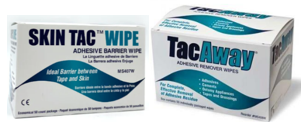
Product
Skin Tac (Torbot Group/ Mason Labs)
Description
Aids adhesion, latex free, hypoallergenic (often used with Tac Away).
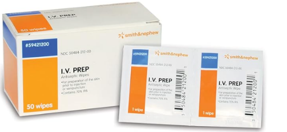
Product
IV Prep (Smith and Nephew Inc)
Description
Prepare, aids adhesion, good in humid climates or people who sweat a lot.
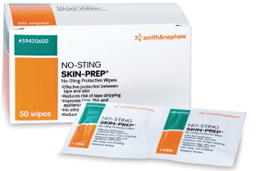
Product
No Sting Skin Prep (Skin and Nephew Inc)
Description
An alcohol free, liquid film- forming skin protectant.
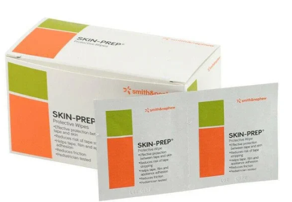
Product
Skin Prep (Skin and Nephew Inc)
Description
Protective barrier between skin and adhesive.
Securing Sensors
CGM devices are designed to make managing diabetes easier but keeping your sensor secure is essential for accurate readings and comfort. A well-secured sensor is less likely to become loose, fall off, or give unreliable results, helping you stay confident in your glucose data throughout the day.
- Infusion set tape- Clean and dry skin, insert sensor, overlay with Infusion Set IV3000TM tape (see table below).
- Sandwich method- Clean and dry skin, apply clear adhesive dressing to skin, apply sensor, cover with another clear adhesive as required.
- Blanket method- Clean and dry skin, insert sensor, cover with tape such as StayPut or HypaFix tape (see table below).
- Straps or bands specifically for products can be purchased.
Tapes
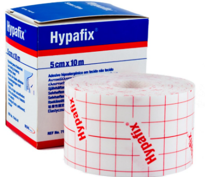
Product
Hypafix Tape (Leukoplast)
Description
Non-woven, hypoallergenic and latex free adhesive dressing retention tape.
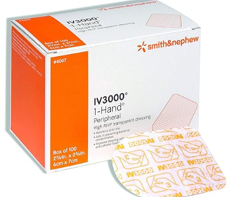
Product
IV3000TM Tape (Smith and Nephew Inc)
Description
Adhesive film dressing.
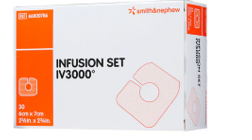
Product
Infusion Set IV3000TM Tape (Smith and Nephew Inc)
Description
Transparent tape dressing with customised design.
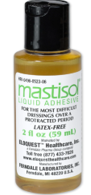
Product
Mastisol® adhesive (Ferndale Laboratories Inc)
Description
Clear, non- irritating liquid adhesive designed to securely hold dressings tapes and devices.
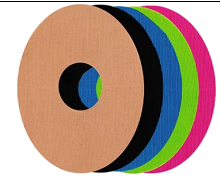
Product
StayPutTM Patch (StayPutTM Medical, LLC)
Description
Latex free, water- resistant adhesive overlay patches.
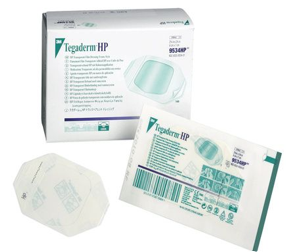
Product
TegadermTM HP Transparent Film Dressing (3M)
Description
Clear tape dressing that adheres well when exposed to moisture.
Please note that none of the skin protection products or tapes, described above, are available on prescription and they must be purchased privately.
Removal techniques and promoting healing
Removal techniques are just as important as securely placing adhesive devices like CGM devices, infusion sets or pods. Using the right approach when taking a device off can help minimise discomfort, protect skin and reduce risk of irritation or damage.
Aid gentle and easy removal ‘slow and low’ by loosening the edges of adhesive with fingernail and/or use products listed below.
While removing tapes, use fingers of opposite hand to push skin down and away from adhesive. Continue to move fingers on skin toward adhesive as it is removed.
‘’Fold back’’ technique: Remove adhesive slowly at low angle folding back on itself.
Use adhesive removal wipes to rub the skin under the tape toward the adhesive as it is removed. This helps loosen adhesive from skin and reduce pain with removal.
Baby oil, Coconut oil, Chapstick, Tac Away- wipes (Torbot and Masons Lab), Detachol adhesive remover- liquid (Fendale lab inc), UNI- SOLVE wipes (Smith and Nephew) can be used for post removal care.
For aftercare, to promote healing, use daily moisturising neutral pH emollients however products with antiseptic irritants such as benzalkonium chloride e.g. DermolTM 500 should be avoided.
Bleeding
Bleeding during the insertion of a CGM or insulin pump infusion set or pod is relatively common and usually occurs when the insertion needle punctures a small blood vessel or capillary in the dermis layer.
If the bleeding is light and occurs under, around or on top of the sensor, apply steady pressure using sterile gauze for up to three minutes. If bleeding does not stop, remove the sensor and apply steady pressure.
Moreover, if bleeding is profuse or blood spreads through adhesive in the infusion set, remove the device and apply a new one at different location.
For future CGM or infusion set or pod placements, you should consider applying ice to the insertion site before next insertion to constrict the blood vessels.
Skin issues identified
If you have been experiencing skin issues following placement or removal of CGM, infusion set or pods, like itching/ mild rash, please try barrier film and emollients. However, if you are experiencing blistering or bleeding or induration or oedema or skin erosions and severe erythema, please stop using adhesive and contact diabetes team. Please take a photo of affected area and send it for assessment.
If reaction is severe, you can also consider reporting this to Medicines and Healthcare products Regulatory Agency via the Yellow Card (opens in a new tab) .
We are smoke-free
Smoking is not allowed anywhere on the hospital campus. For advice and support in quitting, contact your GP or the free NHS stop smoking helpline on 0800 169 0 169.
Other formats
Help accessing this information in other formats is available. To find out more about the services we provide, please visit our patient information help page (see link below) or telephone 01223 256998. www.cuh.nhs.uk/contact-us/accessible-information/
Contact us
Cambridge University Hospitals
NHS Foundation Trust
Hills Road, Cambridge
CB2 0QQ
Telephone +44 (0)1223 245151
https://www.cuh.nhs.uk/contact-us/contact-enquiries/