

What is Simple Lymphatic Drainage?
Simple Lymphatic Drainage (SLD) is a self-management technique to aid the movement of lymph fluid.
SLD is not a standalone treatment but is a useful tool in conjunction with other therapies.
You should not use any creams, lotions or oils when carrying out SLD as we aim for direct skin contact.
SLD is a gentle movement, the lymphatic vessels are just underneath the skin, so when you see the skin moving and wrinkling, that means you are applying enough pressure.
Movements are slow and should be repeated four times in each area. The lymphatic system is sluggish, and the vessels and nodes take around four seconds to refill, so they need to be given time to refill before you repeat the movements. It is important to lift your fingers away from the skin at the end of each movement.
How does SLD work?
We start by clearing the nodes away from the swelling to open a passage for fluid to filter to. Then working to move fluid from the affected to the non-affected side to aid drainage.
The more times you can carry out SLD each day, the more efficient the drainage will be. When you first start doing SLD it will take a while to get used to, but once you have learned the movements, it will be faster to complete. Initially you should aim to carry out SLD two to three times a day. As your oedema improves, you may only need to do this daily.
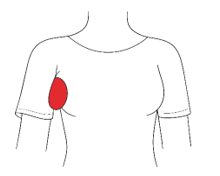
Using a soft ball (like a stress ball) can be helpful. When gently squeezed in the armpit (axilla ), this helps to empty the lymph nodes. Using a rolled-up flannel or a rolled-up pair of socks can also be helpful. Please note that SLD should not be carried out when receiving active cancer treatment (radiotherapy or chemotherapy).
This leaflet has been written using guidance from:
How do I carry out the treatment?
Fluid from the breast drains to the lymph nodes in the collarbone, so it is important that you drain these collarbone lymph nodes first to clear a route for the fluid to move to.
- Begin with some deep breaths. Starting with your fingers touching across the centre of your chest. As you take in a deep breath, stretch your arms out wide, stretching your fingers backwards also. As you exhale, bring your arms back in and let them meet in the centre of your chest. Repeat four times.
- We start the SLD on the opposite side to the affected breast. So, for left breast oedema, start on the right side of your collarbone.
Place a finger on either side of the collarbone towards your right shoulder. The pressure applied should be enough to move the skin. It is a gentle and slow movement.
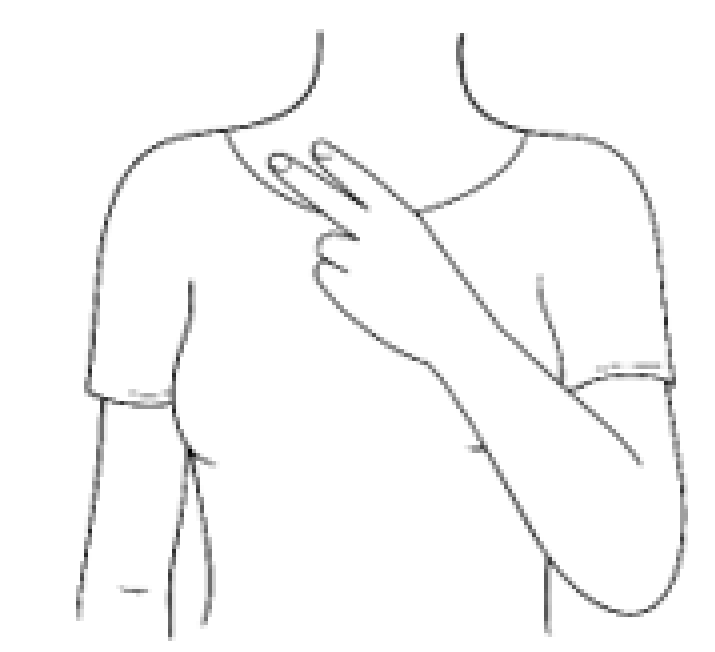
Gently stretch the skin down along your collar bone towards the centre of your neck. Lift your fingers away from the skin at the end of each movement. Repeat this movement four times.
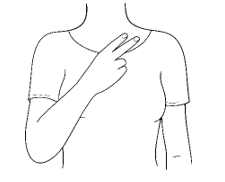
3. Repeat these movements on the affected side – so now you are emptying the nodes on the left side of the collarbone.
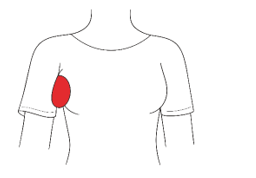
4. Using either a soft ball (a rolled up flannel or rolled up socks will also work) in the right axilla, gently squeeze and release the ball by raising your arm slowly up and down to drain any lymph nodes in that area. If this is difficult you can move your shoulder gently, so that you are performing a circular motion on the ball (or other used item). Repeat this four times.
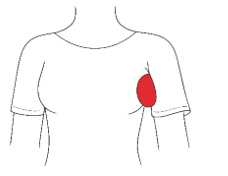
5. Repeat the movements in the left axilla. If it becomes painful, only do the movements for as long as they are comfortable.
Now you move onto the breast/ chest wall clearance.
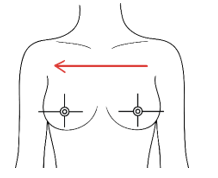
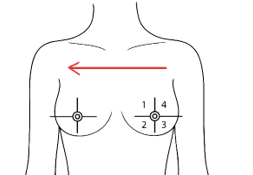
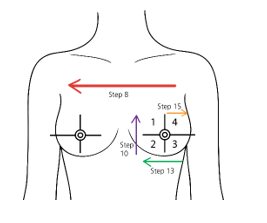
Using the right hand only, sweep from the left shoulder across to the right shoulder (you may need to swap hands to complete the movement). Repeat this 4 times.
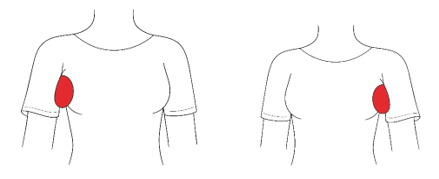
7. Now repeat the ball squeezes in each axilla four times, as per steps 4 and 5, to drain the axillas again.
Next, separate the breast / chest wall into four quarters in your mind, as per the diagram below.
It will feel like a repetitive process, but as you clear each quarter into the next quarter, you need to repeat the movements in order to drain fully to the axilla, before moving to the next quarter. Each time you are clearing a path for the fluid to drain away from the breast.
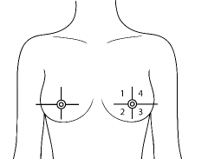
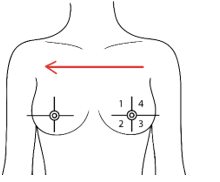
8. Starting in quarter number 1 (the upper inner quadrant of the breast), use your right hand to sweep across from that quarter towards the opposite axilla. Repeat this four times.
9. Now repeat the ball squeezes in the right axilla four times as per step 4, to empty the axilla again.
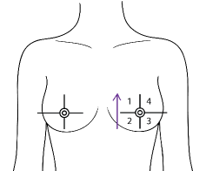
10. Now, in order to drain the fluid from quarter 2 (the lower inner quadrant) to quarter 1 (the upper inner quadrant), use your hand to sweep from the bottom of the breast to the top of the breast. Repeat this movement four times.
11. Now, to move the fluid from quarter 1 again to the axilla, repeat step 8. Using your right hand to sweep across from that quarter towards the opposite axilla. Repeat this four times.
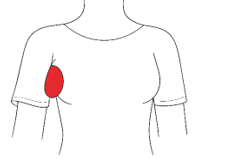
12. Now repeat the ball squeezes in the right axilla four times, as per step 4, to again empty the axilla.
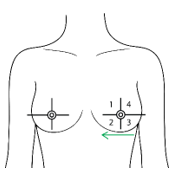
13. You will now clear the fluid from quarter 3 (lower outer quadrant) to quarter 2 (lower inner quadrant) by using your right hand to sweep across the bottom of your breast towards the centre of your chest. Repeat this movement four times.
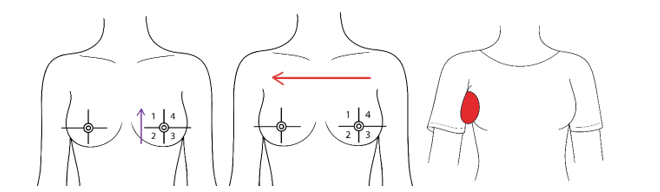
14. Again, you now need to move the fluid from quarter 2 to quarter 1 and then the axilla by repeating steps 10, 8 and 7.
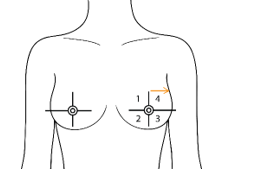
15. The fluid from quarter 4 wants to move towards the left axilla. So, using the flat of your right hand, push from the centre of your breast, round towards the middle of your left side, as far as you can reach.
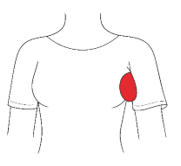
16. Now, drain the left axilla again. Repeat the ball exercises in the left axilla only, four times as per step 5.
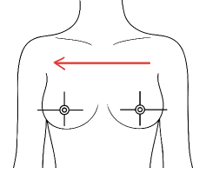
17. Empty the collarbone on the left side by using your right hand to sweep across from the left shoulder to the right (as per step 5)
18. Finish with some deep breaths. Start with your fingers touching across the centre of your chest. Take a deep breath in, stretch your arms out wide, stretching your fingers backwards also. As you exhale, bring your arms back in and let your hands meet in the centre of your chest. Repeat four times.
We are smoke-free
Smoking is not allowed anywhere on the hospital campus. For advice and support in quitting, contact your GP or the free NHS stop smoking helpline on 0800 169 0 169.
Other formats
Help accessing this information in other formats is available. To find out more about the services we provide, please visit our patient information help page (see link below) or telephone 01223 256998. www.cuh.nhs.uk/contact-us/accessible-information/
Contact us
Cambridge University Hospitals
NHS Foundation Trust
Hills Road, Cambridge
CB2 0QQ
Telephone +44 (0)1223 245151
https://www.cuh.nhs.uk/contact-us/contact-enquiries/