This leaflet is designed for those who require a treatment called somatostatin analogues (SSA) to treat neuroendocrine neoplasms. Examples of SSAs include octreotide (Sandostatin) and lanreotide. Evidence suggests that SSAs are associated with a higher risk of developing type 2 diabetes.
What is type 2 diabetes?
Type 2 diabetes occurs when the pancreas fails to make enough of a hormone called insulin or the insulin produced does not work well enough. Insulin is required to help regulate your blood glucose (also known as blood sugar) and prevent high blood sugars. Eating and drinking carbohydrates (e.g. starches and sugars) cause blood sugar levels to rise. If you have diabetes, your body struggles to keep your blood sugars in range. SSAs have been shown to reduce your body’s ability to make insulin and this may lead to diabetes in some people.
Having type 2 diabetes without treatment means that high sugar levels in your blood can harm certain parts of your body. Some examples include: eyes, heart, kidneys and feet. Type 2 diabetes can be managed through diet and exercise, as well as medications if diet and exercise alone are not sufficient.
There are many factors that increase the risk of developing type 2 diabetes: being overweight or obese, having a large waist circumference, certain ethnicities, genetics etc. We also know that those who have had previous pancreatic surgery or chemotherapy to treat pancreatic neuroendocrine neoplasms are at higher risk of developing type 2 diabetes.
Type 2 diabetes can be diagnosed using a blood test called HbA1c. This test can also identify if you have something called “impaired glucose tolerance” (it may also be called pre- or borderline diabetes). If you have impaired glucose tolerance, your blood sugars are raised, but not so high that you have type 2 diabetes. Your treatment team may organise for you to be checked for diabetes regularly while on an SSA. Please ask your doctor, nurse or dietitian if you have any questions.
Symptoms of type 2 diabetes
- Passing urine more often, especially at night
- Feeling more tired, because your body can't get enough glucose into your cells for energy
- Unintentional weight loss
- Genital itching or thrush
- Cuts and wounds taking longer to heal
- Blurred vision
- Feeling extremely thirsty
Not everybody will experience symptoms. Furthermore, diabetes can develop very slowly. If you suffer from any of the above, please discuss this with your doctor, nurse or dietitian.
Eat a healthy balanced diet
What we choose to eat and drink can impact our health. We know that a diet high in processed/refined carbohydrates and sugars, low in fruit and vegetables, low in fibre, high in fat and excess alcohol are associated with increased risk of type 2 diabetes. Changing some of what you eat and drink can help you reduce your risk.
Foods that are beneficial to have more of in your diet:
- Fruit and vegetables (at least 5 portions per day, but no more than one portion of fruit at a time. Each portion is 80g, or approximately a handful).
- Wholegrains such as brown/wild rice, barley, unprocessed oats, spelt, bulgur wheat, buckwheat, quinoa, millet etc. (see more below).
- Other healthy carbohydrates: pasta, wholegrain rice, sweet potato etc.
- Beans, pulses and lentils: kidney, butter, haricot, borlotti, black eyed peas, pinto, chickpeas etc.
- Low fat meats.
- Aiming for 2+ portions of fish a week.
- Unsweetened dairy, or vegan alternatives such as soya products.
- Unsalted nuts/seeds.
Foods that are beneficial to have less of in the diet:
- Fried foods
- Sugary foods such as sugary drinks, sweets, energy drinks
- Refined and processed carbohydrate such as sugary snacks, white bread, processed sugary cereals, cakes, chocolate bars
- Alcohol
- Limiting red meat and processed meat (bacon/sausage) to no more than 70g a day
- Aiming to have 1-3 meat free days a week
Wholegrains
Wholegrains are a great source of fibre. Fibre is associated with a healthy gut, which could help those who suffer with either diarrhoea or constipation. If you have issues with obstructions or strictures, please speak directly with your dietitian before increasing wholegrains in your diet.
| Type of food | Wholegrain varieties | Portion size (one serving) | Ideas for use |
| Breakfast cereal | Whole oats including rolled oats and whole Scottish porridge oats; wholewheat cereals such as wholewheat biscuits, bran flakes, puffed wholegrains, wholegrain muesli; and wholegrain cereal bars | 40g uncooked oats, Three tbsp wholegrain cereal (30g). | With milk or yoghurt and fruit for breakfast, as a topping for crumbles, as a snack. Choose wholegrain versions with less or no added sugar and salt. |
| Bread and crackers | Wholemeal, granary, wheatgerm, wholemeal mixed/multi grain or seeded breads (check the label for wholegrains), rye (pumpernickel), wholemeal pitta, wholewheat crackers, oatcakes and rye crispbread | One medium slice bread, half a wholemeal tortilla/pitta, two wholegrain crispbreads, two oatcakes. | Instead of white bread, cream crackers and sweet biscuits. |
| Flour | Wholemeal, buckwheat, unrefined rye, barley, oatmeal and wholegrain oat flour | n/a | In baking or recipes instead of white flour or mixed half and half. |
| Meals | Brown rice, wholewheat pasta, whole barley (not pearl), bulgur (cracked) wheat, quinoa | Two to three heaped tbsp cooked brown rice; Two to three tbsp wholegrain pasta. | With casseroles, curries, sauces, in soups, and in salads. |
| Snacks | Wholegrain cereal bars, oat cakes, wholegrain rice cakes, popcorn (plain), wholemeal scones, and wholegrain breakfast cereals | Half wholemeal scone, two oatcakes, 2-3 cups plain popcorn. | In place of sweets, crisps and savoury snacks, cream crackers and sweet biscuits. |
Sugar
Sugar in your diet impacts directly on your blood sugar levels. Free sugars are often added to foods during manufacture and include refined sugars such as sucrose (table sugar).
Excess consumption of free sugars is linked to the risk of obesity, type 2 diabetes and tooth decay. Many of the free sugars that we consume are in sugary drinks, confectionary, biscuits and chocolate. A regular can of cola, for instance, can contain the equivalent of seven teaspoons of sugar (35g). The guidance about free sugar consumption suggests a daily limit of 30g. This is equivalent to six teaspoons.
Free sugar is found naturally in fruit and milk - in this instance they are known as natural sugars and are not free sugars. They do not need to be restricted in the same way as sucrose.
Top tips for cutting down on sugar:
- Choose ‘diet’, no added sugar or unsweetened versions of fizzy drinks, squashes, fruit juices and dairy alternatives.
- Try swapping a high sugar cereal for one that is lower in sugar such as porridge, whole-wheat cereal biscuits or wholegrain cereals.
- Watch for savoury dishes that are high in sugar such as sweet and sour sauces, sweet chilli dishes, some curry sauces and salad dressings.
- Reduce consumption of biscuits, cakes, chocolate and sweets.
Artificial Sweeteners
These can be used as an alternative to sugar to help sweeten foods; they have been extensively researched and are shown to be safe. There are a variety of types and forms to choose from. Sweeteners approved for use in the UK are sucralose, saccharin, aspartame and stevia. Their use is not required, rather it is a personal choice to help you reduce your free sugar intake.
Fats
There are several different types of fat and understanding the right type to eat is also important for your health.
Trans Fats
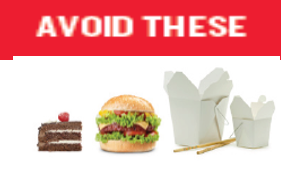
Foods that have hydrogenated oils or fats in them are likely to contain trans fats. Trans fats can increase the amount of cholesterol in your blood.
Some foods that contain trans fats: fried foods, takeaways, snacks: biscuits, cakes and pastries, hard margarine.
Saturated Fat
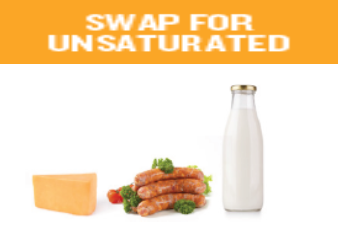
Many of the most popular foods are high in saturated fat. Eating too much saturated fat increases the amount of cholesterol in your blood.
Some foods which contain saturated fat:
Processed meats: sausages, frankfurters, bacon, ham, burgers, fatty meat, hard cheeses: cheddar and parmesan, whole milk, cream, oils and fats: butter, lard, ghee, suet, palm oil and coconut oil.
POLYUNSATURATED FAT
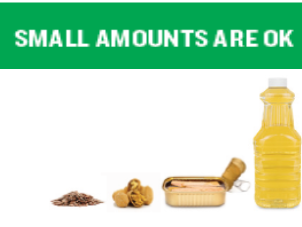
Polyunsaturated fats can help to maintain healthy cholesterol level and provide essential fatty acids.
Some foods which contain polyunsaturated fats: oily fish, oils and fats: corn oil, sesame oil, soya oil, and spreads made from these oils, nuts and seeds: flaxseed, pine nuts, sesame seeds, sunflower seeds, and walnuts.
MONOUNSATURUATED FAT
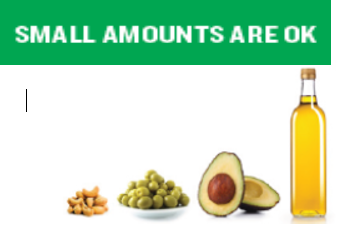
Some foods which contain monounsaturated fats: avocados, olives, oils and fat: olive oil, rapeseed oil, spreads made from these oils, nuts: almonds, cashew nuts, hazelnuts, peanuts, pistachio nuts and spreads made from these nuts.
(British Heart Foundation Leaflet – Saturated fats, 2018)
It is important to remember that all fats have a similar amount of energy, so while olive oil may be a healthier choice, it has the same calories as other oils and so may still cause weight gain. The quantity matters!
Top tips for cutting down on fat:
- Cut down on high fat snacks (crisps, chocolate, biscuits and pastries).
- Change to low fat dairy (semi-skimmed milk or skimmed milk, low fat yoghurts).
- Buy lean meats and avoid processed meats (sausages and bacon).
- Remove the skin and visible fat from meats before cooking.
- Try baking, boiling, steaming, poaching and microwaving foods rather than frying.
- Measure oils with a teaspoon or use spray oil rather than pouring it straight from the bottle.
- Spoon off fats and oils from casseroles and curries.
Healthy snack ideas
Snacks can be built into a healthy diet. They can be necessary if you have a very active day or there may be an extra-long gap between meals. A healthy snack should be low in sugar. Some healthy ideas are given below:
- Unsweetened yoghurt with some berries. High protein varieties include Greek yoghurt, quark and Skyr.
- A piece of fruit.
- Wholegrain baked crisps.
- Carrots and hummus.
- A slice of wholegrain toast.
- Unsalted nuts.
- Avocado on crispbreads.
- Tomatoes/peppers/cucumber/celery (plus a low-fat dip like salsa).
- Olives.
- Boiled eggs.
- Low sugar high protein cereal bar.
- Crunchy corn snacks (also known as giant corn).
- Small bag of popcorn (unsalted or unsweetened).
- A glass of low-fat milk or soya milk.
- Oat biscuits/ Oat cakes.
If you struggle to maintain your weight, please choose high fat/high protein options.
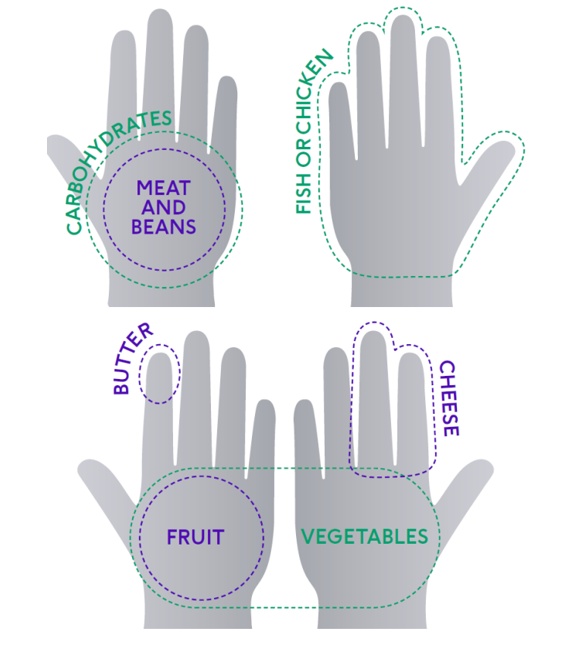
A handy portion guide
Physical Activity
Regular activity reduces the risk of diabetes. It also improves your heart health and mood, while reducing your risk of certain cancers.
We should all aim for at least 150 minutes of exercise a week. That’s about 20-30 minutes of moderate intensity exercise a day. Moderate intensity makes you breathe a bit harder (but still able to talk) and feel warmer and sweaty. Try to find something which suits you and which is safe and enjoyable.
Good ways to increase activity are to take a brisk walk, swim, cycle, gardening, body weight exercises and housework like vacuuming. You can also make little changes in your daily lifestyle to increase your physical activity such as taking the stairs instead of the lift, getting off the bus one stop earlier and walking the rest of the way as well as parking further away from a shop entrance.
You can also ask your GP to refer you to your local exercise referral service if you would like professional support and guidance when starting an exercise programme.
Do I need to lose weight?
It is very important to keep your weight within a healthy range. Body mass index (BMI) is a useful tool to work out which category you fall into – underweight, healthy weight, overweight, obese. Your BMI is calculated using your height and weight measurements.
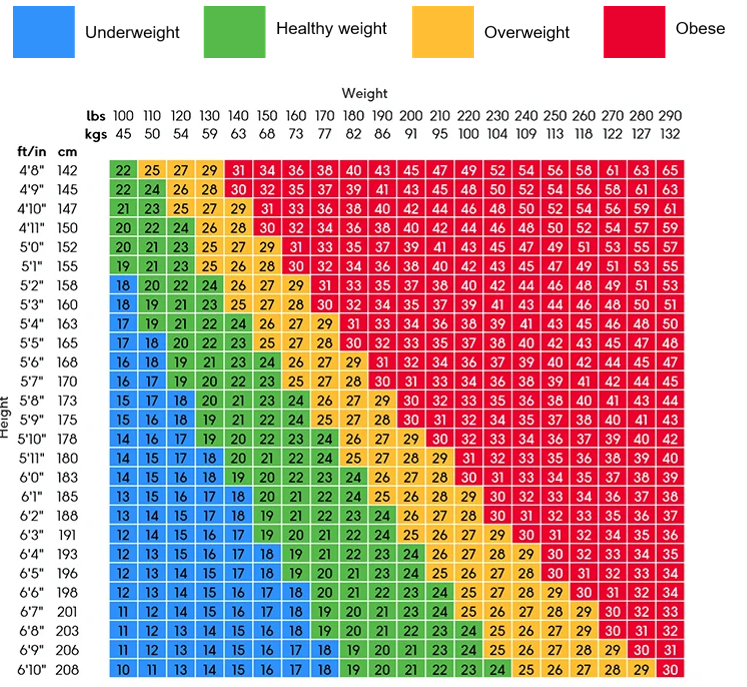
To work out your BMI:
Find your weight across the top of the chart and then follow a straight line down until you find your height on the left. Put a mark where the two lines meet and this should show you which weight category you are in.
Being overweight (BMI greater than 25kg/m2) can increase your risk of diabetes, heart disease, stroke and cancers (among other conditions).
To maintain a healthy weight, the amount of energy (calories) we eat needs to balance with the amount of energy we use.
Eating less energy (calories) and increasing physical activity will kick start weight loss.
Underweight
If your BMI is less than 18.5kg/m2 this means you are underweight and are at high risk of malnutrition. Speak to your dietitian, doctor or nurse if you are concerned, have unintentionally lost weight in the past 3-6 months, have lost your appetite etc.
Contacts
Neuroendocrine specialist dietitians, Tak-Wai Ho, James Wimbury and Anson Tong.
- 01223 348769 (please leave a voicemail)
Further information
- Diabetes Org - Further information about type 2 diabetes (opens in a new tab).
- Tool to find out your risk of developing type 2 diabetes (opens in a new tab).
Please note this tool does not take into account somatostatin analogues
Recipes:
- BHF Recipe Finder (opens in a new tab)
- Diabetes Org UK - Guide to Diabetes Recipes (opens in a new tab)
Weight management and BMI information:
Malnutrition:
We are smoke-free
Smoking is not allowed anywhere on the hospital campus. For advice and support in quitting, contact your GP or the free NHS stop smoking helpline on 0800 169 0 169.
Other formats
Help accessing this information in other formats is available. To find out more about the services we provide, please visit our patient information help page (see link below) or telephone 01223 256998. www.cuh.nhs.uk/contact-us/accessible-information/
Contact us
Cambridge University Hospitals
NHS Foundation Trust
Hills Road, Cambridge
CB2 0QQ
Telephone +44 (0)1223 245151
https://www.cuh.nhs.uk/contact-us/contact-enquiries/