

The advice in this patient information leaflet is not intended for people with cirrhosis or advanced liver disease. If this applies to you, please speak to your doctor or dietitian for tailored advice.
The role of the liver
The liver sits under your right lower ribs and is your largest internal organ playing an important role in your overall health. The liver stores important minerals and vitamins, and filters toxins and waste products from your blood. It also produces bile, a substance that helps break down the fats we eat.
Importantly, the liver controls your metabolism - how your body uses food for energy. After you eat, it manages your blood sugar levels and stores any extra energy as fat, to be used later when you need it.
What is MASLD?
MASLD previously called non-alcoholic fatty liver disease (NAFLD) is a condition where too much fat accumulates in the liver. This is usually because the body is taking in more energy than it uses. Globally 1 in 3 people have MASLD however, many people don’t have any symptoms. In some cases, fat causes inflammation in the liver. This is when MASLD becomes MASH (metabolic dysfunction associated steatohepatitis).
The liver can repair itself, ongoing inflammation caused by fat can lead to scar tissue forming in the liver – this is called fibrosis. If enough scar tissue builds up, this eventually becomes cirrhosis. At that stage, the liver can no longer function properly and damage may become irreversible. MASLD often has no early symptoms, lifestyle changes are important even if you feel well.
When the liver is badly damaged, people can develop noticeable symptoms such as:
- Yellowing of the skin and eyes (jaundice)
- Swelling of the tummy area (ascites)
- Feeling tired or confused
MASLD is not just a liver condition. People with MASLD also have a higher risk of developing other metabolic conditions such as heart disease, hypertension, dyslipidaemia, type 2 diabetes mellitus (T2DM), as well as certain cancers. Looking after your liver also means looking after your overall health.
What causes MASLD?
MASLD is usually caused by a combination of factors rather than one single thing:
- Weight: Being overweight especially with excess weight around the abdomen is the most common cause as fat is more likely to be deposited in your liver. MASLD can also affect people who are not overweight.
- Diet: High intake of fatty and sugary foods and drinks, refined carbohydrates (white bread, pastries, sweets), and processed foods can cause fat to build up in the liver.
- Genetics: Some people have a greater risk of developing MASLD because of their genetics. Lifestyle still has a big impact and can often bring out genetic predispositions.
- Diabetes: T2DM is when the body does not respond well to the hormone insulin. This can cause the body to store more fat, including in the liver.
- Physical inactivity: This means the body is more likely to store excess fat.
Is there a medication for MASLD?
There is currently no specific medication to treat MASLD. Diet and lifestyle changes remain the most effective treatment to reduce liver fat and prevent progression. Your doctor may prescribe medications for related conditions such as diabetes, high blood pressure, or high cholesterol. New treatments are being developed and may become available in the future.
What about alcohol?
Although MASLD is not caused by alcohol it still puts extra strain on your liver. They both damage the liver in a similar way by causing inflammation and scarring over time. If your liver is already dealing with excess fat, drinking alcohol adds to the damage and speeds up the scarring process.
If you drink regularly alongside having MASLD, your doctor may use the term MetALD - metabolic and alcohol-related liver disease. This means that both fat and alcohol are contributing to your liver damage. For people with early or moderate MASLD, we recommend drinking no more than 10 units of alcohol per week. If you have been diagnosed with MASLD cirrhosis then we recommend cutting alcohol out completely.
Diet & Lifestyle Modifications – Why are they important?
Studies have shown that sustained weight loss of 5-10% in MASLD and MASH can reduce liver fat and improve inflammation within the liver. Weight loss of over 10% can reverse damage. Improving diet quality irrespective of weight loss and weight loss are the only interventions to have definite benefits as this helps to tackle the cause of liver disease allowing your liver a chance to heal and recover.
Sustained weight loss of 0.5-1kg a week can be achieved through improving diet quality, moderate dietary restrictions and increasing physical activity. This also helps manage other metabolic related conditions. Setting small achievable goals rather than crash dieting will help with sustained weight loss. Following a crash diet can cause you to lose weight too quickly which can worsen your liver health.
If you are eligible, we can also offer a referral to our colleagues in the Obesity Service or if you live outside the Cambridge area we can ask your GP to refer you locally.
Type 2 Diabetes
If you have MASLD you are more at risk of developing T2DM due to them both being metabolic disorders. If you are someone living with T2DM it is important to maintain good blood glucose control to reduce the risk of worsening your liver disease as well as complications associated with diabetes. If you are concerned about your diabetes control, please speak to your GP or Diabetes Nurse.
Principles of healthy eating
Healthy eating ensures you are eating the right balance of the nutrients for your body. It is important for maintaining a healthy weight and for reducing fatty deposits within the liver. You may find it hard to get the balance right with every meal but aim to get the proportions right over a day or a week. The Eatwell Guide (opens in a new tab) is a guideline created for building a healthy diet. There are 5 food groups we need to include to ensure we are getting all the essential nutrients the body needs: Fruit and Vegetables, Carbohydrates, Protein, Fats, Dairy and Dairy alternatives.
Top tips: for healthy eating
- Meal plan - plan meals and snacks, ensuring you have covered every food group.
- Plan your food shops.
- Ensure you have healthy snacks in the house.
1. Add in more fruits and vegetables
Fruits and vegetables provide fibre, antioxidants and essential vitamins and minerals. Eating fruit and vegetables lower your risk of other metabolic disease, obesity, stoke, and some cancers.
Fruits and vegetables are lower in energy and high in fibre, so they can be filling meaning you are less likely to snack between meals. They are versatile, varied, cheap and accessible - especially when prioritising seasonal produce. Fresh, frozen, tinned and jarred are all good options.
Aim to eat at least five different portions of a variety of fruit and vegetables a day. Just over a third of the food we eat each day should be fruits and vegetables.
What counts as a portion of fruit or veg?
| Small fruits | Grapes and berries | 1 handful |
| Medium fruits | Clementines, Plums, satsumas, kiwi | 2 fruits |
| Whole fruits | Apple, pear, orange, banana | 1 whole fruit |
| Large Fruits | Avocado, grapefruit, large oranges | ½ the fruit |
| Very large fruits | Melon, pineapple, | 1 large slice |
| Dried fruit | Raisins, apricots, dates, prunes | 1 heaped tablespoon |
| Fruit juice | 100% fruit or vegetable juice, smoothies | 150ml once a day |
| All fresh, frozen, and tinned vegetables |
3 heaped tablespoons Salad leaves - 2 heaped handfuls ½ a tin of tomatoes |
| Legumes (lentils, beans) |
3 heaped tablespoons Legumes - only counts once a day ½ can of tinned beans |
What does not count towards your 5-a-day?
- Potatoes, yam, plantain, and cassava do not contribute towards your five-a-day because they are starchy foods. (Sweet potatoes, parsnips, and butternut squash do count).
- Repeatedly eating the same type of fruit or vegetable throughout the day.
- Only eating 5 portions of fruit and no vegetables – aim for 3 portions of vegetables and 2 portions of fruit as a minimum.
- Drinking multiple servings of juice or smoothies.
Top Tip for increasing fruit and vegetable intake:
- Add fruit to your breakfast cereal, e.g., berries or dried fruit.
- Adapt recipes that you already enjoy by adding vegetables, e.g., extra vegetables to your Bolognese sauce or lentils to your shepherd's pie.
- Make sure that every meal and snack has at least 1-2 portions of vegetables or fruit.
- Try a new vegetable or fruit each week to add variety.
- Reduce the cost by buying supermarket own brand ‘wonky’ veg, choosing seasonal produce, and utilising frozen and tinned produce.
2. Swap your carbohydrates
Carbohydrates are the body's main energy source. Some also provide essential vitamins and minerals (B vitamins, calcium, and iron). They also provide slow-release energy and should be included at each mealtime. Choose high fibre, low glycaemic index carbohydrates as they help to keep you full for longer and keep the digestive system healthy and help manage blood glucose levels; which is important if you are living with T2DM.
Examples of high fibre whole grain Carbohydrates:
- Brown rice, or wild rice
- Wholemeal bread, pasta, and Chapattis
- Wholemeal or buckwheat noodles
- Wholegrain cereals – such as Weetabix, bran flakes or shreddies
- Oats
- Sweet potatoes, butternut squash, potatoes with skin on, Yam
- Wholegrain couscous, quinoa, buckwheat
A carbohydrate portion = 1 cupped hand. Aim for 1-2 portions with each meal.
Top tips when choosing/cooking carbohydrates:
- Aim for 1/3 of daily food coming from high fibre, whole grain carbohydrates.
- Swap white carbohydrates for wholemeal versions.
- Choose whole grain cereals or oat-based breakfasts.
- Add variety, try a different carbohydrate, or grain each week. Such as quinoa, bulgar or pearl barley.
- Try to minimise fat, salt, sugar, and opt for baking, boiling, sauteing rather than frying.
3.. Choosing the right protein
Protein helps build and repair muscles. It also keeps you fuller for longer. Trying to have protein throughout the day in each meal and snack means the body is better able to utilise it.
Examples of protein
- Meat, fish, and poultry
- Dairy products including dairy alternatives – soya and pea milk tend to have more protein than other dairy alternatives
- Eggs
- Pulses – peas, beans, lentils
- Meat alternatives e.g., Quorn, tofu, soya protein/mince, textured vegetable protein, fava beans, tempeh, seitan and edamame beans
Top tips: for making healthy choices with protein
- Pulses and lentils are good meat alternatives and are low in fat and high in fibre.
- Choose lean cuts of meat and mince, remove visible fat or remove skin.
- Eat less red and processed meat like bacon, ham and sausages.
- Limit red meat to 70g per day, with at least one meat free day a week. (70g is equivalent to 5 tbsp cooked mince, or 1/3 of a steak).
- Try to eat 2 portions of fish per week with one of these being oily fish such as salmon, pilchards, sardines, mackerel.
4. Choosing the right fats
We all need a small amount of fat in our diet. As they help with hormone regulation, brain health and the absorption of fat-soluble vitamins. It is essential to choose the right fats and in the right quantities to help with weight management and reducing fatty deposits.
Saturated fats
- High intake is associated with high blood cholesterol (opens in a new tab) levels.
- Increases the risk of heart disease and stroke.
- Reduce the amounts of this type of fat you eat.
- Found in processed and fatty meats like sausages, ham, burgers, and bacon. As well as hard cheeses, cream, ice cream, butter, ghee, palm oil, coconut oil, cakes, donuts, pastries and fast food.
Unsaturated Fats
- Unsaturated fats are broken down into poly/monounsaturated fats.
- Small amounts can help to maintain normal blood cholesterol levels.
- Reduces the risk of heart disease or stroke.
- Polyunsaturated fats should be consumed in small regular amounts as they supply your body with omega 3 and omega 6 which the body cannot make on its own.
- Polyunsaturated fats can be found in rapeseed and sunflower oil, walnuts, pine nuts, sesame seeds, and sunflower seeds. As well as in oily fish such as kippers, mackerel, salmon, pilchards and in green leafy vegetables and walnuts.
- Monounsaturated fats should also be consumed in small regular amounts. They can be found in olive oil, rapeseed oil, olives, avocados, peanut butter, almonds, cashews, hazelnuts, peanuts, and pistachios.
Total Fat
- High intake of total fat is associated with weight gain, worsening MASLD and the development of other diet related health problems.
- Reduce your intake of saturated fats and be mindful of your overall fat intake.
Top tips for choosing fats:
- Add at least one portion of oily fish per week.
- Swap cooking oil to an unsaturated option e.g., rapeseed or olive oil.
- Use a good non-stick pan where you do not need oil, or if cooking with oil measure it out - 1tsp per person.
- Snack on a handful of walnuts or add seeds to cereal and salads.
5. Reducing Salt
High consumption of table salt is associated with high blood pressure and cardiovascular diseases, as well as worsening your liver disease. Try to aim for less than 5g of salt a day.
Tops Tips to help reduce salt in your diet:
- Avoid adding salt when cooking meals.
- Avoid adding extra salt to meals once cooked.
- Reduce your intake of ready meals and processed foods.
- Add extra seasonings for flavour – herbs, spices, pepper, garlic, and sauces.
6. Reducing sugar and sugary drinks
Sugar is a broad term for carbohydrates. Sugars can be natural like those found in fruits, vegetables, and dairy products. The other type is ‘free sugars’ or ‘added sugar’ which is sugar added to foods.
High intake of added sugar is associated with higher risk of obesity, MASLD and T2DM, especially if your overall calorie intake is higher than the body needs. Consuming a small amount of sugar will not make you overweight.
Which foods are high in added sugar?
- Sugar-sweetened drinks - fizzy drinks, juice drinks, energy drinks, squash, and alcoholic drinks.
- Cereal-based products - biscuits, cakes, pastries, and sweetened breakfast cereals.
- Confectionery - chocolate, chocolate spread and sweets.
- Sweetened dairy products - flavoured milk and yoghurts.
- Some savoury products such as tomato ketchup and pre-prepared sauces.
Top Tips for reducing sugar intake:
- Opt for diet fizzy drink and swap fruit juices for sugar free squash or water flavoured with fresh fruit.
- Swap sugary cereals for whole-grain sugar free options such as oats, Weetabix, sugar-free muesli, and flavour naturally with fruit.
7. Food labels
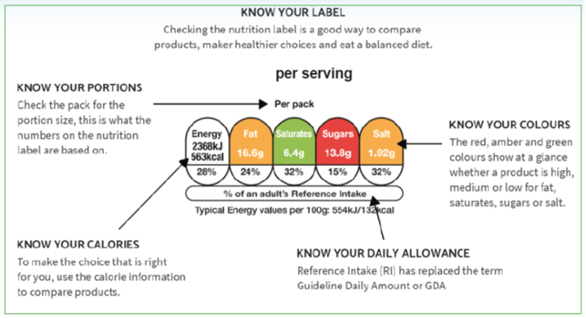
Since 2016 all pre-packaged foods have mandatory nutrition labels on the front and back of the packaging. They show the nutritional breakdown in a standardised format. Labels on the back will often have the nutritional breakdown for a portion and per 100g or 100ml.
Labelling on the front as shown in the diagram below allows you to easily check what the food contains, compare similar products and choose the food best for you. This label shows you the amount per portion. Make sure to look at this as a portion the manufacturer recommends may be different to what you think. The food labels will be colour coded using a traffic light system, try to pick food which is more green and amber over ones with red.
8.Stay hydrated
Drinking enough fluid is essential to ensure your body is working properly. Maintaining your hydration status prevent constipation, helps with concentration and appetite regulation. Your urine should be a pale straw colour which shows you are well hydrated. Dark yellow urine is often a sign of dehydration, but in a few cases may have other causes. If you are concerned, contact your GP.
Mediterranean style diet
The Mediterranean style diet is the most evidence-based diet for the management of MASLD. Studies have shown it is associated with decreased liver fat, even without significant weight loss but also promotes sustainable weight loss. Improving the quality of the diet also reduces the risk of other diet related health issues.
A Mediterranean style diet is high in antioxidants and anti-inflammatory as it is rich in fruits, vegetables, legumes, wholegrains, unsaturated fats, from olive oil, nuts, and seeds. It is low in heavily processed foods, saturated fats, red and processed meats. Foods that are high in sugar or fats such as cakes, biscuits or fried foods are enjoyed but consumed in moderation.
You can take principles of the Mediterranean style diet and choose foods you enjoy or that are more culturally common for you and still achieve the benefits from this diet.
Exercise
Regular physical activity is important for everyone’s physical and mental health. In MASLD, along with a healthy balanced diet can help reduce liver fat. The NHS recommends at least 150 minutes of moderate aerobic activity per week such as a brisk walk, swimming, cycling, and running. As well as two days of muscle-strengthening exercise to build muscle mass and help strengthen bones. This could be weight training, yoga, Pilates, or resistance bands. Please make sure you do this to your own physical and medical ability.
Top tips for increasing exercise:
- Try starting gently (even 10 minutes counts) and building up as you can.
- Try taking the stairs more.
- Try walking instead of taking the car. Or get off the bus a stop earlier.
- If you struggle with mobility, try doing some chair-based exercises.
- Meet up with friends or family to go on a walk.
Mindful eating
It is easy for our eating environment to not be conducive for healthy digestion. Often, we are eating on the go, in a hurry or whilst distracted. Being fully present in the moment when you are eating, without distractions, may improve your eating experience, promote positive, healthy eating habits and behaviours, and help with managing your weight.
Emotional hunger is likely to come on suddenly with a craving for a particular food whereas physical hunger will build over time and is satiated by any food. It is entirely normal to eat in response to thoughts and feelings from time to time. Recognising this and satisfying your emotions by enjoying a small amount of food slowly.
Improve sleep and manage stress
Poor sleep, less than 6 hours per night, increases the likelihood of weight gain. When sleep is restricted, food intake increases potentially related to altered brain activity and levels of appetite-regulating hormones. When tired from a lack of sleep, exercise becomes harder along with emotional regulation which can lead to less mindful eating.
High stress levels which are not managed can lead to weight gain and overall poorer health outcomes. Stress triggers physiological and psychological changes that often lead to poor diet and lifestyle choices, including cravings for high-fat, sugary "comfort foods," emotional eating, or skipped meals and less motivation to exercise.
Top tips for improving sleep:
- Avoid caffeine, alcohol, and nicotine at least 4 hours before bed.
- Avoid electronic devices at least 1 hour before bed.
- Moderate daily movement can aid sleep at night.
Top tips for stress management:
- Create healthy boundaries and find some time for ‘you’.
- Talk to friends, family, or a professional when feeling overwhelmed.
- Try "box breathing" (inhale 4s, hold 4s, exhale 4s, hold 4s) to stop racing thoughts.
- Gentle daily movement – a walk outside, some gentle stretching or a jog.
When to Seek Help
If stress is overwhelming, or if you are using harmful coping methods, speak with a GP or professional for advice.
Contact:
Liver UK provide information and support for everyone affected by liver disease. Visit the Liver UK website (opens in a new tab) or call 0800 652 7330.
- Main Dietetic office telephone: 01223 216655
We are smoke-free
Smoking is not allowed anywhere on the hospital campus. For advice and support in quitting, contact your GP or the free NHS stop smoking helpline on 0800 169 0 169.
Other formats
Help accessing this information in other formats is available. To find out more about the services we provide, please visit our patient information help page (see link below) or telephone 01223 256998. www.cuh.nhs.uk/contact-us/accessible-information/
Contact us
Cambridge University Hospitals
NHS Foundation Trust
Hills Road, Cambridge
CB2 0QQ
Telephone +44 (0)1223 245151
https://www.cuh.nhs.uk/contact-us/contact-enquiries/