

This leaflet includes:
- Barriers to exercise
- Top tips to keep you motivated
- Effective goal setting
- Writing ‘if/then’ plans

Barriers to activity
Much research shows that taking part in physical activity is particularly important to our health. Nevertheless, most of us at certain times in our lives find it difficult to participate in physical activity on a regular basis. This may be due to several different reasons, all of which will be unique to you. However, here are some of the very common barriers to activity that are regularly reported, which you may be able to relate to or identify with:
- “I do not have the time to exercise”
- “I am too ill to exercise”
- “I am too fat to exercise”
- “I am not the sporty type”
- “I do not have the motivation to exercise”
- “I cannot afford to exercise”
- “There is nowhere for me to exercise”
It is important when beginning a programme of activity that you look to identify any barriers that may prevent you from exercising on a regular basis. Most barriers to exercising can be overcome with some forward thinking. Here are some examples:
- “I do not have the time to exercise”
Have a look at your typical week. Be honest with yourself. Is there really no time in your weekly regime when you can’t squeeze in 20 minutes of activity? It may mean exercising at home, going for a walk round the block, finding a babysitter to look after the children, prioritising activity in your free time, walking to/from work or using part of your lunchtime to exercise.
If finding a consecutive 20 minute slot to exercise is near on impossible, how about breaking this up into two short bouts of ten minutes of activity? Remember, anything you can do is better then nothing!
2. “I am too ill to exercise”
There are only a handful of medical conditions which mean physical activity is not recommended. In fact, physical activity is being used more and more frequently as an alternative treatment or therapy to aid and rehabilitate patients, especially those with long-term medical conditions.
It is more than likely that your GP will be happy for you to commence with a programme of activity, providing it is tailored to your level of ability. However, if you are concerned as to whether it is safe for you to start an exercise regime, please do seek their advice. The Obesity Team will also be able to help you with your concerns.
3. “I am too fat to exercise”
It may be necessary to adapt certain activities and in particular, some weight bearing activities of a higher intensity may be less suitable. However, in most cases, exercises can be adapted to accommodate your size and level of ability.
If you are self conscious about your size, activities in the home may be a good starting point. Alternatively, it may be a good idea to find out as to when your local leisure providers are quieter.
4. “I am not the sporty type”
You do not have to come from a sporty background or be good at an activity to join in or benefit from it. In fact, you may relish the opportunity to learn a new skill or try something different. Many activities provide sessions catering for all levels of abilities, from complete beginners to established performers/athletes. If starting something, whether it is an activity that you have previously participated in or not, it is always best to start at a beginner’s level.
5. “I am not motivated enough to exercise”
Be honest and ask yourself as to why you are not motivated to exercise. It may be due to several reasons such as: you have failed at your attempts in the past to become more active, you may not have seen positive results in the past, you have had a bad experience, or you have not enjoyed past activity. You may have other reasons, but it is essential that you share these with your exercise specialist, who will be able to help you to overcome your specific barriers.
6. “I cannot afford to exercise”
To walk more frequently is completely free! Should this not be an option, alternatives may be to follow a home programme using the Obesity Clinic’s guide, following a home fitness video or purchasing a piece of home equipment, many of which are available to purchase second hand at charity shops or online.
Most leisure providers provide off-peak casual and membership rates to access their facilities within certain times. Council run leisure providers in particular, offer subsidised rate access to facilities.
7. “There is nowhere for me to exercise”
Check out your local community centres, church halls and schools, as well as your local fitness centres. You are likely to be amazed as to what sessions are going on. If there really is nothing locally to you, is it possible for you to walk more, use your local green space areas to exercise, use public transport for you to get to a venue or clear a space in your home or garage for you to exercise in.
Top tips to keep you motivated
- Know the benefits to your health of maintaining a physically active lifestyle. Remind yourself of these benefits regularly.
- Try to include a variety of different activities into your weekly regime.
- Participate only in those activities which you enjoy.
- Exercise if possible with a friend or family member.
- Keep a physical activity diary as it may be useful to you to see how you have progressed.
- Schedule your activity sessions in advance into your diary/calendar.
- Consider taking part in a community based physical activity programme as you may find the social support or class setting beneficial.
- Be realistic, as it takes time to get fit.
- Set some goals specific to you (see guidance in Back to Basics: Making changes for the better leaflet).
- Do something that you enjoy! It does not need to look like a structured exercise; it can be a dance in your living room or a walk around the block.
Writing an ‘if/then’ plan
You may find it useful to use an ‘if/then’ plan when starting an exercise programme or when trying to include some small, basic physical activity tasks into your daily/weekly regime.
Here are some examples on how to use this plan:
- “If I am in a shopping mall/centre, then I will always use the stairs”
- “If I need to go to the local shops, then I will walk instead of using my car”
- “If it is not raining, then I will always walk my children to school”
The ‘if/then’ plan is not to be used to replace your SMART goal setting, but to compliment it. Think of three simple, positive physical activity changes that you can make to your lifestyle:
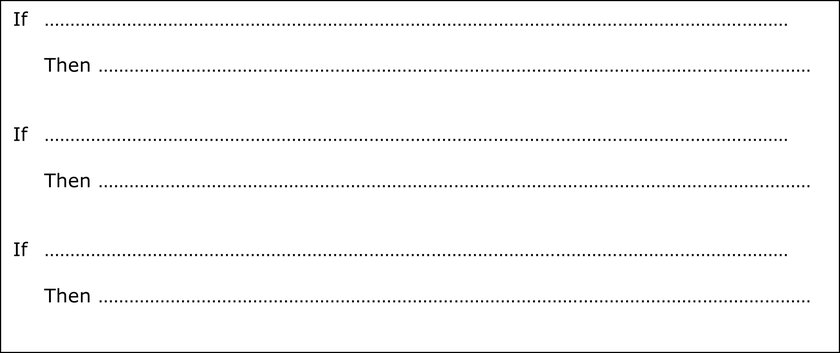
Bring these with you to your next clinic visit so you can discuss them with your Obesity Health Care Professional.
We are smoke-free
Smoking is not allowed anywhere on the hospital campus. For advice and support in quitting, contact your GP or the free NHS stop smoking helpline on 0800 169 0 169.
Other formats
Help accessing this information in other formats is available. To find out more about the services we provide, please visit our patient information help page (see link below) or telephone 01223 256998. www.cuh.nhs.uk/contact-us/accessible-information/
Contact us
Cambridge University Hospitals
NHS Foundation Trust
Hills Road, Cambridge
CB2 0QQ
Telephone +44 (0)1223 245151
https://www.cuh.nhs.uk/contact-us/contact-enquiries/