

The aim
- This leaflet is designed to provide information about thoracic spine surgery.
- The information will help you understand how long it typically takes to recover after surgery.
- To aid your rehabilitation and become more active, we have detailed below several exercises to start this process.
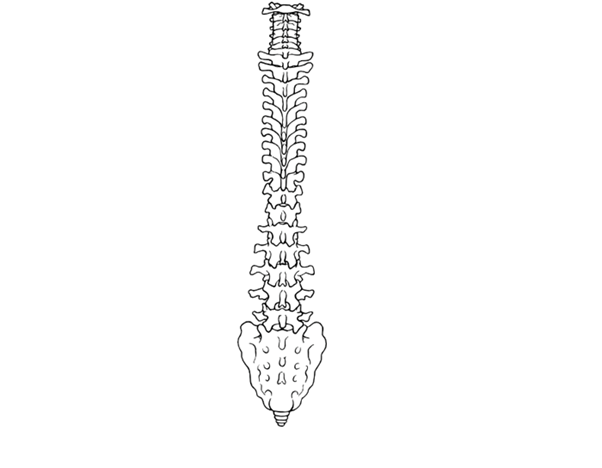
The Spine
The spine is split into three curvatures or sections. The cervical curve is the upper part of your spine, your neck. The thoracic curve is the middle section of your back, and the lumbar curve is the lower portion of your back.
You have had surgery to the thoracic section of your back. This may have been to help with pain, altered sensations or your movement. In some cases, it may have been a combination of these factors.
The Thoracic Spine
The thoracic area has the largest number of vertebrae in the spine. The spine is made up of vertebrae each separated from the next by an intervertebral disc. Spinal nerves exit the spinal cord, pass between the vertebrae and supply the lower limbs to enable sensation and movement.
Surgery
Thoracic spine surgery will normally be completed under a general anaesthetic. You will have a breathing tube placed in your throat to protect your airway and you will be positioned flat on your stomach. Muscles are carefully moved aside to access the spine so the relevant structure – bone, intervertebral disc or ligament – can be operated on.
After Surgery
Normal side effects from the general anaesthetic include drowsiness, dry mouth and a sore throat. Sensitivity over the wound site and discomfort in the general back area is also normal and should reduce with time and mobility. Some patients find that their previous symptoms have reduced, but this varies from person to person. Whether or not you experience an immediate improvement, unless advised otherwise by a healthcare professional, start the exercises explained in this leaflet as soon as possible.
The structures that have been operated on are healing, so it is normal for symptoms to persist until the expected post-operative swelling reduces. These are expected to improve with time.
Please note the following:
- Only sit for as long as is comfortable. If discomfort increases, this is your body signalling that movement is needed.
- Regular walks are great for increasing your activity level and general fitness. If discomfort increases, take a short rest before continuing. Note how far you managed to walk and aim to increase or match this next time.
- Maintain your pain relief to keep the discomfort to a minimum and so to enable the completion of your exercises.
- Experiencing fatigue is normal; this will reduce the more active you become.
- Continue to complete exercises; they should get easier
- Think about contacting your employer and discussing measures needed to return to work, such as a phased return or adaptations to your working environment.
- When returning to hobbies and recreational sport, be guided by how your back feels.
The time when you can return to driving is likely to vary depending on your recovery, but could be from 2 to 6 weeks after surgery, provided you have no altered sensation or weakness in your legs or unless you are advised otherwise. If in doubt, discuss driving with your GP or await your clinic appointment with your consultant.
It is also advisable that you contact the DVLA (Driver and Vehicle Licensing Agency) for advice regarding returning to drive. The DVLA can be contacted on 0300 790 6801.
Exercises
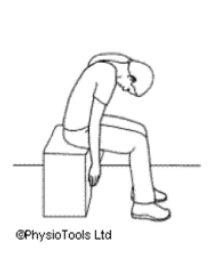
1. Sit on a chair with your back straight and your feet firmly on the floor. Now bring your chin to your chest and round the upper back. Keep your head and shoulders relaxed.
Repeat . . . . . times . . . . . per day.
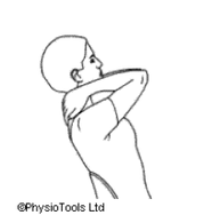
2. Sit on a chair with a high back. Keep your feet firmly on the floor. Gently lean backwards so that the area of your spine above the back of the chair extends.
Repeat . . . . . times . . . . . per day.
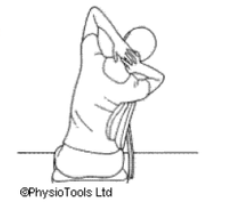
3. Sit sideways on a chair with a back. Place a cushion between your side and the back of the chair. Put your hands behind your neck or cross them on your chest. Bend sideways.
Repeat . . . . . times . . . . . per day.
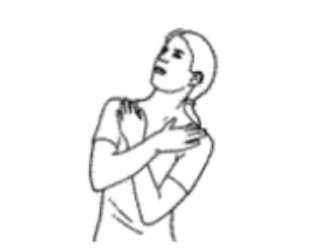
4. Sit on a chair and cross your arms over your chest, each clasping the opposite shoulder. Rotate the trunk to one side. Rotate back to the midline and then rotate to the other side.
Repeat . . . . . times . . . . . per day.
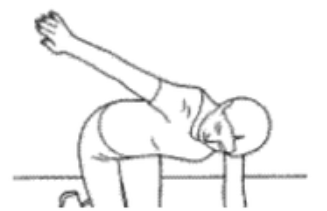
5. Start in all fours. Lift one arm up to the side while rotating your trunk. Let your eyes follow your arm. Lower your arm and repeat with the other arm.
Repeat . . . . . times . . . . . per day.
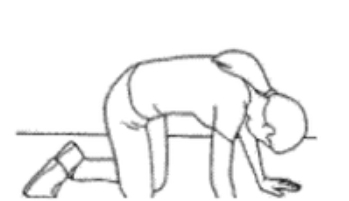
6. Start on all fours. Arch your spine upwards while letting your head relax down between your arms. Now let your back drop down, hollowing the mid-back. Keep your neck long and your elbows straight.
Repeat . . . . . times . . . . . per day.
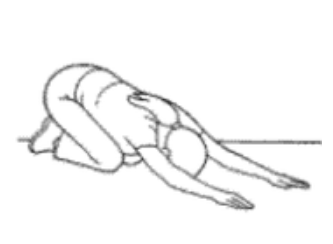
7. Start in crawling position. Let your arms slide along the floor as far as possible. Push your bottom back and down and your chest towards the floor.
Repeat . . . . . times . . . . . per day.
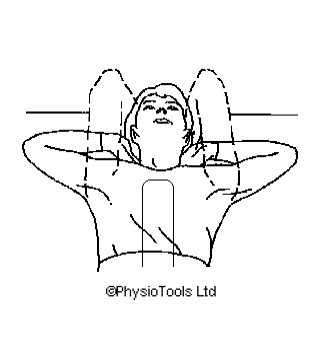
8. Lie on your back with a rolled towel positioned along your mid spine between your shoulder blades. Place your hands behind your neck with your elbows pointing towards the ceiling. Take a deep breath and move your elbows apart and down towards the floor.
Repeat . . . . . times . . . . . per day.
When should I start the exercises?
- You will be expected to be sitting out of bed and walking on the ward the day after your surgery, unless advised differently by your doctor.
- Start with the first four gentle exercises. Ensure you are feeling the stretch. Avoid rapid or jerking movements.
- Take regular pain relief.
Why should I do these exercises?
- To restore movement to your spine and to minimise the potential discomfort of scar tissue.
- To help to reduce the swelling faster by improving blood circulation.
- To reduce pain.
- To restore functional mobility more quickly.
How long should I exercise for?
- Continue with your exercises for four to six weeks.
- Gradually increase the amount of activity you do each day until you feel you have reached your normal levels of energy.
- Ensure that you maintain adequate posture and take regular pain relief.
Goals
In order to aid your recovery back to full fitness, goal setting is really important to establish a focus.
Please write down three realistic goals – one short-term, one mid-term and one long-term – to help you focus on your rehabilitation.
1.
2.
3.
Can you think of any barriers which may prevent you from achieving these goals?
1.
2.
3.
My Chart:
We would encourage you to sign up for MyChart. This is the electronic patient portal at Cambridge University Hospitals that enables patients to securely access parts of their health record held within the hospital’s electronic patient record system (Epic). It is available via your home computer or mobile device.
More information is available on our website.
Privacy & dignity
Same sex bays and bathrooms are offered in all wards except critical care and theatre recovery areas where the use of high-tech equipment and/or specialist one to one care is required.
We are smoke-free
Smoking is not allowed anywhere on the hospital campus. For advice and support in quitting, contact your GP or the free NHS stop smoking helpline on 0800 169 0 169.
Other formats
Help accessing this information in other formats is available. To find out more about the services we provide, please visit our patient information help page (see link below) or telephone 01223 256998. www.cuh.nhs.uk/contact-us/accessible-information/
Contact us
Cambridge University Hospitals
NHS Foundation Trust
Hills Road, Cambridge
CB2 0QQ
Telephone +44 (0)1223 245151
https://www.cuh.nhs.uk/contact-us/contact-enquiries/