

Introduction
This leaflet is for patients and their families who have sustained a fracture of the acetabulum - the socket of the hip joint.
It explains:
- What the injury is
- How it is treated
- Possible risks and complications
- What to expect during your hospital stay
- Your recovery and rehabilitation
What is the acetabulum?
The acetabulum is the cup-shaped part of the pelvis that forms the socket of the hip joint.
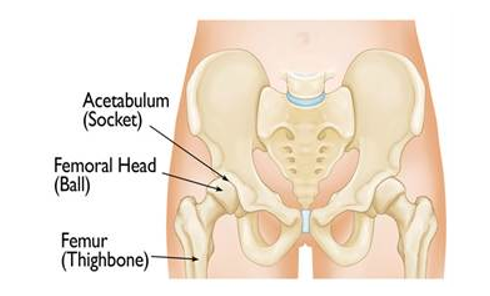
How do acetabular fractures happen?
These injuries are uncommon and usually occur following high-energy trauma such as:
- Road traffic collisions
- Falls from height
- Sporting injuries
Acetabular fractures can occur in many patterns, from simple cracks to complex breaks involving multiple pieces.
Some fractures can be treated without surgery, but you may need to avoid putting weight through the affected leg for a period of time and use crutches or a frame.
We decide on the best treatment after reviewing your X-rays and CT scans. You will be followed up in clinic by the pelvic team, who will monitor healing and advise when weight-bearing can be increased.
Occasionally, an examination under anaesthetic (EUA) is required to check the stability of the fracture. If the joint is stable, surgery may not be needed.
Catheterisation
If you have an operation you may need a urinary catheter. This drains urine into a bag and helps keep you comfortable while you are less mobile.
Surgery for acetabular fractures
If surgery is recommended, the pelvic team will explain the procedure and why it is suitable for your particular fracture.
Incisions are usually made either through the buttock muscles or the groin, depending on the fracture pattern. The aim is to realign the bone fragments and stabilise them with plates and screws.
These operations are complex and may take several hours. Surgery is carried out under general anaesthetic. The anaesthetist will meet you beforehand to discuss this and your pain relief.
After surgery you may spend time in a critical care unit for close monitoring before returning to the ward.
Fix and replace
In some cases the surgeon may recommend stabilising the fractured bone and replacing the hip joint either during the same operation or at a later stage. This approach is sometimes called “fix and replace”.
The fracture is first fixed with plates and/or screws to restore the shape and stability of the pelvis, and a hip replacement is then carried out to restore movement and reduce pain. This may be done at the same time as the fixation, or at a later date. Your surgeon will explain whether this approach is suitable for you and why.
Sexual activity and fertility
Most people can return to a normal sex life once their wounds have healed, pain is controlled and they have begun weight-bearing.
There are no specific restrictions on positions - comfort should guide you.
A small number of people may experience pain during intercourse or erectile difficulties. Please speak to your team or GP if this happens so that support can be arranged.
Pregnancy and childbirth
In many cases, vaginal delivery is possible following an acetabular fracture. This depends on the type of injury and treatment you have had.
Your obstetrician can advise you and may contact the pelvic team if needed.
Recovery and everyday activities
Driving
Most people are unable to drive for at least three months. You will be advised when it is safe to resume driving at follow-up. You must inform the DVLA and your insurance company.
Flying and airport scanners
You should avoid flying until you are walking without restriction, due to the risk of blood clots - usually for at least three months.
Metal implants can occasionally trigger airport scanners. You do not usually need written proof.
Swimming
Swimming should wait until full weight-bearing is allowed and wounds are healed
Monitoring after surgery
The team will regularly check:
- Movement and strength in your legs
- Sensation in your feet
- Circulation
Immediately after surgery
You can expect:
- Regular observations (blood pressure, pulse, oxygen levels and temperature)
- Oxygen if required
- Pain control using a pump and tablets
- A drip until you are eating and drinking
- Possible wound drains
- Antibiotics to reduce infection risk
- Encouragement to breathe deeply and move your ankles
Blood clots and prevention
Being less mobile increases the risk of clots in the legs or lungs.
To reduce this risk you will:
- Wear compression stockings
- Receive daily injections while in hospital
- Take blood-thinning tablets (usually rivaroxaban) after discharge for several weeks
Possible complications
All operations carry some risks. These include:
- Bleeding
- Infection
- Constipation
- Pain
Signs of infection include redness, discharge, increasing pain or feeling unwell.
Other recognised risks
- Difference in leg length
- Heterotopic ossification (bone forming in soft tissues)
- Post-traumatic stress symptoms
- Avascular necrosis of the femoral head
- Arthritis developing in the hip joint
- Nerve injury, most commonly to the sciatic nerve
Nerve symptoms can include numbness, pain or weakness in the leg or foot. Recovery can take months and occasionally may be incomplete.
Mobility and physiotherapy
Your consultant will advise how much weight you can put through your leg.
Many patients need to avoid full weight-bearing for several weeks or months.
Physiotherapists will teach you how to use crutches or a wheelchair and give you exercises to aid recovery.
Wheelchairs can be hired locally via the British Red Cross.
Discharge planning and follow-up
Discharge planning involves doctors, nurses, physiotherapists and occupational therapists.
You may temporarily need:
- A bed downstairs
- Equipment such as a commode
- Help at home
If Addenbrooke’s is not your nearest hospital you may be transferred to your local hospital to continue rehabilitation.
You will usually be reviewed in the specialist pelvic clinic six weeks after discharge, with new X-rays taken beforehand.
Rehabilitation and return to work
Recovery can take many months.
Some people return to work after six weeks, while others take up to a year depending on the severity of injury and the type of work they do.
A small number of patients have long-term symptoms, particularly after severe fractures.
Removal of metalwork
The metalwork is rarely problematic. It can be removed, if necessary, once the bone has healed at approximately 12 months.
References
Dunbar RP et al. Acetabular Fractures. OrthoInfo (AAOS)
Acetabular Fractures. Nursing File, 2017
Produced in conjunction with St George’s Healthcare NHS Trust.
Contacting the team
Cambridge University Hospitals NHS Foundation Trust
Trauma and Orthopaedic Department
Addenbrooke’s Hospital
Hills Road
Cambridge
CB2 0QQ
Telephone: 01223 245151
Ward C8: 01223 217279
Ward D8: 01223 217282
We are smoke-free
Smoking is not allowed anywhere on the hospital campus. For advice and support in quitting, contact your GP or the free NHS stop smoking helpline on 0800 169 0 169.
Other formats
Help accessing this information in other formats is available. To find out more about the services we provide, please visit our patient information help page (see link below) or telephone 01223 256998. www.cuh.nhs.uk/contact-us/accessible-information/
Contact us
Cambridge University Hospitals
NHS Foundation Trust
Hills Road, Cambridge
CB2 0QQ
Telephone +44 (0)1223 245151
https://www.cuh.nhs.uk/contact-us/contact-enquiries/