
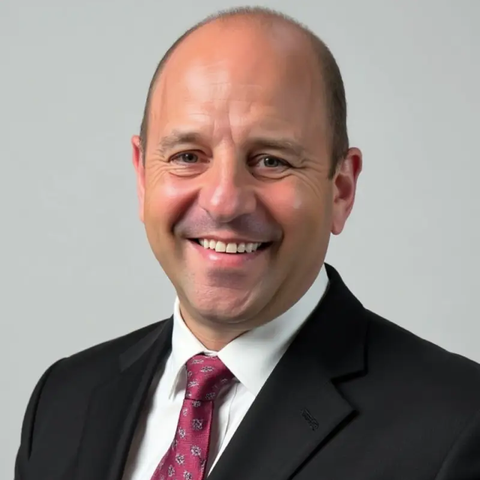
My current role
I was appointed as a consultant urologist at Addenbrooke's Hospital, Cambridge University Hospitals NHS Foundation Trust, in 2007, and as consultant andrologist at Bourn Hall Clinic in 2010. My practice is focused on two areas: the surgical and medical management of kidney and ureteric stones, and the diagnosis and surgical treatment of male infertility. I also see patients with general urological problems, and assess and treat selected upper tract urothelial cancers using minimally invasive techniques.
Kidney stone disease
I treat the full range of stone disease, from a single small stone causing pain to large and complex "staghorn" stones filling the kidney. Every option is offered in Cambridge, so the treatment can be matched to the stone and to the patient, rather than the other way round:
- Shockwave lithotripsy (ESWL): a non-invasive treatment that breaks stones with focused sound waves, without anaesthetic or incisions.
- Flexible ureteroscopy and laser lithotripsy (FURS): a telescope passed through the natural urinary passage to fragment or dust stones with a laser, usually as a day case.
- Percutaneous nephrolithotomy (PCNL): keyhole surgery through a small incision in the back for larger stones; I introduced supine PCNL (performed with the patient lying on their back) and ECIRS (endoscopic combined intrarenal surgery) and regularly host surgeons from the UK and abroad to observe these techniques.
- Metabolic assessment: blood, urine and stone analysis to understand why stones form, with dietary and medical advice to reduce the risk of recurrence.
I was co-lead of the NIHR-funded PUrE study, a £1.7m national programme of randomised trials comparing ESWL, ureteroscopy and PCNL for stones in the lower part of the kidney. For stones of 10 mm or less, ureteroscopy cleared stones completely in 72% of patients compared with 36% after shockwave treatment, although shockwave treatment was the more cost-effective option for the NHS [1].
For stones of 10 to 25 mm, PCNL achieved a stone-free rate of 71% compared with 48% for ureteroscopy, with fewer additional procedures and lower overall cost [2].
These results now help patients and surgeons across the UK choose the most effective treatment.
I have contributed to international consensus statements and guidelines on ureteroscopy, shockwave lithotripsy and the safe control of kidney pressure during surgery [3–5], and to national research on the safety and organisation of PCNL [6, 7]. My other research covers the use of medication to help stones pass [8, 9], ureteric stents and how to make them more comfortable [10, 11], and stone-related quality of life.
Male infertility
Around one in two couples' fertility problems involve a male factor, and many of these can be treated. I have more than 15 years' experience in male fertility surgery and have performed over 1,000 procedures, working closely with the embryology teams at Bourn Hall Clinic and Cambridge IVF.
I offer:
- Full assessment of the infertile man: history, examination, hormone profile, semen analysis and, where needed, genetic tests and scrotal ultrasound.
- Microsurgical TESE (microTESE): an operating-microscope technique to find sperm in men with no sperm in the ejaculate due to low production (non-obstructive azoospermia); I was the first surgeon to introduce microTESE in the East of England PESA, TESA and TESE: sperm retrieval from the epididymis or testis for men with a blockage, including after vasectomy, so that sperm can be used in IVF/ICSI.
Previous history
I studied medicine at the University of Cambridge, graduating BA (Hons) in 1992 and MB BChir in 1994, followed by MA in 1996. After basic surgical training I undertook research in London, then completed higher specialist urological training, obtaining FRCS (Urol) from the Royal College of Surgeons of England in 2005.
I have held a number of national and international leadership roles:
- Training Programme Director for urology registrars, Health Education East of England (2014–2019)
- Honorary Treasurer and Trustee, British Association of Urological Surgeons (BAUS) (2015–2021), and member of BAUS Council and the BAUS Section of Endourology Treasurer and organising committee member, World Congress of Endourology, London 2015
- Board member and Chair of the Communications Group, EAU Section of Endourology (2024–present)
- Awards Committee member, Endourological Society
I teach widely. I have led the Endourological Society "Tips and Tricks in PCNL" course, direct the Cambridge Endourology and Advanced Endourology courses, teach on the EAU metabolic stone management course, and have lectured and performed live surgery at national and international meetings.
I was awarded the BAUS Karl Storz Harold Hopkins Golden Telescope in 2017, and the BAUS Karl Storz Silver Cystoscope for excellence in training.
Never say never and never say always.
Unknown
Membership and accreditations
- Fellow of the Royal College of Surgeons of England – FRCS (Urol)
- Full registration with the General Medical Council, on the Specialist Register (GMC 4146458)
- Member of the British Association of Urological Surgeons (BAUS)
- Member of the European Association of Urology (EAU) and Board member, EAU
- Section of Endourology
- Member of the British Medical Association
- Faculty, EMS Swiss Urology Academy