

An Addenbrooke’s-based team that launched a specialist clinic to help patients with normal pressure hydrocephalus (NPH) – which is frequently mistaken for dementia – has expanded its outreach work for sharing its pioneering good practice.
NPH is caused by an abnormal build-up of fluid in the brain, and leads to cognitive impairment, poor balance, and bladder problems. It typically affects people over 65 and is frequently missed or mistaken for untreatable forms of dementia like Alzheimer’s disease. However, unlike other conditions, it can be treated effectively with a short surgical procedure to insert a shunt device into the brain, which diverts fluid elsewhere in the body, usually the abdomen.
The REVERT NPH Visitation Centre, established last year in collaboration with Integra Lifesciences, supports clinician education and the sharing of best practice to help other centres adopt the standard of care established through the Reversible Dementia Project (REVERT).
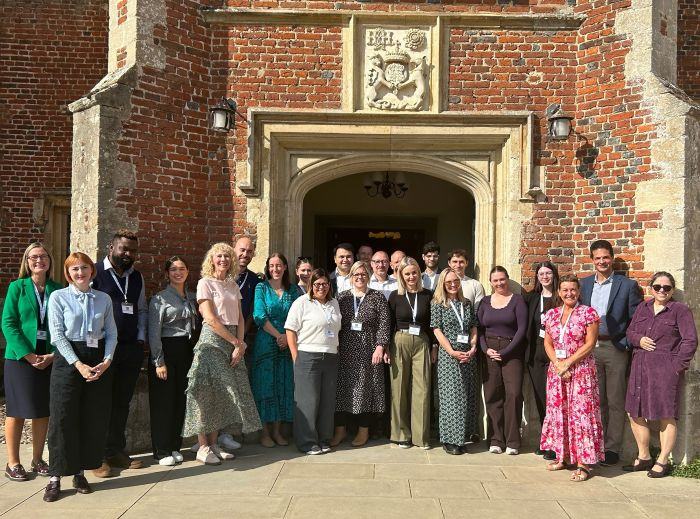
Held at Madingley Hall, experts from the REVERT team held a two-day learning event last week attended by dozens of delegates from around the UK – and with one team travelling from as far afield as Canada. It is indication of the growing - and now international - interest in the work of the REVERT team, which has jointly hosted five such learning events since last year, attended by members from 14 healthcare teams across the UK and Ireland.
The REVERT project was a cross-border collaboration between the UK and France involving seven partner organisations and led by the University of Cambridge which was successfully completed in 2023. It established an innovative multidisciplinary care model to improve the diagnosis and treatment of NPH whilst reducing the demand for hospital-based services which has now been fully adopted within routine care by CUH.
The REVERT care model is centred around a one-stop multidisciplinary clinic review, including a medical consultation, cognitive evaluation (memory test), and gait assessment (walking test). It also includes an awareness programme for healthcare professionals, day-case diagnostic procedures based on the techniques pioneered by the Brain Physics Laboratory at the University of Cambridge, and a short-stay surgical treatment pathway.
Delegates gained insight into how the REVERT Clinic works, and the experience of the hundreds of patients it has helped across the Eastern region since it opened in June 2022. The programme included sessions on outreach and awareness, multidisciplinary assessment, cutting-edge diagnostics, and streamlined surgical pathways. Delegates had the opportunity to try out clinical screening tests, intracranial pressure analysis software, and hydrocephalus-related medical devices. The hydrocephalus charity, SHINE, also discussed additional support available for patients and families with the condition.
Mr Alexis Joannides, consultant neurosurgeon and REVERT clinic lead, said:
We are very grateful to our clinical colleagues for the opportunity to work together for advancing the care of NPH patients within the UK and beyond, and to Integra Lifesciences for supporting this initiative
Graeme Loughlin, head of Northern Europe, Integra LifeSciences added:
We are honoured to collaborate with the amazing REVERT team to support greater awareness, education and multidisciplinary collaboration in Normal Pressure Hydrocephalus. The Visitation Centre demonstrates the positive impact that can be achieved when healthcare professionals and industry work together to advance transformational care.
Janet VanValkenburg, NPH Manager, SHINE said:
It was a valuable opportunity to share the patient perspective, raise awareness of the challenges faced by people living with NPH and their families, and discuss the importance of education, support, and collaborative working in improving outcomes. By working together, we can drive earlier diagnosis, improve access to specialist care, and ensure that more people affected by NPH receive the support they need.
- The REVERT clinic takes referrals from GPs and specialists in the East of England and beyond. Anyone worried about cognitive problems should speak to their GP. Find out more about REVERT.