A patient who took part in a personalised skin cancer vaccine trial at Addenbrooke’s Hospital has described the latest findings as “groundbreaking.”
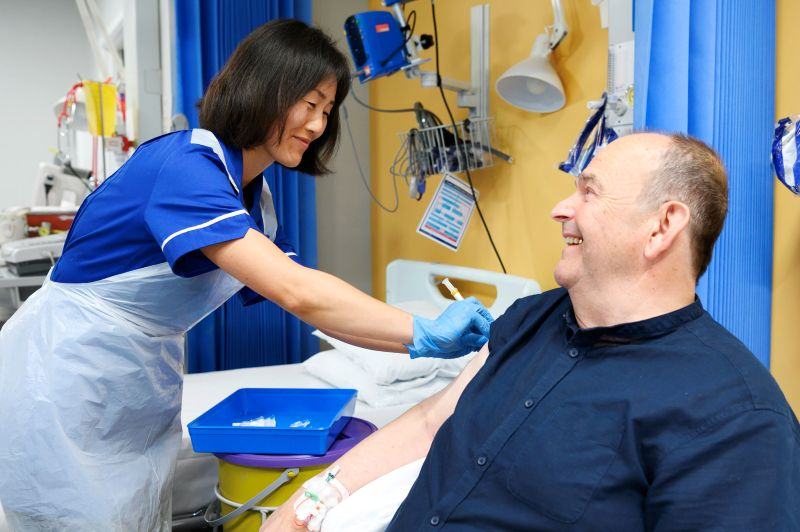
Tony Chapman, 75, from North Northamptonshire, was diagnosed in 2019 with melanoma, the deadliest form of skin cancer.
The retired businessman was one of more than 1,000 patients with high-risk melanoma who took part in an international trial to test a new personalised vaccine.
Results from the trial found when the personalised vaccine was given alongside an immunotherapy drug it reduced the risk of patients dying or their skin cancer returning by 42%.
The trial also found the combination of the vaccine and immunotherapy drug reduced the risk of melanoma spreading by 38% over two years compared to immunotherapy alone.
In the phase three trial, patients were either given the vaccine and Keytruda, an immunotherapy drug already given as a cancer treatment, or only Keytruda for around a year.
As a double-blind trial, neither Tony Chapman nor the researchers know whether he received the vaccine or placebo, alongside the immunotherapy drug.
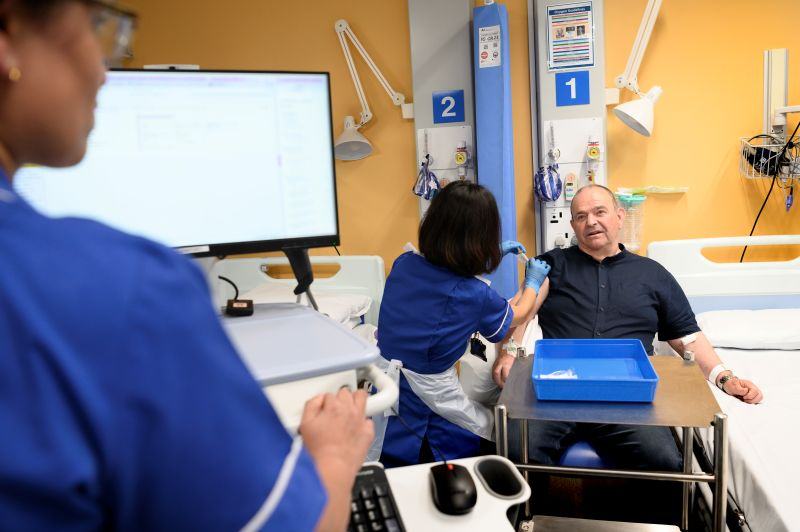
He was initially diagnosed with stage three cancer in 2019 and had a melanoma on his chest removed. But four years later, Tony discovered a lump under his armpit and needed surgery to remove the lymph nodes.
Since taking part in the trial and finishing treatment at the NIHR Cambridge Clinical Research Facility last year, Tony remains cancer-free. He is a keen gardener and enjoys spending time with his wife and three adult children.
Addenbrooke’s has a sentimental place in my heart as I was born here, so I didn’t hesitate when I first heard about the research trial. I couldn’t get over how groundbreaking it sounded. The opportunity to play a small part in furthering scientific research and potentially helping others along the way was too exciting to miss out on.
Tony Chapman
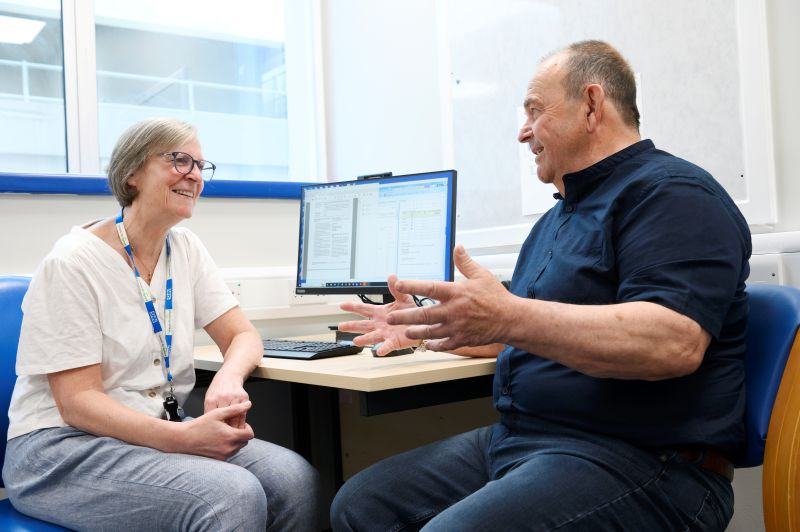
Consultant medical oncologist Pippa Corrie, who led the trial at Addenbrooke’s Hospital and is Affiliated Professor at the University of Cambridge, explained to Tony that the vaccine uses mRNA technology, which was used to develop some Covid-19 vaccines. Following surgery, a fragment of the patient’s tumour is taken and sequenced to create a vaccine that is unique to the patient.
The vaccine, called Intismeran, is designed to use the patient’s own tumour to target any remaining cancer cells following surgery. The two drug companies who developed the vaccine, Merck (known as MSD in Europe) and Moderna, announced initial results in the summer. The full trial results are expected to be presented at the European Society of Medical Oncology (ESMO) conference in Madrid on Saturday.
The results have yet to be peer-reviewed, where they are closely analysed by independent experts to verify the findings. Approval will also be required by regulators before it could be made available on the NHS.
The personalised cancer vaccine uses exciting technology to stimulate the patient’s own immune system to recognise and attack any tumour cells remaining after surgery. It is a whole new approach to cancer treatment which is designed to improve outcomes compared with standard anticancer drug treatments that don't take into account individual differences, and this trial was the first proof of principle.
Professor Pippa Corrie, consultant medical oncologist
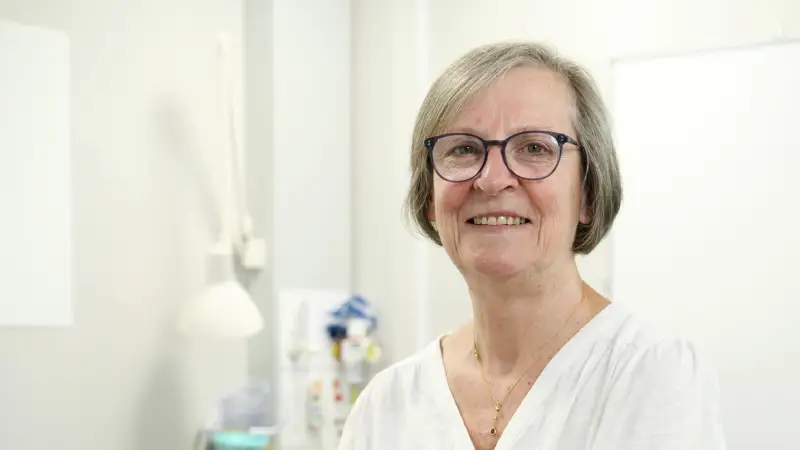
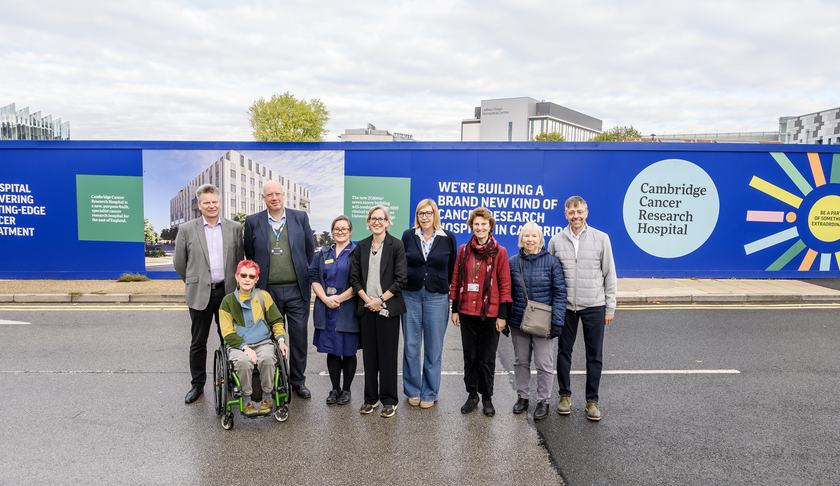
The personalised treatment approach of the trial aligns with the planned Cambridge Cancer Research Hospital, which will bring research and clinical care together in one building on the Cambridge Biomedical Campus. The hospital will embed cutting-edge research directly into NHS care, helping more patients to benefit from the latest innovations in cancer science.
Seven years on from his diagnosis, Tony Chapman is focused on the future.
I’m thrilled I had the opportunity to participate in this ground-breaking research. The frequency of my hospital check-ups has recently been reduced from scans every three months, to every six months, so I’m feeling positive, I’m feeling well and I’m making the most of what life has to offer.
Tony Chapman