
One of the first people in the world to receive a ground-breaking treatment for lupus at Addenbrooke’s Hospital has welcomed news of a larger trial offering the one-off CAR-T cell therapy to more patients.
Laura, age 37 from King's Lynn, was first diagnosed with lupus aged 14 and says she is thrilled to finally have her condition under control after struggling with constant and increasingly severe symptoms for almost two decades.
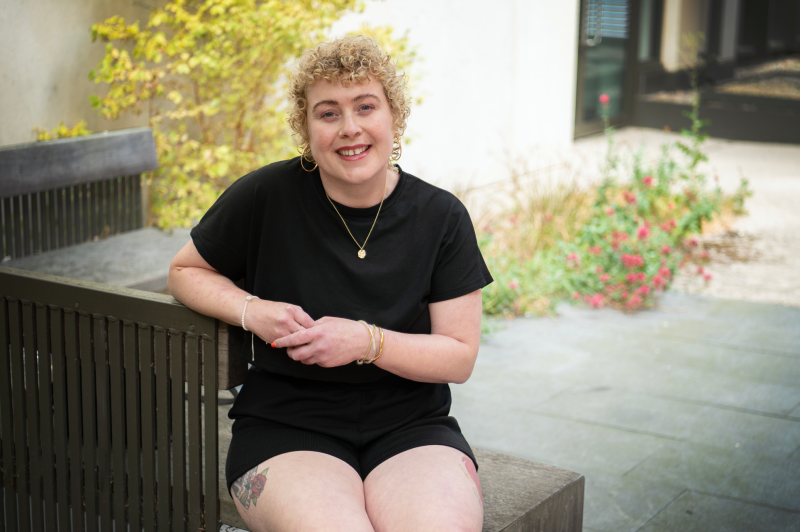
This is the first time since I was a teenager that I’ve really felt healthy. I’ve tried so many treatments over the years but nothing else has given me back so much freedom and control for so long. It’s really exciting to be able to benefit from something so life-changing.
Laura, trial participant
Laura’s symptoms started in 2003 when doctors initially thought she had glandular fever. Her illness continued and after extensive tests she was diagnosed with lupus at her local hospital.
“I was in denial for a long time, it just didn’t feel right to be diagnosed with something so severe, extensive and long-lasting when I was so young. It was only when I was 17 and things started to get worse that I had to accept I was going to be living with this for the rest of my life.”
For many people with lupus the severity of symptoms changes over time, switching between phases where they have few symptoms and phases of more severe and debilitating illness. In Laura’s case, she has had constant severe symptoms for the last 20 years.
It’s a constant part of every day. Waking up with every joint aching. A daily routine of creams to protect my skin. Wearing gloves all the time because my hands are so damaged. I can’t even wear my hair the way I want. It’s a huge amount to get used to, especially when you’re a teenager.
Laura
In 2012, as her condition continued to progress, Laura was referred to Cambridge University Hospitals NHS Foundation Trust (CUH), which has helped her to access a wider range of treatments and research studies.
She runs a successful, high-end decorating business with her partner Matt. She has built up the business despite constant challenges from her illness.
“I travel all over the East of England to meet clients, usually in their homes. At one point I was so stiff and in so much pain, I couldn’t drive, I couldn’t even walk. Anytime I get ill, it means time in hospital. I’ve been in hospital multiple times each year and each time it’s usually at least a month before I get out again. I’m lucky that my team at Addenbrooke’s are fantastic and always there when I need them.”

Since her diagnosis, Laura has tried a wide range of treatments including at least seven different chemotherapies and immunotherapies. She even participated in other clinical trials of new treatments.
Doctors note that Laura’s case is particularly severe and complex. She has commonly had extreme complications as a result of treatment, which has made it harder for doctors to help her manage her symptoms.

Laura’s case is especially challenging and has proven unusually resistant to standard treatments. The CAR-T trial was an opportunity to try something new and we’re very pleased to see how well Laura is doing following the treatment.
David Jayne, Professor of Clinical Autoimmunity at the University of Cambridge and a lupus specialist at CUH
Laura received treatment in summer 2025. This involved collecting cells from her blood which were then modified in a lab to create the CAR-T cells, which were then returned to her blood. While she experienced complications during her recovery, she is now very positive about the results and cautiously optimistic about the future.
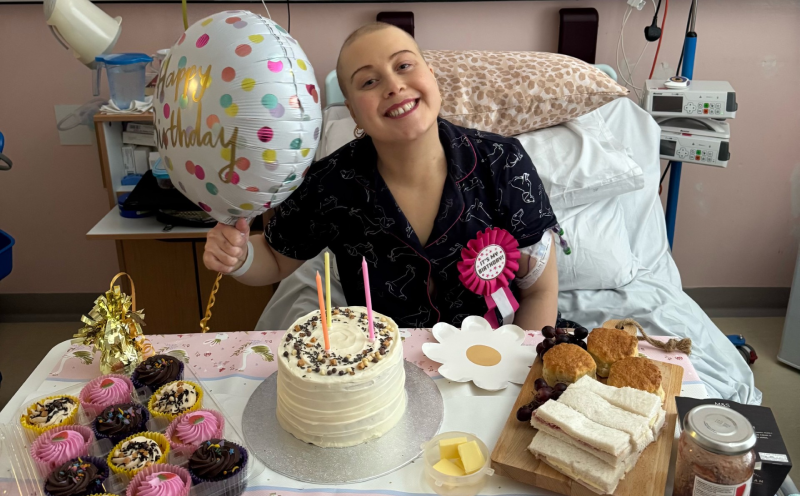
The CAR-T treatment was my last hope. It’s a tough treatment to go through and I was quite ill for a while afterwards but now, a year later, I’d say it’s the best decision I ever made. The doctors are hopeful the effects will last a long time, but even if I only get a few years feeling like this it’ll be worth it.
Laura
CUH is trialling a CAR-T cell therapy for lupus developed by UK biotech company Autolus, a spin-out from University College London. Laura was one of the first in the world to receive the treatment as part of a Phase I trial. Thanks to close collaboration amongst the teams at CUH and the unique clinical trials infrastructure in the UK, CUH is now also the first in the world to recruit patients into the new, larger Phase II trial.
The rapid trial setup and recruitment was driven by the close collaboration of CUH’s lupus, haematology and local research teams and supported by the National Institute for Health and Care Research (NIHR) Life Sciences Industry Hub.
CUH led the on-the-ground setup and clinical delivery of the trial, while the Hub worked in partnership with the commercial sponsor, Autolus, to anticipate and manage setup requirements across multiple sites. By streamlining these national processes, the Hub helps ensure that life-changing, cutting-edge treatments like CAR T-cell therapy can reach patients like Laura faster than anywhere else in the world.
Systemic lupus erythematosus is a complex, chronic autoimmune condition that affects about 1 in 1000 people. It is caused by cells from the immune system that attack other parts of the body causing extensive damage. The damage can lead to breathing difficulties, cardiovascular illness, kidney damage and a greatly increased risk of infections.
Notable symptoms include joint pain, severe rashes, fatigue, poor blood flow to extremities and fatigue. Treatments generally include anti-inflammatories and steroids, with chemotherapy used in extreme cases to destroy harmful cells.
CAR-T cell therapy involves collecting cells from a patient’s blood. The cells are modified in a lab to better fight disease and are then returned to the patient’s bloodstream where they start to attack the causes of illness.
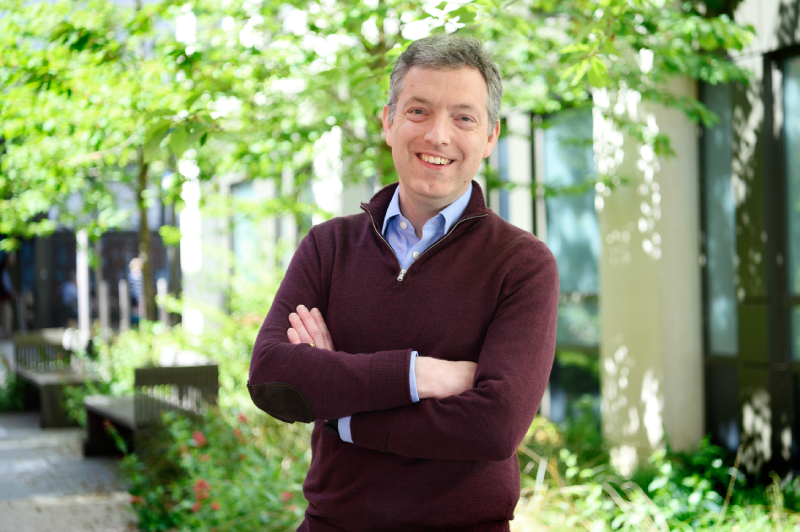
These cutting-edge cell therapies offer exciting opportunities to help patients across a range of illnesses. We’re working with partners nationally and internationally to provide faster access to groundbreaking trials, giving hope to patients living with severe conditions that have proven resistant to existing therapies.
Dr Ben Uttenthal, consultant haematologist and director of cell and gene therapies at CUH
Because the CAR-T cells survive and grow once in the body, doctors hope that, for many patients, a single treatment will provide long-term or even life-long relief from symptoms.
Originally developed to attack cancer cells, CAR-T cells are now being explored as treatments for other illnesses including autoimmune conditions like lupus.
In autoimmune illnesses, cells from a patient’s immune system cause damage to other parts of the body. CAR-T cells can treat the illness by destroying the harmful cells.
This global first at Cambridge University Hospitals is a perfect example of what the UK delivers when we combine world-class clinical excellence with an integrated, accountable delivery system. By supporting Autolus from its early days as a spin-out through to late-stage global trials, we are providing a robust growth pipeline for innovative biotechs. We are turning the UK's scientific strength into an investable, scalable R&D platform. This accelerates patient access to life-changing cell therapies while driving high-value job creation and economic growth.
Dr Maria Koufali, Life Sciences Industry Director at the NIHR
Matthias Will, MD, Chief Development Officer at Autolus, said: "The rapid progression of this programme is a testament to the strength of the UK's cell and gene therapy ecosystem. This achievement has been made possible through close collaboration between Autolus, Cambridge University Hospitals, the NIHR, and investigators and research teams at sites across the UK. Together, we are demonstrating how a connected national research infrastructure can accelerate ATIMP studies, enabling innovative therapies to reach patients faster while reinforcing the UK's position as a global leader in advanced therapy clinical research."
Obecabtagene autoleucel is not approved for the indication of SLE or lupus nephritis and is an investigational agent in these indications with no proven efficacy or safety.