Women invited for NHS breast screening in Cambridgeshire are the first to take part in a landmark national trial using artificial intelligence to support specialist clinicians and help detect breast cancers earlier. Nearly 700,000 women will take part in the trial.
The £10 million NIHR-funded trial is the largest in the world to use an artificial intelligence-assisted tool in breast cancer screening. Cambridgeshire is the first location to launch the trial, which will soon be running at 30 breast screening sites across the UK.
All women aged 50-71 are invited for screening every three years. Currently around 2.1 million women in the UK have breast screening each year, which helps prevent around 1,300 deaths.
More information for women taking part in the trial is available on the EDITH patient information webpage.
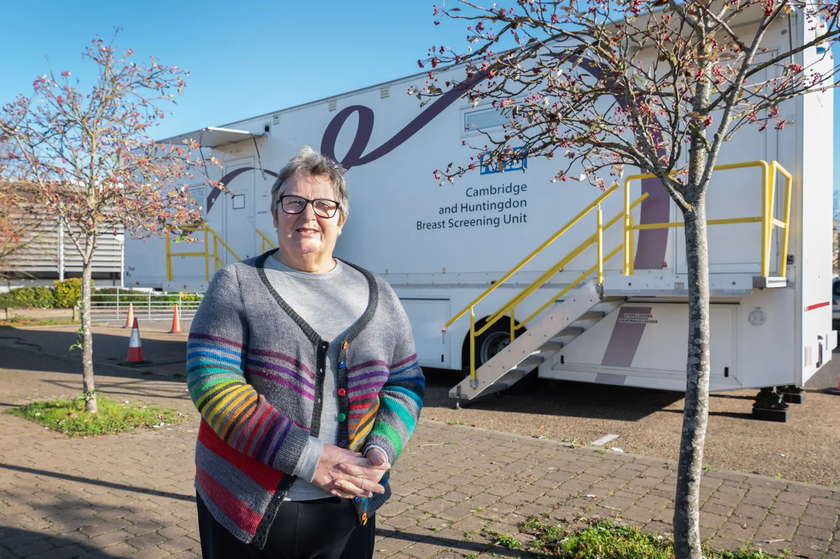
Shirley, aged 70 from Cambridgeshire, was diagnosed with early-stage breast cancer in October 2025 after a routine screening appointment. Following surgery and radiotherapy treatment, she is now doing well. Shirley is not part of the trial but is passionate about the importance of screening.
I feel so lucky my cancer was detected early. When I received the invitation to attend, I had no symptoms and no clue anything was wrong. My routine mammogram saved my life, so anything that helps other people get diagnosed earlier is crucial. That's why this trial is so important.
Reviewing breast screening x-rays (mammograms) is time intensive. Currently, each mammogram is reviewed by two specialist radiologists. Fewer than 1% of mammograms show signs of cancer, so significant time is spent reviewing negative screening images.
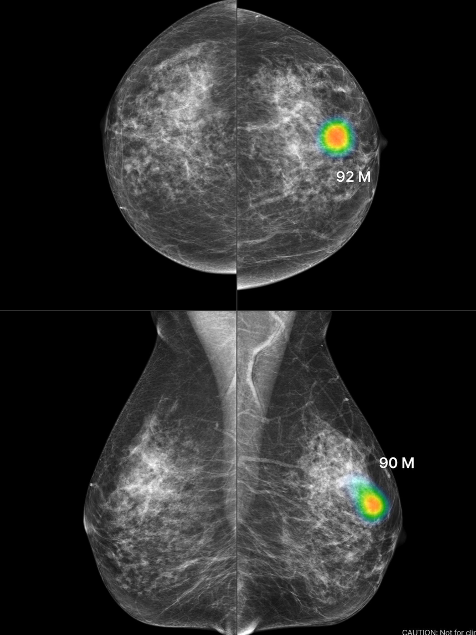
In the trial, known as EDITH, the AI-assisted tool will be used alongside specialists checking the images to look for cancers that are too small to see or feel. This could mean many mammograms would only need to be reviewed by one radiologist and would free-up radiologists to spend more time on diagnosis and caring for women with cancer.
Millions of women have a mammogram each year, and fewer than one in 100 will be diagnosed with cancer. EDITH will test whether an AI-assisted mammogram-reading tool can help experts review images more efficiently, while maintaining professional oversight and the standards women expect from NHS breast screening.
Professor Fiona Gilbert, Department of Radiology, University of Cambridge and Honorary Consultant at Cambridge University Hospitals NHS Foundation Trust
The NHS offers mammograms at local breast screening clinics in GP practices or hospitals, or women can attend one of their local mobile screening vans, conveniently located in supermarket or community car parks.
The trial will not change what happens during a woman’s breast screening appointment. It only affects how the collected images may be reviewed. Every mammogram will still be reviewed by at least one human radiologist.
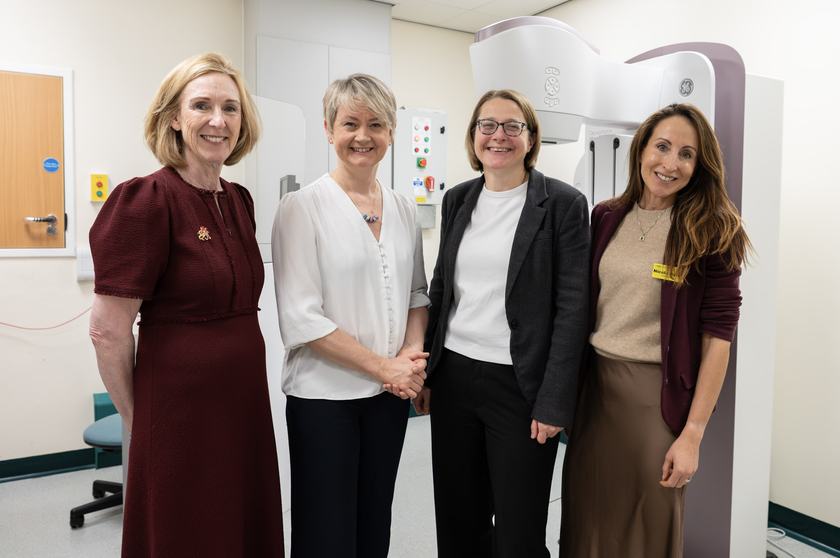
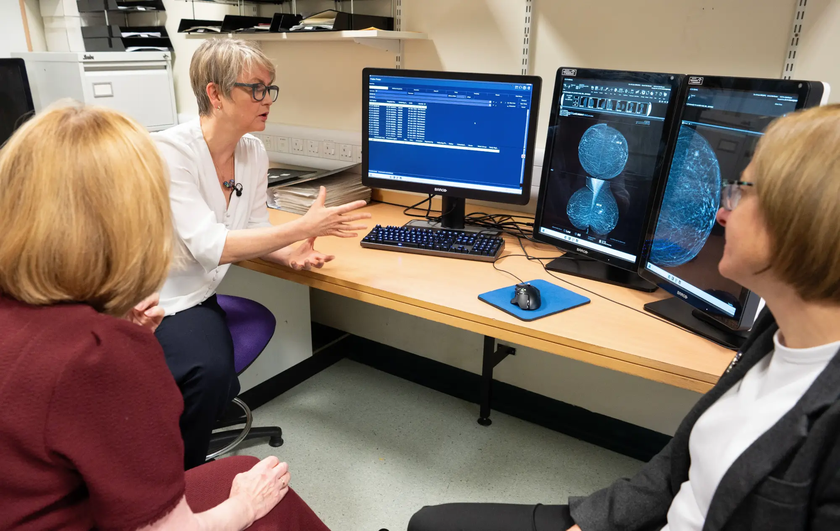
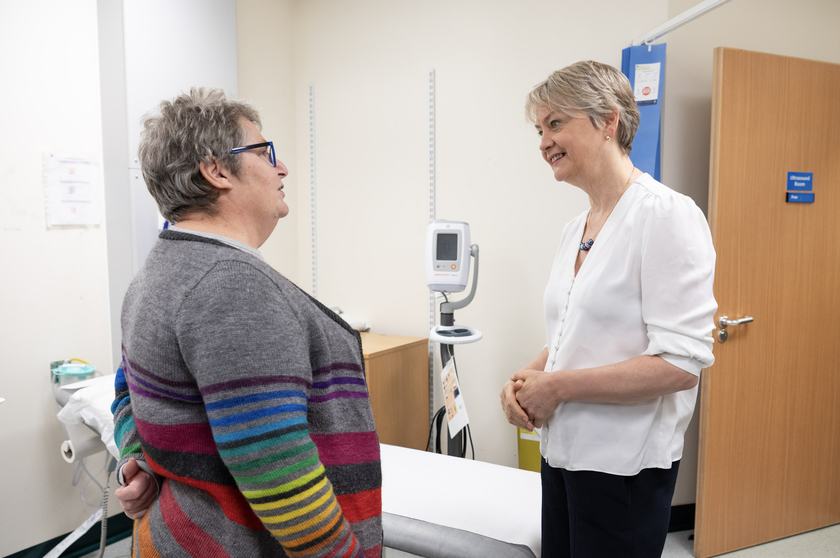
To mark the opening of the trial, the Secretary of State for Health and Social Care, Yvette Cooper, visited the Breast Unit at Addenbrooke’s Hospital to meet with Shirley and the leaders of the trial, Professor Fiona Gilbert from the University of Cambridge and Addenbrooke’s Hospital and Professor Sian Taylor-Phillips at the University of Warwick.
This is the biggest AI breast cancer trial in the world, backed by £10 million of government investment to speed up diagnosis and potentially deliver life-saving improvements.
If successful, this technology could help women get a breast cancer diagnosis and start treatment much more quickly, giving them the best possible chance of recovery.
AI has huge potential, but we also need proper safeguards in place to make sure we’re using it safely and effectively to improve treatment and research.
Our National Cancer Plan is about improving diagnosis and treatment and, harnessing the world-leading research that we have in our NHS and life sciences sector to drive forward world-beating treatments for cancer.
Secretary of State for Health and Social Care, Yvette Cooper
Details of the trial will be included in the letter sent to eligible women when they are invited for screening, along with details of how to opt-out of the trial for anyone that does not want to take part.
The AI-assisted tool is being tested alongside the usual process rather than replacing it. The NHS will only change how screening works if the evidence shows it is as safe and effective as the care women receive now.
EDITH will test whether AI can assist NHS staff improve the service for women attending the NHS Breast Screening Programme. AI-assisted technology could support staff by flagging areas of a mammogram where cancer might be missed to improve early cancer detection.
Professor Sian Taylor-Phillips, NIHR Research Professor and Professor of Population Health at the University of Warwick
Previous work by Professor Gilbert has shown how breast screening could be further enhanced by offering additional imaging to some women based on their cancer risk. She is also exploring the use of AI to assess which women are at the greatest risk of developing breast cancer.
The Breast Unit at Addenbrooke’s is leading the way in improving access to cancer care. They have launched a direct referral service via NHS 111 that offers rapid support to women concerned they may have breast cancer.
The speed and scale of these pioneering improvements is expected to grow and expand further when the Breast Unit moves into the future Cambridge Cancer Research Hospital (opens in a new tab).
The NHS Breast Screening Programme is continuing to modernise, and we are looking carefully at how technology developed using artificial intelligence could support the reading of mammograms safely and effectively. EDITH will help build the evidence we need, while ensuring patient safety, quality and the expertise of screening professionals remain at the heart of the programme.
Professor Kevin Dunbar, Deputy Director of Public Health, England
The trial is funded by the National Institute for Health and Care Research (NIHR) working closely with NHS England and the UK National Screening Committee, who helped shape the study design.
The NIHR is proud to be funding one of the world's largest studies of AI-assisted breast screening. Bringing together researchers, NHS staff and hundreds of thousands of women from all walks of life, EDITH will generate vital evidence on whether this technology could transform how cancer is detected and diagnosed.
Earlier diagnosis gives people the best chance of successful treatment. Through studies like EDITH, we can rigorously evaluate whether AI can help deliver better outcomes for patients while maintaining the safety, quality and human expertise at the heart of NHS care.
Professor Lucy Chappell, CEO of the NIHR and Chief Scientific Adviser to the Department of Health and Social Care
As the trial progresses, it will be supported by an AI research screening platform, AIR-SP, built by NHS England with nearly £6 million of government funding. It is designed to make it easier for NHS Trusts to join AI screening trials.
EDITH aligns with the NHS 10 Year Health Plan and the aims of the National Cancer Plan.
Finding cancer earlier can make all the difference to patients and their families, including saving lives. Through this landmark trial, we’re putting AI to work alongside our expert radiologists to test whether it can help spot warning signs sooner and free specialists to spend more time on direct patient care. “This is what AI that works for people looks like. Backing our NHS staff with new tools to help patients get the answers they need sooner.
Kanishka Narayan, UK Minister for Artificial Intelligence