
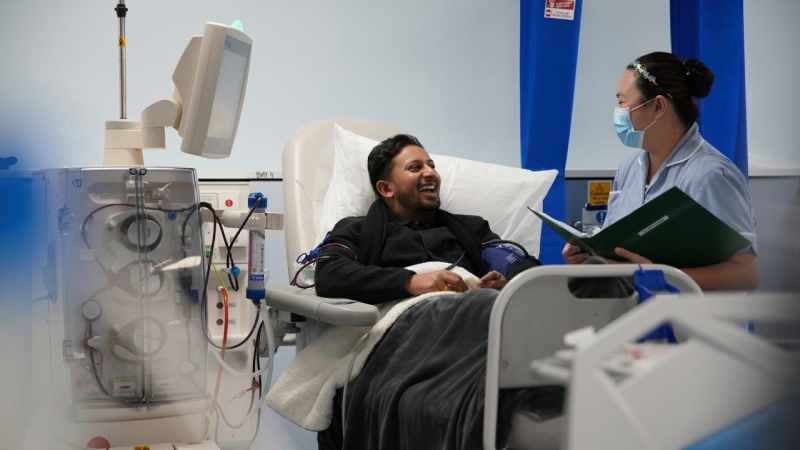
31-year-old Sameer, who spends more than 70 hours a week on dialysis, says new research results give him hope and highlight the need for more studies in dialysis care. His comments follow results from one of the UK’s largest ever dialysis trials.
Around 30,000 people in the UK rely on dialysis to survive. Half die within five years and survival has not improved in decades. Complications including heart attacks, strokes and infections are also common.
The Cambridge-led trial, called SIMPLIFIED, investigated high-dose vitamin D supplementation for people on dialysis. While the overall results found no benefits, there were possible interesting findings for non-white patients and men. Researchers and patient groups say more research on improving dialysis patient outcomes and quality of life is “urgently needed”.
Sameer Solomon from Cambridge took part in the study. He was diagnosed with late-stage kidney disease in early 2020 and has been on dialysis for more than three years.

Dialysis is keeping me alive, but so much of my life is spent simply living between sessions. Kidney disease and its treatment are a constant presence in my everyday life, both physically and emotionally.
The burden of kidney disease and care is enormous, yet research remains underfunded and treatment options are limited. That’s why this trial, and the wider research it contributes to, is so important. It gives me hope that we can drive progress towards better treatments, improved care, and a brighter future for people living with kidney disease.
Sameer
Sameer is on the waiting list for a kidney transplant, but knows that even once he gets one, he is likely to end up back on dialysis in the future.
Transplanted kidneys don’t last forever. Assuming everything goes well and I get a transplant, I know in 10-20 years time, I could be back on dialysis, and it needs to be better then than it is now.
Vitamin D deficiency is extremely common in patients with kidney failure. The NIHR-funded trial of more than 3,800 patients across England, Scotland and Wales looked at whether a high-dose of vitamin D could improve survival and help avoid complications.
Results of the trial were presented today (23 Oct) at the American Society of Nephrology conference in Denver. They show high-dose vitamin D doesn’t help everyone but they offer hope for Sameer and many other patients.

Dr Rona Smith, Consultant Nephrologist at Addenbrooke’s Hospital and Senior Research Associate at the University of Cambridge, led the trial. She said:
The results of the trial do not support use of high-dose vitamin D supplementation for all dialysis patients. But we found some interesting patterns in some sub-groups of patients, which require further investigation.
Dr Smith and her colleagues hope their results will lead to more research including targeted studies on using high-dose vitamin D for certain patients as part of standard dialysis care.
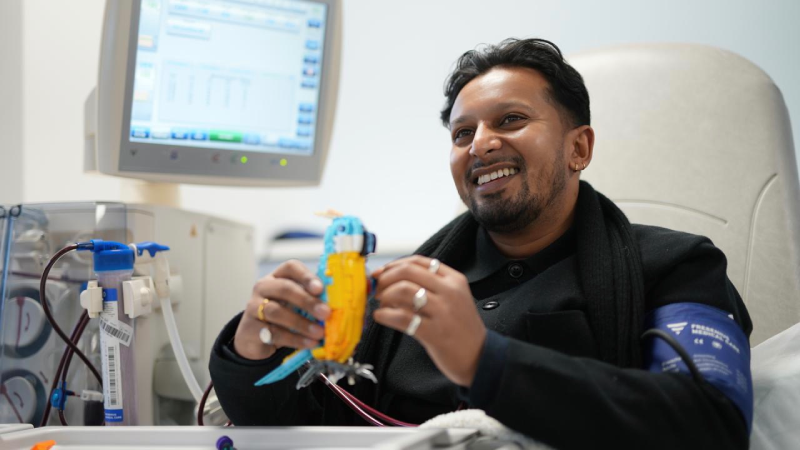
One of the reasons I feel it’s important to take part in research is because people of colour are often underrepresented. These results show why this is so important. I’m glad I was able to take part and I hope this will encourage others to do the same. People of colour in the UK are already more likely to be lacking vitamin D so the need for more focused research is key.
Sameer
SIMPLIFIED started in 2017 and was led from Cambridge University Hospitals NHS Foundation Trust (CUH) and the University of Cambridge. It involved patients from 55 dialysis centres, including over 200 participants in Cambridge.
Half of patients in the trial received normal care, while half were given an additional high dose of vitamin D every two weeks. Participants were then followed for several years until the trial completed in October 2025 to understand whether the treatment had any benefits.
I think it’s really important to put yourself forward for research. The fact that this trial used information that’s already collected as part of my care made it really easy to take part without really doing anything different.
Sameer
The study used data already collected as standard across the NHS, including the UK Renal Registry, to monitor participants following the trial. This innovative approach saved time and money while enabling a large number of people to take part in the trial.
The number of people living with kidney disease is rising, creating an urgent need for large-scale research to better understand how to slow disease progression and, for those who go on to develop kidney failure and require dialysis, improve survival, outcomes and quality of life.
Dr Smith
Dr Katie Vinen, UK Kidney Association President, said: "This is a very valuable dialysis trial and a credit to the investigators, clinicians and patients who made it possible in a key population who so value all progress in care.
“Large, randomised trials of this kind are essential to establish whether treatments improve survival and reduce serious complications. By testing high-dose vitamin D, SIMPLIFIED addresses an important practical question and demonstrates the value of national patient data in informing future care.
“SIMPLIFIED highlights the value of the UK Renal Registry in supporting research that can improve dialysis care and patient outcomes. Its contribution shows how data collected through routine care can help answer important clinical questions and build the evidence needed to guide treatment decisions.”
Shockingly, treatments for people with kidney failure have barely changed in the last couple of decades, so research into ways life could be improved for people on dialysis in particular is vital and most welcome. By pointing to where vitamin D supplementation may potentially be effective, for those in under-represented groups, the outcomes of the SIMPLIFIED study are beneficial. We now need more investment to develop these initial research findings further.
Fiona Loud, Policy Director at the UK’s leading kidney patient support charity, Kidney Care UK
The trial was funded by the National Institute for Health and Care Research (NIHR) and supported by the NIHR Biomedical Research Centre: Cambridge.
Professor Anthony Gordon, Director for NIHR's Health Technology Assessment (HTA) Programme, said: "Funding studies which aim to identity more effective and efficient treatments, while offering better outcomes for patients is one of our key aims. These findings provide vital evidence that will help shape the care dialysis patients receive. While this treatment won't help everyone, anything that can be done to improve survival rates - and the quality of life - for patients on dialysis is a huge benefit.
"For the past two decades, the NIHR has invested in high-quality research where it's needed most, helping to tackle the most urgent health and social challenges faced by communities and individuals across the UK."
Sameer’s story
In early 2020, Sameer unexpectedly woke up with pain in his legs which was so severe he was unable to walk. After trying to manage the pain himself for months, Sameer was admitted to hospital where he stayed for ten days.

Tests showed Sameer’s pain was the result of gout caused by stage 4 chronic kidney disease and that his kidneys were working at less than 20% of normal. Doctors found that Sameer’s kidneys were small – about half normal size – and suspect they may have been damaged by an infection during childhood.
With the help of medication, a controlled diet and a medical care plan, Sameer was able to return to normal life but knew that it was a matter of time until he would need to start having regular dialysis.
Being diagnosed with a severe, chronic disease in my 20s was a massive shock. I know I will have to live with this for the rest of my life and I want that to be as long as possible. I want to stay positive. I’ve really focused on learning and trying to optimise what I’m doing and how I’m living so I can keep living my life as well as I can.
Sameer
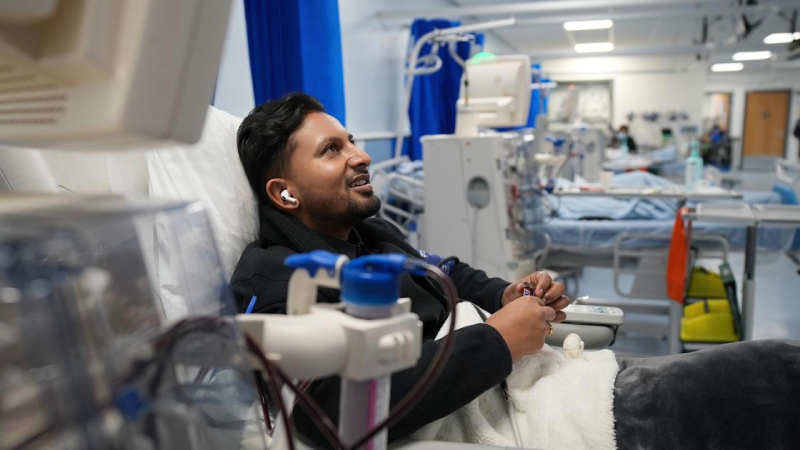
Sameer started dialysis in summer 2023 and the frequency has increased over time. He now receives two forms of dialysis: 9-10 hours of automated peritoneal dialysis every night at home and weekly four hours of haemodialysis at the Cambridge Dialysis Centre operated by CUH.
In order to receive dialysis, Sameer has undergone multiple surgeries to install ‘ports’ in his neck and stomach that allow dialysis machines to be connected to his body.
Sameer is still able to work but says dialysis impacts every part of his life.
With 10 hours of dialysis every day, sometimes it can feel like my life is just work and dialysis. Being on dialysis through the night affects your sleep and, if there’s anything you want to do with your time you have to plan it around your dialysis schedule.
I can travel but it’s very limited and there’s a huge amount of advanced planning – ordering medical supplies and making sure it arrives in time, as well as carrying excessive medical luggage myself – enabling me to dialyse while I’m there.
Sameer
Sameer joined the SIMPLIFIED trial in 2025. He was not one of the patients randomly allocated to take high-dose Vitamin D.
He said: “I’m aware of the stats around dialysis and I feel very lucky to still be here. I don’t feel completely healthy but at least I get to feel ‘normal’ some of the time. Obviously, I’m still always focused on getting a transplant as soon as possible and, once I get one, I’ll do my best to take care of it to ensure it lasts as long as possible.”
Sameer has been on the kidney transplant waiting list for over three years. He hopes to receive one soon, but knows he will likely need further dialysis and another transplant later in life.
When I get a transplant one of the first things I want to be able to do is to go swim in the sea. I can’t get my dialysis ports wet, so swimming just isn’t an option right now. I’d love to go somewhere where I could go snorkelling and be able to enjoy the water and not have to worry about dialysis supplies for once.
Sameer