
Addenbrooke’s clinicians have developed a digital tool to help parents thrown into shock, fear, and weeks of uncertainty when their critically ill child is rushed into intensive care.
They have created an app called My ‘PICU Story’, which provides instant, practical help and answers to pressing questions, in addition to support for stressed parents in danger of sliding into long-term mental illness.
Helping with development are parents of children brought into the Trust’s Paediatric Intensive Care Unit (PICU) due to trauma through accidents, cancer, post-surgical complications, and severe infection.
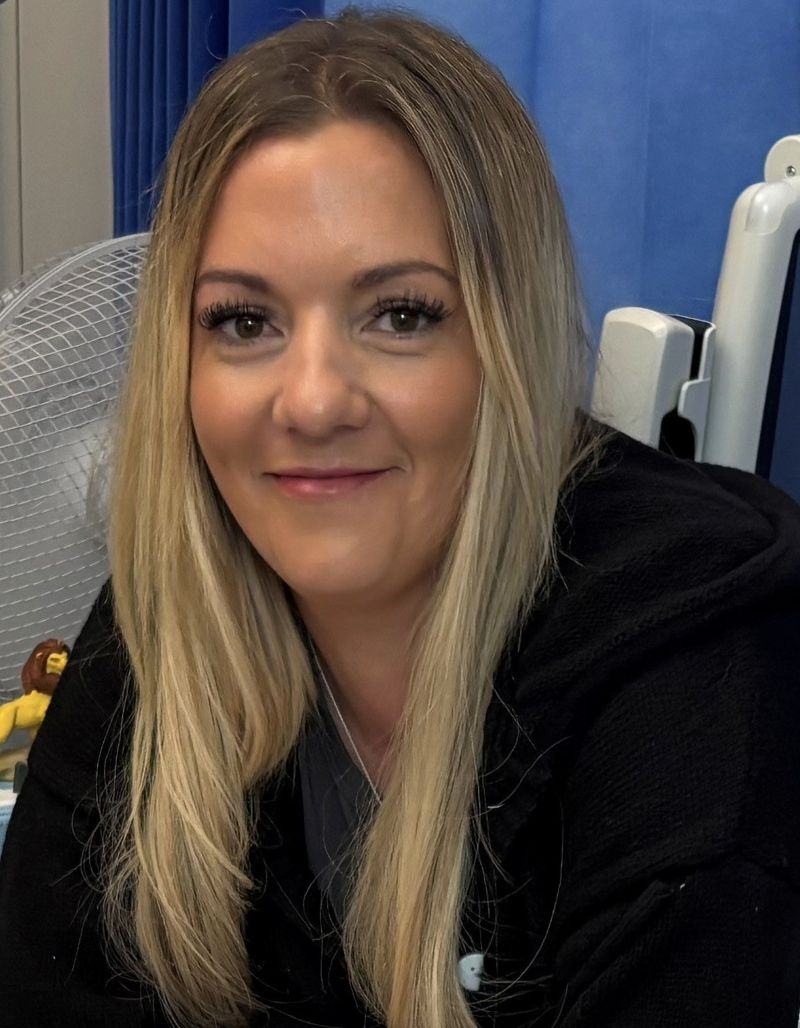
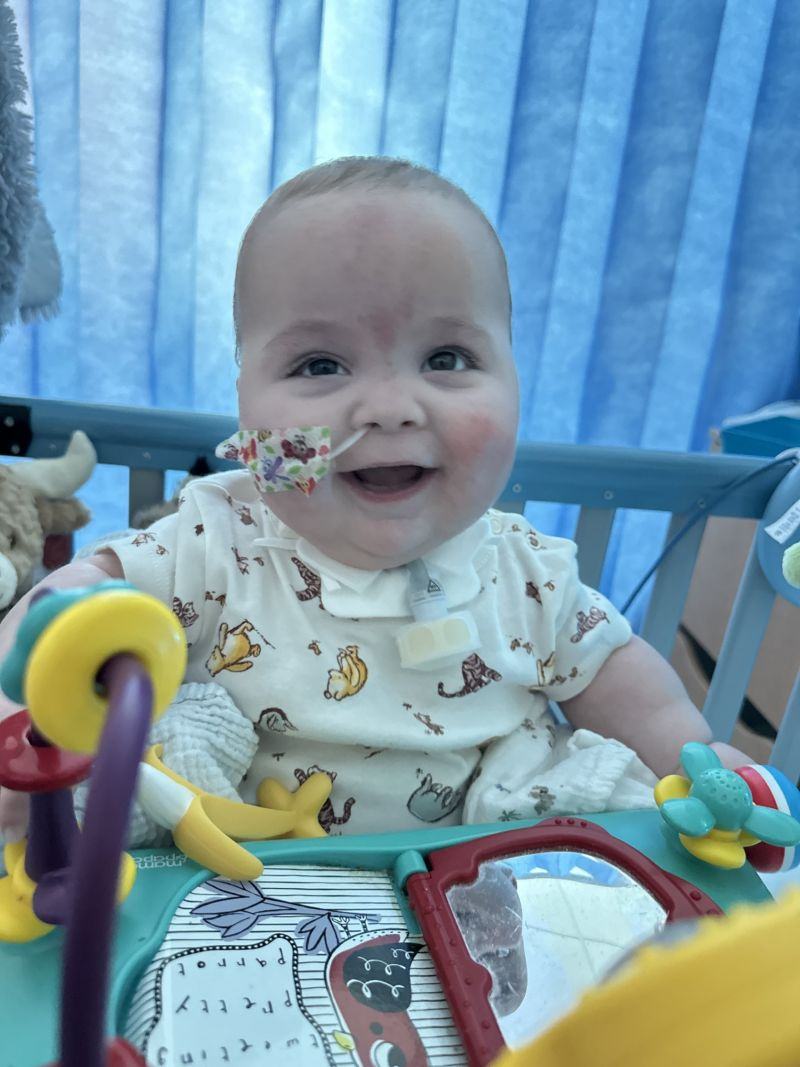
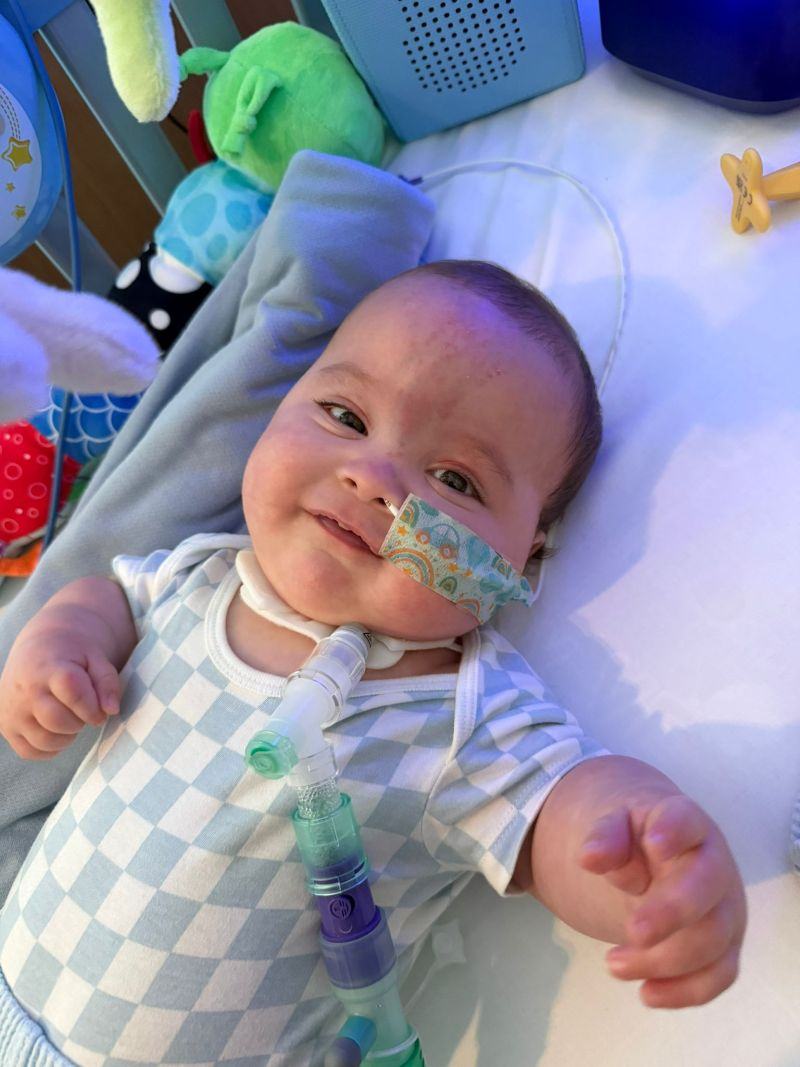
Among those who have helped with feedback is Claire Wroe from Northstowe, (pictured above), whose seven-month-old son, Teddy, (pictured below) has finally returned home after spending most of his life in PICU.
Claire, whose story can be found at the end of this article, said:
It’s just brilliant – as are the staff at Addenbrooke’s who have saved Teddy’s life several times.
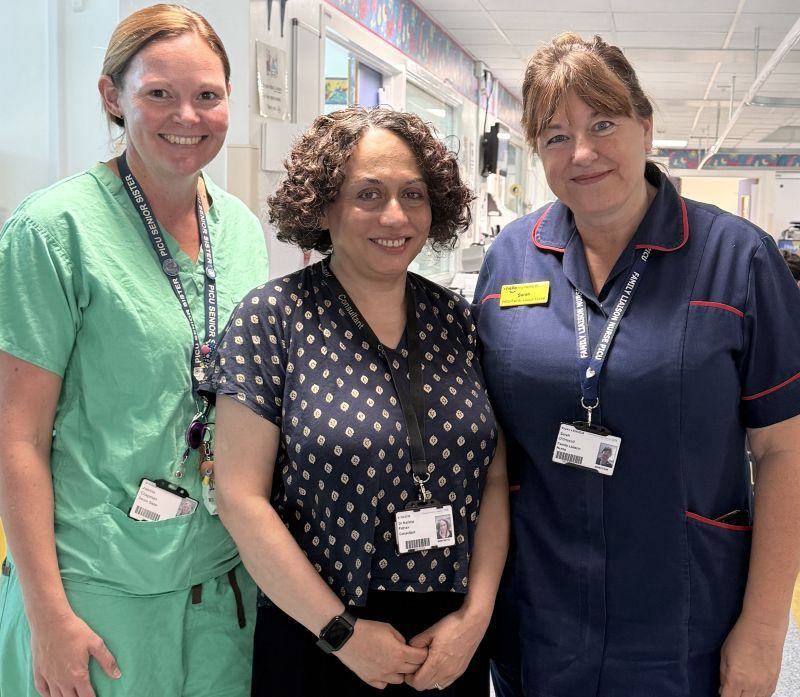
Project lead is PICU consultant and University of Cambridge Associate Professor, Dr Nazima Pathan, who is pictured above with colleagues (left) Senior Sister Joanne Chapman and (right) Family Liaison Nurse, Sarah O'Driscoll who helped with the app
Dr Pathan explained that around 17,000 children are treated in intensive care nationally each year, impacting around 34,000 parents and caregivers. She said:
The stress of a PICU admission doesn’t end when the child gets better. A third to half of parents go on to develop post-traumatic stress, anxiety, or depression. It is heartbreaking to families and costly to the wider economy with an estimated impact of around £14,000 per parent each year, and £1100 in direct healthcare costs as a result of the need for support from GPs and community mental health services.
This equates to around £15m a year for treating the 30-50 per cent of parents who go on to develop significant PTSD after their child’s PICU admission.
Dr Nazima Pathan

My PICU Story is described as “the first co-designed digital support tool for parents of critically ill children”. It is two years into the making with the help of doctors, nurses, psychologists, counsellors, parents, Addenbrooke’s Charitable Trust (ACT) and RJDM, a digital media and animation company.
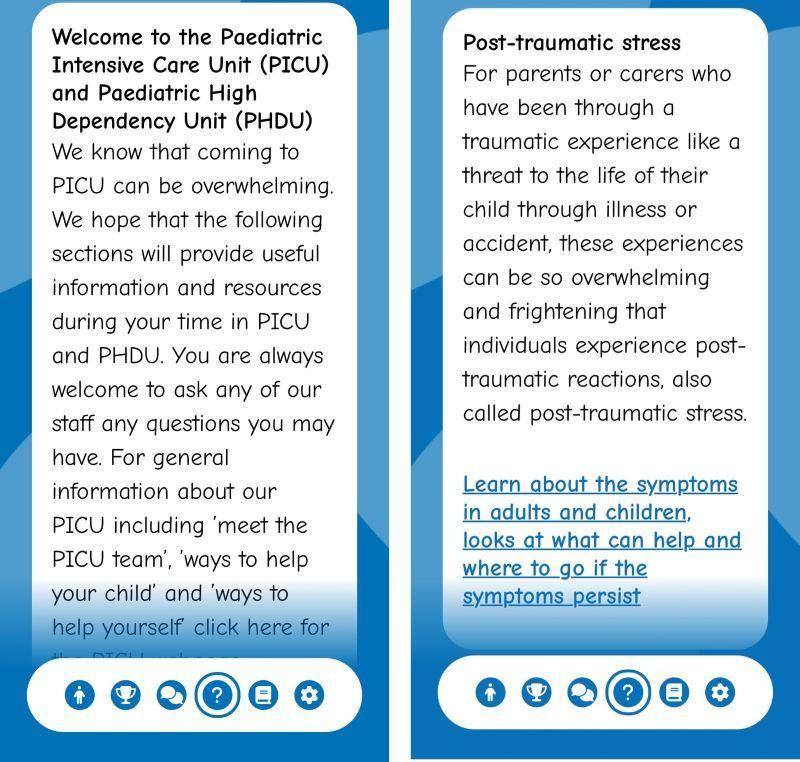
The app provides cognitive-behavioural therapy (CBT) informed coping and sleep tools, and exercises that help to calm the nervous system and manage overwhelming emotions like stress and anxiety. There are also opportunities for journalling, sibling resources, and plain-English explanations of intensive care.
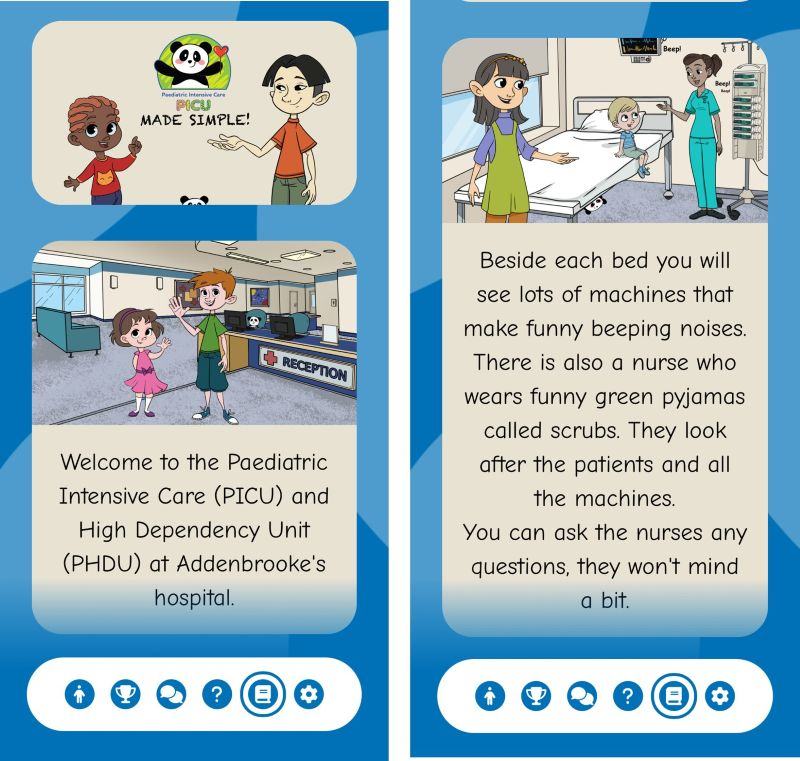
There are sections where parents can tell staff about their child, post messages and pictures to a wall so others can send reactions and stickers, a Q&A section, and an illustrated story to read to children about PICU written by PICU senior sister Clare King, which helps siblings understand what is happening when a child is in the PICU.
There is information on accommodation, visiting, parking, PICU facilities, and answers to burning issues such as “can I see my child straight away?” and “can I touch my child?”
Its ongoing development dovetails with the Government’s 10-year plan which includes increasing prevention and digitising services and the Trust’s own strategic priorities, which includes harnessing research and innovation to improve patient outcomes.
Dr Pathan said:
The next step is to see what parents find helpful and to integrate some personalised support for mental health that they can take into the community to prevent their stress and trauma becoming debilitating.
By reaching parents early, we hope in the longer term, we will be able reduce dependency on GP and community mental health services by parents going through the trauma of a PICU admission.
Though there are some diary apps licensed for use as journal and communication tools in the PICU and NICU setting, ‘My PICU Story’ offers more. It is a scalable, evidence-based community mental health intervention that turns intensive care into a point of prevention, not the start of another illness.
Dr Nazima Pathan
ACT CEO Shelly Thake said:
Having a really sick child is every parent’s worst nightmare and I know our supporters will be proud that the charity is supporting the development of such a practical source of help.
Shelly Thake
My PICU Story it is available for download on Apple and Google play store. Follow this link (opens in a new tab) to support Addenbrooke’s Charitable Trust.
Claire’s, James’ and Teddy’s story
There were many dark moments for Claire and James Wroe in the seven months baby Teddy was in Addenbrooke’s Paediatric Intensive Care Unit (PICU) - but a thoughtful telephone app designed by clinicians helped to ease some pain.
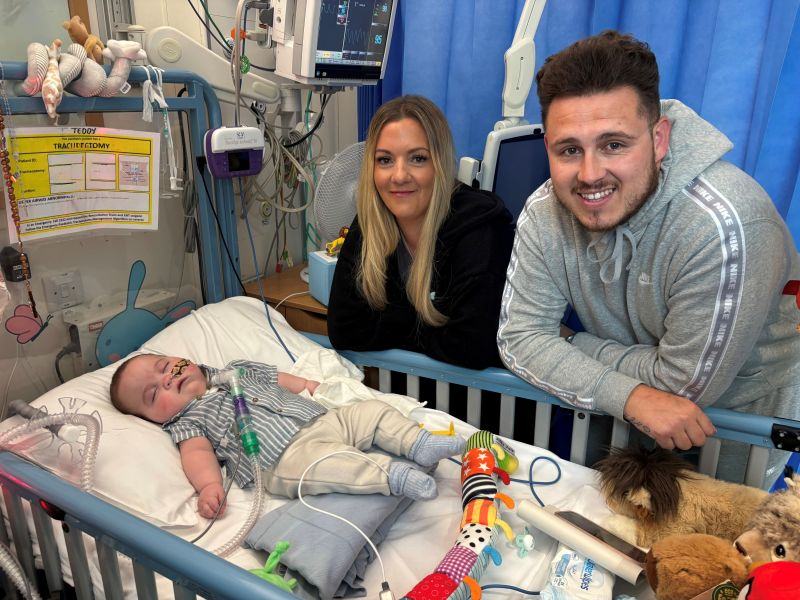
Teddy, who was born with an ultra-rare genetic condition known for affecting bone growth, was rushed into the Emergency Department in November last year when he developed unexpected breathing problems.
He was on a ventilator for five days, diagnosed with a collapsed airway, and by March needed a tracheostomy to breathe through the neck. His problems were compounded by seizures - and then an MRI confirmed he had brain damage.
In the following months clinicians saved his life several times, but as time in PICU passed, he gained weight and stabilised enough to go home - an exciting but daunting prospect for mum and dad given the ongoing care he needs.
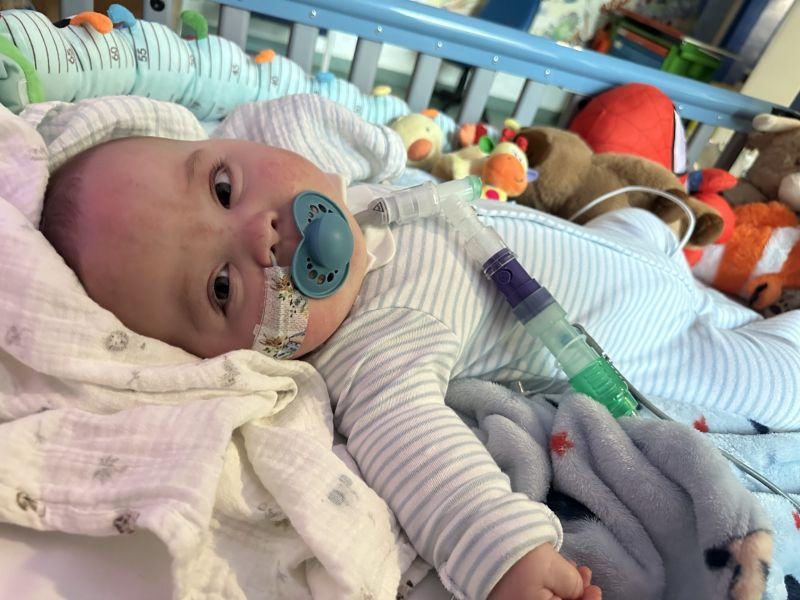
Teddy, who now sleeps in a special cot in the family lounge, needs 24-hour support by his parents supported by a live-in nurse and, once well enough to go out in a buggy, will need an emergency ventilator, oxygen, a feeding pump and medication.
Claire, who says a more suitable house is now a priority, recalled that while the couple had much on their minds when Teddy was admitted, the My PICU Story app helped from the outset.
She was, at time when she could barely think straight, able share an animation with her three children from a former marriage, Riley, 13, Charlie, 12, Alfie, 11, who were worrying at home. It explains, in simple terms, what the PICU is and how it helps babies like Teddy.
And as the days turned to months Claire found other features – designed and improved with the help of PICU clinicians and parents like her - that made tough times more bearable.
The app enabled her to contact the nursing team during the few hours she and James snatched away from the unit for food or sleep. They replied with reassuring messages, stickers, and pictures of Teddy.
She was able to share those with James when he was at work, and he in turn could update his seven-year-old son, George. A nearby Sick Children’s Trust flat at Acorn House – featured in the app - served as a temporary sanctuary for the couple.
Claire, who gave up her job as a child minder to stay at Teddy’s side, explained:
We spotted signs for My PICU Story as soon as we arrived and, while we had little idea what it was, we soon found it useful. I would recommend it to any other parent who found themselves in similar circumstances.
Finding yourself with an extremely sick child is daunting and anything that can help is very welcome. There are still bits of it which I haven’t explored, but it’s reassuring to know it’s there if needed.
The care at PICU has been outstanding, and the staff go out of their way not just for Teddy, but for the parents too. I will never be able to thank them enough for what they have done
Coming home is like a new beginning for Teddy, since he has been in hospital from virtually the time he was born. He will always be vulnerable to illness, but he is growing, putting on weight, happy - and we love him.
Claire Wroe
Digital innovation, family-centred care and sibling support are key parts of the vision for Cambridge Children’s Hospital, where the Paediatric Intensive Care Unit will be based when the new hospital opens. Construction is due to start in 2027 for three years. You can find out more here Cambridge Children's (opens in a new tab)