
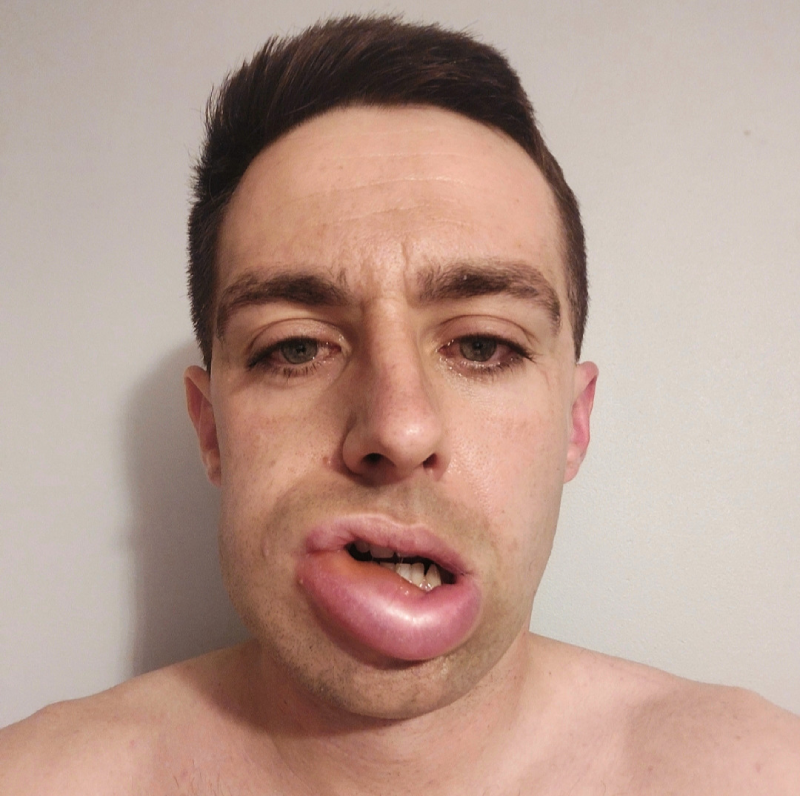
Jack Cope, age 30, has lived with hereditary angioedema (HAE), a condition that causes severe, unpredictable swelling, since birth. After years of struggling to control the condition, he is now trying a new treatment as part of a research trial at Addenbrooke's.
Jack, who is from Bedford and works as a joiner, has experienced unpredictable, painful attacks since a young age. These attacks can be life-threatening, causing severe swelling all over his body, including in his throat, stomach and face.
Jack’s potentially life-threatening episodes have worsened over time and frequently lead to visits to A&E:
Sometimes, I wake up in the morning and my face or throat are swollen and I’ll be on the floor being sick and just in agony.

Jack is also mindful of the impact this has on his partner, Chloe:
“Chloe basically becomes my carer. One night, I woke up and felt like my face and throat were swollen so I woke Chloe. She flicked on the light and her face just dropped because I was swollen so much.
“We were able to get to the hospital in time but if I hadn’t woken up I wouldn't be here.”
Jack has tried all available treatments to prevent attacks of HAE, but none have worked for him, which is why he is excited to be trying something new thanks to an international trial being supported by the National Institute of Health and Care Research (NIHR).
Addenbrooke's has recruited more participants to the trial than any other hospital thanks to the efforts of Dr Padmalal Gurugama, and his colleagues.
If this can help me and stop anyone else from having to go through what I have, it’s a no brainer
Jack
Before the trial, Jack had to go through a challenging six month period with no medications to help manage his illness. Despite this, he is grateful for the chance to take part in research that could offer a treatment that works for him, and is encouraging others to explore opportunities for research to help them.
“I can’t help but think about what my mum, grandma and others have had to go through. Years ago, when my grandma had an episode and her tongue swelled up, she was able to get to the hospital, however, when she was unpacking, she stopped breathing and her heart stopped beating. She was brought back with a defibrillator and spent time in intensive care on a ventilator."
We’ve already come a long way and that’s because of research, so my mindset is that if they can go through all that, then there's no reason why I can't take part in this trial.
Jack
In total, around 24,000 people took part in over 875 research studies at Cambridge University Hospitals NHS Foundation Trust last year.
Across the East of England over 76,000 people took part in more than 1,000 NIHR-supported research studies.
Jack is encouraging others to get involved in research through Be Part of Research - a free service which makes it easy to find opportunities to take part in NIHR research.
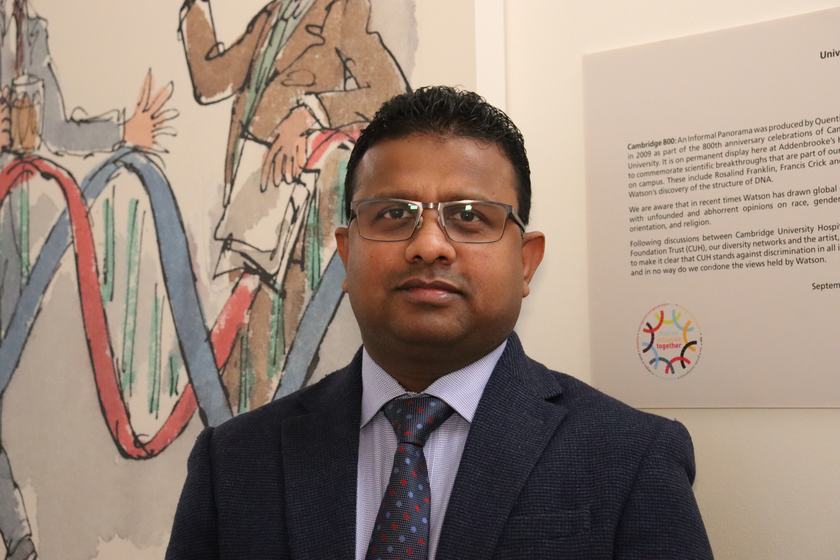
Ruth Hudson, Strategic Development Director at NIHR Research Delivery Network in the East of England, said:
“Research would be impossible without those like Jack who volunteer, and we owe a debt of gratitude to the many people who took part over the last year. These figures also highlight the exceptional dedication of our health and care workforce across the East of England."
The NIHR Research Delivery Network helps health and care organisations deliver research across the UK. This increasingly includes community settings, reflecting the government’s ambition to shift healthcare from hospitals into local communities.
In the East of England, this included:
- GP practices: 10,112 participants in 48 studies
- Schools: 2,330 participants in 6 studies
- Care homes: 207 participants in 6 studies
The majority of research continues to be delivered in hospitals with 57,959 participants in 961 studies in the East of England.