Cambridge University Hospitals (CUH) is marking one year of successfully progressing its detailed plan to halve the Trust’s direct carbon emissions by 2032, with strong progress made through reducing waste and a suite of decarbonisation projects.
CUH launched its first Green Plan almost five years ago, resulting in annual financial savings of £460,000 and a reduction in direct carbon emissions by 13% — exceeding its original target by 3%.
Watch how staff at CUH are reducing their impact on the environment
Link: https://youtu.be/KaCrJov_agU
Climate change is already affecting hospitals across the UK. Rising temperatures, heavier rainfall and increasing pressure on global supply chains are creating new challenges for healthcare organisations.
Launched last year, the Trust’s Green Plan 2 is a three-year initiative on how CUH will achieve Net Zero by 2045, significantly reducing costs and strengthening resilience. It aims to increase the Trust's reduction in direct carbon emissions to 22% by the end of 2027 and save more than £500,000 every year.
The Green Plan 2 is an essential part of CUH’s recently launched 2026-2031 strategy, for a healthier life for everyone through care, learning and research.
One notable saving has been drastically reducing the losses of nitrous oxide (N₂O), a particularly harmful greenhouse gas used in healthcare. While nitrous oxide will continue to be used in anaesthesia, the Trust replaced an ageing pipe network with portable cylinders. It is estimated that this saved the equivalent of driving a petrol or diesel car around the world 330 times.

Upcoming long-term carbon reduction projects include upgrading the Frank Lee Centre and nearby residential buildings with a new heat-pump powered energy centre, replacing inefficient old gas-fired steam boilers. The Trust is also planning to replace its current petrol and diesel car fleet with electric and hybrid vehicles, along with installing more LED lighting and solar panels.
At the core of the Green Plan 2 are three principles: life cycle thinking (the environmental impact of an item), connecting budgets (making long-term financial choices today to reduce carbon emissions to ultimately save money) and devolving responsibility (ensuring that everyone understands they can make choices to reduce carbon emissions).
Addenbrooke’s Hospital first opened its doors in 1766 and we need to act now to ensure we’re still serving our community well for the next 250 years.
Carin Charlton, Net Zero Lead and Director of Capital, Estates and Facilities Management
She adds: “I’m incredibly proud of what we’ve achieved so far. The Green Plan 2 is all about ensuring that we are resilient and responsible towards the environment. I’d like to thank our staff for their commitment and for taking practical steps to reduce our carbon emissions and help build a stronger healthcare service for future generations.”
Around 300 members of staff are part of the Trust’s Green Champions community. The network aims to reduce consumption within the hospital, ultimately reducing carbon emissions.
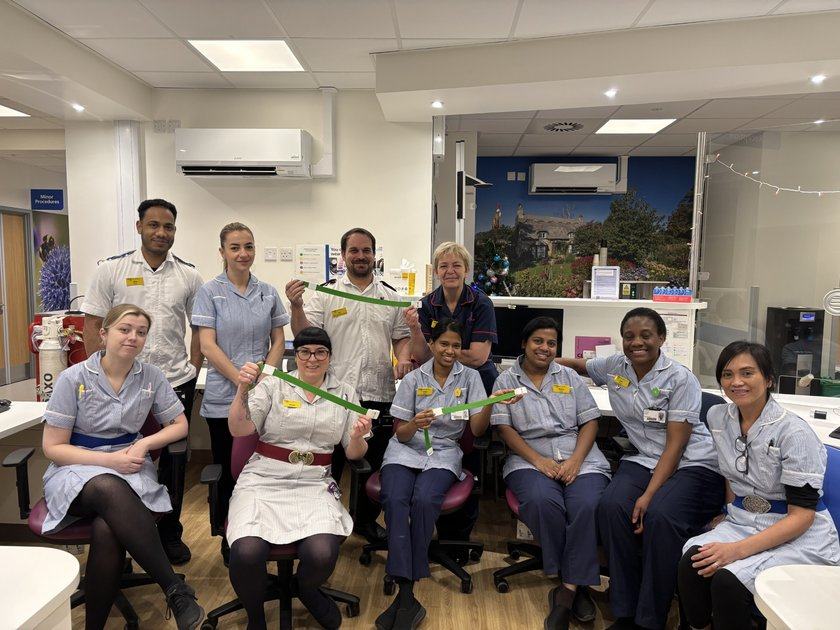
Some recent successes include reducing the number of single-use gloves by one million pairs — saving £40,000 in six months — and reducing single-use tourniquets with reusable alternatives.
Find out more about CUH’s Green Plan 2 and upcoming projects.