

Introduction
A perianal infection is an infection of the area surrounding or involving a person’s anus. This may lead to pain and inflammation, and in severe cases an abscess may form.
If a patient's neutrophil (a type of white blood cells) counts are low for 2 weeks or more, they are at an increased risk for perianal infections. For example, a patient undergoing treatment for acute leukaemia.
Perianal infections can have a negative impact on a patient's quality of life, and cause delays in treatment. Therefore, prevention is extremely important in ‘at risk’ patients.
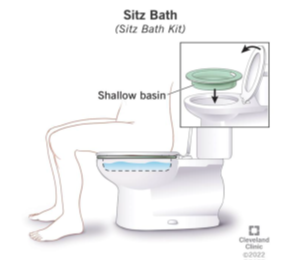
Sitz baths help to keep the perianal area clean and have been proven to help reduce the incidence of perianal infections in acute leukaemia patients. The basin is placed within the toilet, just below the rim.
A Sitz bath is a warm shallow bath for a patient to sit in. 10mL antiseptic (usually 10% iodine) is added to every 1L of warm water.
It is recommended that this is done for ten minutes twice a day, in the morning and the evening. It is important to keep the perianal area clean and dry in between baths.
A Sitz bath may look something like this:
It is advisable to bathe, as recommended, from the start of treatment, until neutrophil counts recover after the final cycle of chemotherapy.
Frequently asked questions
Where do I get a Sitz bath basin?
A Sitz bath will be provided for you by one of the nurses looking after you at CUH. It is then yours to take home. If you have not been provided with one, please contact your clinical nurse specialist or the nurses on the Haematology Day Unit or the wards.
What are the potential side effects of using a Sitz bath?
- Burns may occur if the water is too hot. Ensure the water is warm/lukewarm, but not hot, aiming for about 37 to 39 degrees Celsius.
- Rarely, patients can have allergic reactions to the iodine in the Sitz bath. Any new lesions should be reported to your medical team.
- If you are allergic to iodine, please let the medical team know so that they can advise on a different antiseptic to use in your Sitz bath.
What else can I do to reduce risk of a perianal infection?
- In between Sitz baths, keep the skin around the anus clean and dry.
- Avoid constipation: You can do this by drinking plenty of water and gentle exercise. The use of laxatives can help to avoid or treat constipation.
- Whilst you are neutropenic do not use suppositories or have anal sex, as passing anything through the anus can lead to small tears in the skin which may become infected.
If you have any further queries surrounding Sitz Baths, please speak to the ward nurses looking after you, or leave a voicemail for the acute leukaemia CNS team on 01223 596279 (Option 3).
We are smoke-free
Smoking is not allowed anywhere on the hospital campus. For advice and support in quitting, contact your GP or the free NHS stop smoking helpline on 0800 169 0 169.
Other formats
Help accessing this information in other formats is available. To find out more about the services we provide, please visit our patient information help page (see link below) or telephone 01223 256998. www.cuh.nhs.uk/contact-us/accessible-information/
Contact us
Cambridge University Hospitals
NHS Foundation Trust
Hills Road, Cambridge
CB2 0QQ
Telephone +44 (0)1223 245151
https://www.cuh.nhs.uk/contact-us/contact-enquiries/