
Introduction
This leaflet provides information for people with Type 1 Diabetes (on MDI) who already carbohydrate count and use an insulin to carbohydrate ratio, on how to manage meals that are high in fat and/or protein.
Understanding the impact of fat and protein
While carbohydrates remain the biggest influence on your blood glucose levels, significant amounts of fat and protein can also affect them and lead to unpredictable readings if not considered. Eating in restaurants, pubs or cafes, or having take-aways pose a challenge to carbohydrate counting accurately. It is not unusual to see higher glucose levels after these meals, and these meals may also be higher in fat and protein compared to home cooked meals.
- Fat:
- When eaten with carbohydrates, fat slows down how quickly food leaves your stomach. This can cause a delayed rise in your blood glucose levels, often starting several hours after eating and potentially lasting for 8 hours or longer.
- High-fat meals can also make your body more resistant to insulin and can increase glucose production by your liver. This means you might need more insulin than you would for the carbohydrate content alone.
- Result: You might see a low blood glucose reading shortly after the meal, followed by high readings for many hours, especially overnight if the high fat/protein meal is the evening meal.
- Protein:
- Protein foods include meat, fish, seafood, eggs, dairy, beans and lentils, tofu, soya products, mycoprotein and other vegetarian protein sources.
- Protein slows down digestion and can contribute to a delayed rise in your blood glucose levels.
- In larger quantities (40-75 grams or more – see below), protein can be converted into glucose by the liver and kidneys, leading to an increase in blood sugar.
- A meal high in both fat and protein can have an additive effect, causing a more significant and longer-lasting rise in glucose levels.
- The effect of protein can vary depending on whether it's eaten with or without carbohydrates.
Important first steps
It's crucial to remember that everyone responds differently to fat and protein. There is no single "best" way to manage these meals. Accurate carbohydrate counting remains the most important skill.
Before considering extra insulin for fat and protein, make sure:
- Your carbohydrate counting is accurate. Use food labels, weighing scales and apps like Carbs and Cals or Nutracheck to help you.
- Your insulin-to-carbohydrate (I:C) ratios are correct for different times of the day.
- If you are unsure about your insulin-to-carbohydrate ratios, please refer to the DAFNE course (Dose Adjustment For Normal Eating course) step-wise approach if you are a DAFNE graduate; or contact the diabetes educator team for advice.
What do we mean by high fat and protein?
These are general guidelines. Your individual response may vary.
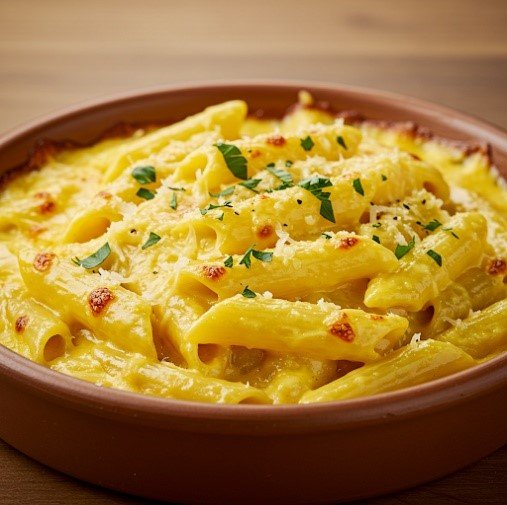
- High Fat: 30 grams of fat or more in a meal.
Example below: cheesy pasta
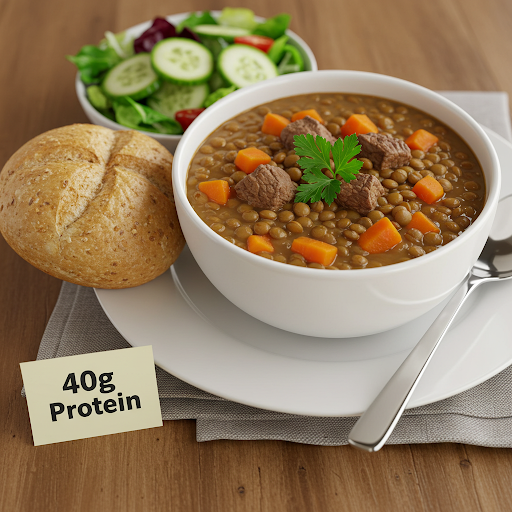
- High Protein: 40 grams of protein or more in a meal containing carbohydrates.
Example below: beef and lentil stew
Apps/books such as Carbs and Cals and Nutracheck can help you quantify the fat and protein in your meals.
Strategies for managing high fat/protein meals
The strategies below are not to be used together; consider trialling one or the other.
Strategy 1: Splitting the injection
- Take half of your calculated insulin dose (based on the carbohydrate content) before the meal.
- Take the remaining half of your calculated insulin dose 1-2 hours after starting to eat.
- Example: For a pizza with 120g of carbohydrates, if your I:C ratio is 1:10g (12 units total), you might take 6 units before eating and another 6 units 1-2 hours later.
- Some people may find a 60% upfront dose and 40% delayed dose may work better for them; this may depend on the meal itself.
- Example: For a Chinese takeaway containing 120g of carbohydrates, if your I:C ratio is 1:10g (12 units total), you might take 7 units before eating and another 5 units 1-2 hours later.
Strategy 2: Consider additional insulin (add-on bolus for fat/protein)
- For high-fat and / or protein meals, you might consider taking an additional 20-40% of your pre-meal carbohydrate dose, given 1 hour after the start of the meal.
- Example: for an Indian takeaway containing 100g of carbohydrates, if your I:C ratio is 1.5:10g (15 units in total), you might take 15 units before eating and another 3 units 1 hour later. 18 units in total delivered (20% extra as an add-on bolus). Always start with a smaller add-on dose of 20%; gradually adjust this percentage based on your observed patterns.
- Don’t forget to add on a correction dose if your glucose level is above target before the meal.
- Example: For the same pizza (120g carbohydrates, 57g fat), if your carbohydrate dose is 12 units, you could take the 12 units before eating and then an extra 4 units (12 x 0.35) 1 hour later, for a total of 16 units.
Strategies for managing high protein and carbohydrate free meals
Examples: steak and salad; a large fry-up without toast or hash browns; prawn and cheese omelette etc.
Example below: A piece of steak
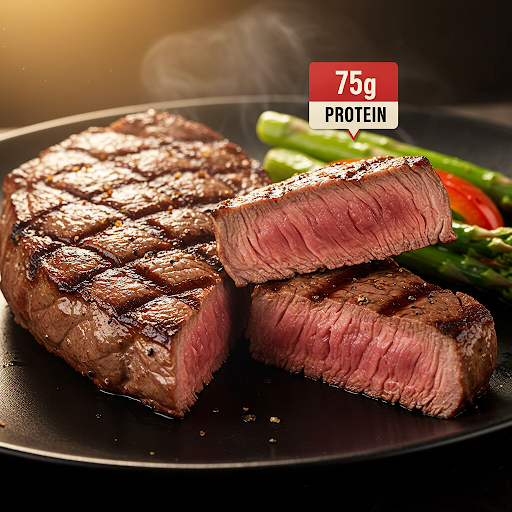
- If a high protein low carbohydrate meal is eaten, your glucose levels may rise.
- The more protein you eat, the greater the effect on your glucose levels.
- You may want to count a high protein carbohydrate free meal as 10g carbohydrate.
- Calculate your insulin dose using your usual insulin to carbohydrate (I:C) ratio.
- If your glucose remains above target at 4-5 hours post meal, you can gradually increase the amount of carbohydrate that you count for high protein carbohydrate free meals by 5g increments.
- A half unit insulin pen may be required for this. Please ask the diabetes educator team if you feel you would benefit from a half unit pen.
- If your glucose is in target before a high protein low carbohydrate meal, you might want to consider giving the insulin after the meal as opposed to before the meal.
Using Continuous Glucose Monitoring (CGM) or Frequent Blood Glucose Monitoring
If you use a CGM or frequently check your blood glucose, pay close attention to your glucose trends after eating high-fat and/or high-protein meals. This can help you understand your individual response and whether the strategies you are using are effective.
- Look at your sensor trace: Does it show a delayed rise several hours after the meal? It is recommended to check your glucose level at 3 and 5 hours after the meal.
- Rule out other causes of above target glucose levels; e.g. are you confident about your carbohydrate counting?
- Did the splitting of the insulin dose help? (strategy 1)
- Did the additional insulin prevent a significant post-meal spike? (strategy 2)
- Look for a pattern: if you see a pattern of above target glucose levels at 3 and 5 hours after a high fat/protein meal, you may need an add on protein/fat insulin dose.
Important considerations
Individual response: Remember that everyone reacts differently. What works well for one person might not work for another.
- Trial and error: Managing high fat/protein meals often involves some trial and error to find the best approach for you.
- Timing is key: The timing of any additional insulin is crucial and can significantly impact your blood glucose levels.
- Risk of hypoglycaemia: Be cautious when trying new strategies, as taking too much insulin or taking it too early can lead to low blood glucose levels (hypoglycaemia).
- Talk to a diabetes educator/dietitian: we can provide personalised advice and help you develop a safe and effective management plan.
Diabetes team contact numbers
Please contact the team if you need advice regarding your diabetes. You can leave a voicemail on one of the numbers below (the answerphone is checked regularly Mon-Fri office hours)
Diabetes specialist nurses: 01223 348790
Diabetes specialist dietitians: 01223 348769
Alternatively, you can use the Diabetes eConsult service
To contact a diabetes educator, please use MyChart (preferred route of contact)
• Click on Messages
• Then click "ask a question"
• Then click "New question for your clinical team"
• Choose the appropriate option then choose Diabetes Educator
You must ensure the subject of the email includes: full name, date of birth and hospital number.
All messages are checked: Mon/Wed/Fri. It is for non-urgent enquiries; allow up to 5 days for a reply if using the eConsult service. Please ensure you have uploaded your pump to Glooko (if applicable).
We are smoke-free
Smoking is not allowed anywhere on the hospital campus. For advice and support in quitting, contact your GP or the free NHS stop smoking helpline on 0800 169 0 169.
Other formats
Help accessing this information in other formats is available. To find out more about the services we provide, please visit our patient information help page (see link below) or telephone 01223 256998. www.cuh.nhs.uk/contact-us/accessible-information/
Contact us
Cambridge University Hospitals
NHS Foundation Trust
Hills Road, Cambridge
CB2 0QQ
Telephone +44 (0)1223 245151
https://www.cuh.nhs.uk/contact-us/contact-enquiries/