

An information leaflet for children awaiting an assessment under the Ketogenic Diet Service
This leaflet is designed for families with children, who have been diagnosed with drug-resistant epilepsy and are either on the waiting list for Ketogenic Dietary Therapy (KDT) or KDT has been recommended as a treatment option for your child.
Healthy Eating – Reduction in sugar
A healthy, balanced diet with a reduced sugar intake provides the essential nutrients for growth, whilst helping to stabilise energy and glucose (sugar) levels. While a low sugar diet is less likely to reduce seizures compared to a full ketogenic diet, some families have found this dietary advice beneficial and it may reduce seizure risk for some people with epilepsy. Please note, this is not a ketogenic diet or a medically supervised diet.
A low sugar diet can be followed before starting a ketogenic diet, as it does not need to be supervised by a specialist dietitian. This information sheet suggests changes to make before considering a ketogenic diet, helping assess how your child adapts to dietary changes and whether a full ketogenic diet would be feasible. These changes are the first steps towards preparing for a ketogenic diet. This advice may also be beneficial for children who would find a full ketogenic diet too restrictive to follow strictly.
What does a balanced diet look like?
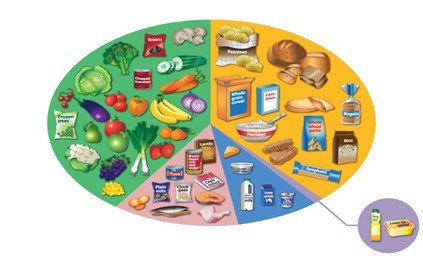
Fruit and Vegetables
- Aim for 5+ portions of fruit and vegetables daily; making up just over 1/3 of your diet.
- Choose from fresh, frozen, tinned, or dried fruit
Tips to reduce sugar:
- Fruit juice & smoothies should be avoided - Ideally swap fruit juice or smoothies for a milkshake or sugar-free squash with water.
- If choosing tinned fruits, choose tinned fruit in juice or water, instead of tinned fruit in syrup. Pour away the juice/syrup before serving.
- No more than 1 portion of dried fruits per day = ½ child sized handful
- Reduce garden peas and sweetcorn in favour of other green vegetables (e.g., petit pois, broccoli and green beans)
Starchy Carbohydrates
- Choose wholegrains, wholemeal or higher fibre varieties, instead of white varieties.
- These include wholemeal bread, pasta, rice, chapattis, noodles, wholegrain cereals & root vegetables, such as sweet potatoes, yams, plantain & cassava.
Tips to reduce sugar:
- Choose low sugar varieties of cereals such as Weetabix, Shredded Wheat, Ready Brek, Shreddies Original, porridge oats, bran flakes & no sugar muesli. Avoid cereals that are sweetened, frosted, chocolate flavoured or honey flavoured.
Choose wholegrain breads such as wholemeal, granary, seeded, grains and rye. Avoid white bread, even swapping to 50:50 / best of both is a good first step.
Dairy and alternatives
- Milk, cheese, and yoghurt are good sources of protein, some vitamins and calcium, which help keep bones healthy.
- If following a dairy free diet, ensure that dairy free alternative products are fortified with calcium to support bone health.
Tips to reduce sugar:
- Choose plain natural yoghurts, adding chopped fruit or sugar-free flavour drops or low sugar flavoured yoghurts. Avoid flavoured yoghurts or yoghurts with added chocolate toppings, i.e., Muller Corners.
- Choose homemade milkshakes made with whole/full-fat cow’s milk or unsweetened milk alternatives with milkshake powders, fruit or sugar-free flavour drops.
Sweeteners
Artificial sweeteners can be helpful to sweeten food & drink, replacing sugar.
Sweeteners, sugar-free syrups & flavour drops come in a range of forms & flavours. They can be useful instead of sugar to sweeten drinks, yoghurts, milkshakes or cereals. Sugar-free syrups can be added as toppings to pancakes, waffles or cereals.
High Sugar Food & Drink – To Avoid & Useful Alternatives
- Sugar, sweets, food & drinks high in sugar should be avoided & swapped for the alternatives (listed below), as much as possible.
- There are many ways added sugar appears on food labels: sucrose, glucose, fructose, maltose, fruit juice, molasses, hydrolysed starch, corn syrup, honey.
| Foods/Drinks to avoid – High sugar | Foods/Drinks - Low sugar alternatives |
|---|---|
| Foods/Drinks to avoid – High sugar Tinned fruit in syrup or light syrup |
Foods/Drinks - Low sugar alternatives
Tinned fruit in juice or water Fresh or frozen fruit |
|
Foods/Drinks to avoid – High sugar
Biscuits Cakes Cake Cereal bars Doughnuts Muffins |
Foods/Drinks - Low sugar alternatives
Crackers Breadsticks Rice cakes Crumpets Pancakes Crisps Nuts |
|
Foods/Drinks to avoid – High sugar
Chocolate Sweet |
Foods/Drinks - Low sugar alternatives
Plain popcorn Sugar-free mints Yoghurt-coated nuts or yoghurt-coated fruit - limited to ½ child’s handful of dried fruit |
|
Foods/Drinks to avoid – High sugar
Split-pot yoghurts High sugar yoghurts |
Foods/Drinks - Low sugar alternatives
Plain yoghurt Low sugar yoghurts Can add fruit toppings or sugar-free sweetener to plain yoghurts to sweeten to taste, if needed |
|
Foods/Drinks to avoid – High sugar
Sugary pudding Pudding pots |
Foods/Drinks - Low sugar alternatives
Plain rice puddings No added sugar angel delight Sugar free jelly Homemade milk puddings made with sweeteners |
|
Foods/Drinks to avoid – High sugar
Jam Marmalade Lemon curd Honey Syrup / Treacle |
Foods/Drinks - Low sugar alternatives
Reduced sugar jams or marmalades Sugar-free syrups Nut butter Soft cheese Hummus |
|
Foods/Drinks to avoid – High sugar
Sugary drinks: Cola, Fanta, lemonade & fizzy drinks High-juice Added sugar squash Fruit juice or smoothies |
Foods/Drinks - Low sugar alternatives
Sugar-free or no added sugar squash Sugar-free flavoured water Sugar-free ‘Diet, Zero or Slimline’ fizzy drinks |
|
Foods/Drinks to avoid – High sugar
Drinking hot chocolate Horlicks Ovaltine |
Foods/Drinks - Low sugar alternatives
Cocoa-powder with sweetener Light/lighter instant hot chocolate Warm milk with sugar-free syrups or flavour drops |
|
Foods/Drinks to avoid – High sugar
Sugar: White, brown, demerara, muscovado, glucose/sorbitol sweeteners (sucron, fructose, fruisana) |
Foods/Drinks - Low sugar alternatives
Artificial sweeteners in any form: tablet, liquid or granulated. Brands include: Candarel, Sweetex, Hermesetas, Splenda, Nutrene, Flix, Saxin, Truvia |
|
Foods/Drinks to avoid – High sugar
Sauces: Ketchup, Brown Sauce Sweet Chilli, Sweet & Sour |
Foods/Drinks - Low sugar alternatives
‘Reduced’, ‘no added’ or ‘zero’ sugar sauces Heinz Tomato Ketchup Zero Added Sugar & Salt Blue Dragon Reduced Sugar Sweet Chilli Sauce |
Seizure diary
- Please fill out this diary: for the last 4 weeks if requested by your medical team or for 4 weeks prior to starting a new therapy as directed by your medical team.
|
Seizure Type |
Your name of this seizure type |
Description of before, during and after the seizure *continue on next page, if further space needed for detailed description |
Do you treat this with rescue medication? If so, how long after the seizure starts in minutes |
|---|---|---|---|
|
Seizure Type A |
Your name of this seizure type |
Description of before, during and after the seizure *continue on next page, if further space needed for detailed description |
Do you treat this with rescue medication? If so, how long after the seizure starts in minutes |
|
Seizure Type B |
Your name of this seizure type |
Description of before, during and after the seizure *continue on next page, if further space needed for detailed description |
Do you treat this with rescue medication? If so, how long after the seizure starts in minutes |
|
Seizure Type C |
Your name of this seizure type |
Description of before, during and after the seizure *continue on next page, if further space needed for detailed description |
Do you treat this with rescue medication? If so, how long after the seizure starts in minutes |
|
Seizure Type D |
Your name of this seizure type |
Description of before, during and after the seizure *continue on next page, if further space needed for detailed description |
Do you treat this with rescue medication? If so, how long after the seizure starts in minutes |
|
Seizure Type E |
Your name of this seizure type |
Description of before, during and after the seizure *continue on next page, if further space needed for detailed description |
Do you treat this with rescue medication? If so, how long after the seizure starts in minutes |
|
Seizure Type Other |
Your name of this seizure type |
Description of before, during and after the seizure *continue on next page, if further space needed for detailed description |
Do you treat this with rescue medication? If so, how long after the seizure starts in minutes |
2. Out of the above types, which type(s) are most troublesome for your child?
……………………………………………………………………………………………………………………………………………………………………………………………………………………………………
………………………………………………………………………………………………………………
3. Do you have a rescue medication plan? Yes / No
4. When did you last use rescue medication? ...............................................................
5. When was your child last brought to hospital for acute seizure management?
…………………………………………………………………………………………………
6. In the table below, please record the number of each seizure type each day during the 4-week period. If you are unable to count all seizure types, please count the type which is most troublesome and please put ‘?’ for those that you cannot count.
| Date | Type A | Type B | Type C | Type D | Type E | Other |
|---|---|---|---|---|---|---|
| Date | Type A | Type B | Type C | Type D | Type E | Other |
| Date | Type A | Type B | Type C | Type D | Type E | Other |
| Date | Type A | Type B | Type C | Type D | Type E | Other |
| Date | Type A | Type B | Type C | Type D | Type E | Other |
| Date | Type A | Type B | Type C | Type D | Type E | Other |
| Date | Type A | Type B | Type C | Type D | Type E | Other |
| Date | Type A | Type B | Type C | Type D | Type E | Other |
| Date | Type A | Type B | Type C | Type D | Type E | Other |
| Date | Type A | Type B | Type C | Type D | Type E | Other |
| Date | Type A | Type B | Type C | Type D | Type E | Other |
| Date | Type A | Type B | Type C | Type D | Type E | Other |
| Date | Type A | Type B | Type C | Type D | Type E | Other |
| Date | Type A | Type B | Type C | Type D | Type E | Other |
| Date | Type A | Type B | Type C | Type D | Type E | Other |
| Date | Type A | Type B | Type C | Type D | Type E | Other |
| Date | Type A | Type B | Type C | Type D | Type E | Other |
| Date | Type A | Type B | Type C | Type D | Type E | Other |
| Date | Type A | Type B | Type C | Type D | Type E | Other |
| Date | Type A | Type B | Type C | Type D | Type E | Other |
| Date | Type A | Type B | Type C | Type D | Type E | Other |
| Date | Type A | Type B | Type C | Type D | Type E | Other |
| Date | Type A | Type B | Type C | Type D | Type E | Other |
| Date | Type A | Type B | Type C | Type D | Type E | Other |
| Date | Type A | Type B | Type C | Type D | Type E | Other |
| Date | Type A | Type B | Type C | Type D | Type E | Other |
| Date | Type A | Type B | Type C | Type D | Type E | Other |
| Date | Type A | Type B | Type C | Type D | Type E | Other |
| Date | Type A | Type B | Type C | Type D | Type E | Other |
More information:
My Chart:
We would encourage you to sign up for MyChart. This is the electronic patient portal at Cambridge University Hospitals that enables patients to securely access parts of their health record held within the hospital’s electronic patient record system (Epic). It is available via your home computer or mobile device
More information is available on our website.
We are smoke-free
Smoking is not allowed anywhere on the hospital campus. For advice and support in quitting, contact your GP or the free NHS stop smoking helpline on 0800 169 0 169.
Other formats
Help accessing this information in other formats is available. To find out more about the services we provide, please visit our patient information help page (see link below) or telephone 01223 256998. www.cuh.nhs.uk/contact-us/accessible-information/
Contact us
Cambridge University Hospitals
NHS Foundation Trust
Hills Road, Cambridge
CB2 0QQ
Telephone +44 (0)1223 245151
https://www.cuh.nhs.uk/contact-us/contact-enquiries/