CUH Logo

Mobile menu open

Carers' handbook - An essential guide for unpaid carers

Cambridge University Hospitals NHS Foundation Trust (CUH) recognises the essential role played by carers, families and friends in supporting our patients. We aim to work together to ensure that the best possible care is provided and patients and their carers are fully supported.

As part of CUH's commitment to carers, CUH has pledged to meet the good practice that John's Campaign advocates.

Our Trust is committed to working in partnership with carers to provide person-centred care. We value carer expertise and the vital role they play. They are welcomed outside visiting hours on all adult wards and encouraged to discuss their needs with the nurse in charge.

CUH John's campaign pledge

Carers are essential for the health and wellbeing of the person they care for and we recognise that patients who are supported by their carers have improved prospects of recovery and staying well. We want to provide the best possible care and treatment for our patients, and part of that aim is to work alongside and provide support and advice to carers.

This handbook is part of our commitment to work closely with all carers as partners. It describes what you as a carer can expect from our services and how you can get the help and support you need. Caring for someone can be physically, emotionally and practically demanding: CUH values the care and support provided by all carers.

A woman helping an elderly woman with her shopping

How do you know if you are a carer?

You are a carer if you provide help and support, unpaid, to a family member, friend or neighbour who would otherwise not be able to manage without this support. The person you care for may have a physical or learning disability, dementia or mental health problems or they may misuse drugs or alcohol. Whatever their illness, they are dependent on your care. The person may live with you or elsewhere, they may be an adult or a child, but if they rely on you for support, then you are entitled to support as a carer. Anyone can become a carer. Carers come from all walks of life, all cultures, and can be any age. You may be a wife, husband, parent, partner, friend, uncle, niece, colleague or neighbour. No matter what your relationship, if the person you care for cannot manage without your support then you are a carer.

How do you know if you are a young carer?

Young carers are children and young persons under 18 who providecare, assistance or support to another family member who is disabled, physically or mentally ill, or has a substance misuse problem. They carry out, often on a regular basis, significant or substantial caring tasks, taking on a level of responsibility that is inappropriate to their age or development.

Some of the ways young people care for someone are:

  • Staying in the house a lot to be there for them
  • Helping them to get up, get washed or dressed, or helping with toileting
  • Doing lots of the household chores like shopping, cleaning and cooking
  • Looking after younger siblings
  • Providing emotional support or a shoulder to cry on

How you might be feeling as a carer

Carers say that the role of a carer can often be very rewarding and report a great sense of pride in what they and the person they care for achieves. At the same time, carers report some negative feelings and mixed emotions. Having to cope with a dependent adult or child whose needs may be complex can be a difficult situation and one for which you feel unprepared. For example, you may feel that your carer role has changed your relationship with the person you care for and has affected your relationship with other family members, and even changed you too - maybe it has made you feel more anxious and stressed?

You may have other responsibilities in addition to your carer role, such as work and family, and you may feel that you have too much to do. Over time this can become exhausting. You may also feel that your efforts are not appreciated and feel resentful about this. Your caring role may have stopped you from doing the things you love which may make you feel angry. You may feel isolated and sad. The demands on your money, time and patience may seem relentless and with so many challenges and difficulties you may find you are feeling frustrated and demoralised, worried and unable to cope. Above all, you may feel you lack basic information to help you to fulfil the role of carer.

Staff at CUH are aware of how difficult the carer role can be and value the vital work done by carers. By providing you with this handbook we hope you will feel better informed, supported and more positive about your role as a carer, leading to an improved level of personal satisfaction for you as the carer and to an improved sense of wellbeing for the person you care for.

Our commitment to carers

Cambridge University Hospitals NHS Foundation Trust (CUH) recognises the essential role that carers take on in supporting people with health problems and disabilities. The Trust also recognises the impact that caring responsibilities have on carers and that there is a need to support and help people in their caring role.

We aim to work with local support services, and directly with carers, to develop effective partnerships and ensure that carers are well informed and supported to be a carer for as long as they want to be. We believe that carers should be able to seek the support they need at the time that they need it whether that is from us or from another provider/service. This handbook is designed to give you as a carer an overview of what to expect from CUH and information about the support and resources which are available to you.

How can we support you - useful information for when you are at CUH

Carers Passport photo
Carers' passport

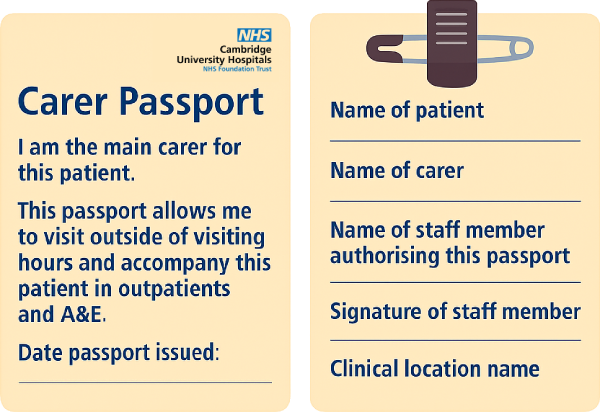
Some carers wish to continue their caring role, for example assist with personal care, whilst a patient is in hospital and this should be facilitated where possible - but carers should not be obliged to continue with their caring role. Carers’ passports are yellow ID cards worn by a carer so that they can be easily identified by staff. This allows access to a ward outside normal visiting hours, being able to accompany patients in outpatients/day units and the ED if support is needed. The passports are issued to carers after discussion and agreement with nursing staff about the caring duties that the carer wishes to continue. If in ED, a day unit or an inpatient ward - please ask the nursing staff about a Carers’ passport if you would find this helpful. Carers’ passports are also available to carers accompanying patients at outpatient appointments, from the Outpatients reception desk, Clinic 12 reception desk or contact the Accessibility Team:

Information for carers is also available on our web pages.

For further details, you can also email our carers' team - copies of a carer's passport agreement can be emailed on request.
'What is important to me' posters

'What is important to me' signs are placed near patients’ beds. They direct staff, visitors and carers to collaborate to provide personalised details of the important aspects of patient’s lives - such as where they grew up, what they worked as, their hobbies, their achievements, who are their loved ones, do they enjoy music, peace and quiet or the opposite. The signs aim to remind staff of the things that are most important to older people and people with dementia.

Visiting hours and overnight stays

The visiting hours for most wards are 11am until 8pm. Further information is on the CUH website - search for the individual ward.

Please ask senior nursing staff on the ward about making arrangements to extend visiting times.

Overnight stays on the wards may be difficult to arrange, but short term and overnight accommodation is available on the CUH site. This is a cheaper, more convenient alternative to searching for hotels near the hospital and can provide you with overnight and longer stay rooms.

Pemberton House has eight twin rooms and one single room available. To book please contact the Frank Lee Leisure and Fitness Centre:

More prices and further details here (opens in a new tab)

Elsworth House also offers a variety of different accommodation. Rooms are available for families and are booked by the wards looking after the patient. More information is available from Sanctuary (opens in a new tab)

We offer discounted car parking rates for people who are regularly visiting patients in hospital

Full details on all discounted ticket prices can be found on entry to the car park, at the pay stations and at our customer service desks situated in the car parks.

Information is also available here

To qualify for a discount proof of an appointment will be required. Appointment letters, booking cards, car park ticket signed by the clinic or department will be accepted as proof.

To obtain a discount take your car park entry ticket to the customer service desks which are located on ground level in both car parks 1 and 2.

If you are claiming a discount, please do so at the time of your visit. Car parking refunds are not offered at either of the car parks once the fee has been paid.

Please note that the pay machines accept both cash and credit card payments.

If you receive benefits

On proof of certain benefits you may be able to claim back your travel expenses and car parking cost through the “Healthcare Travel Cost Scheme”.

More information and advice is available from staff at the Outpatients main reception desk.

Frequent visitors

If you are coming to visit someone in hospital on a regular basis, it is cheaper to buy a 7 or 14 day ticket.

Take the usual parking ticket as you enter the main hospital car park and exchange it for a 7 day or 14 day ticket at the customer service desks which are located on level 1 in both car park 1 and 2.

Pay the fee at the pay machine in the car park to validate the ticket, then keep and use this ticket each time you exit the car park for the designated period.

Patients’ treatment and frequent visitors tickets can only be used in the car park of origin and are not transferrable between car parks.

Hourly parking tariffs

Full details of the hourly tariffs are available in the car parks or on our parking information page.

Disabled parking

Discounted parking fees for disabled blue badge holders are available.

  • Short-stay disabled car parking spaces: all on-road disabled car parking spaces are short-stay spaces. These spaces are for blue-badge holders only and parking is available for a maximum of 4 hours per stay. This is to provide a frequent turnover of the on road-disabled spaces, giving more opportunity for patients who are blue-badge holders to park. Parking is free in the short stay disabled car park spaces. There are a number of short stay disabled parking spaces close to the hospital entrances.
  • Long-stay disabled car parking spaces: for those parking for more than 4 hours, long-stay disabled spaces are available in the patient and visitor car parks. These spaces are for blue-badge holders only. Standard car parking charges will apply, as well as the discounts described above.

Assessing what you need as a carer

The Care Act 2014 gives equal rights to adult carers as the person they are caring for. Local councils and health organisations are now required to promote the wellbeing of all carers, ensure information, advice and support is available, and to prevent, reduce or delay unpaid family carers reaching crisis point.

For most of the Trust’s patients, the organisation responsible for delivering information, advice and guidance to help family carers access the right support is Caring Together.

Both CUH and Caring Together want to support your needs as much as possible, and the best way we can give this support is to provide you with a carer assessment. This is a way of finding out what support you might need, not an assessment of your ability as a carer.

This can be requested at any stage of the carers journey. The Care Act 2014 entitles all carers to a carer assessment on the appearance of need. This is irrespective of the level of support you are providing someone, or financial circumstances. The person you care for does not need to be in receipt of services for you to have an assessment of your own needs as a carer.

You are also able to request a review of your needs at any time should your circumstances change. Carers assessments are carried out by the local authority of the carer.

If you live in Cambridgeshire, carers needs assessments are completed by the Early Help Team at Cambridgeshire County Council. If you live in another county, please contact your local county council for further advice.

If appropriate, we encourage the carer and patient to be involved in these discussions together so that we can ensure you both have all the support you need to carry out your caring role. However, this should be your choice and you should not be made to do this if you would rather be assessed separately.

It is important that you take time to prepare for your assessment.

Some of the topics you may wish to discuss as a part of your assessment are:
  • Practical support
  • Emotional support
  • How best to help and support the person you care for
  • Confidentiality and information sharing
  • Your rights if the patient refuses consent to share information
  • How to get time off from caring (breaks)
  • Your own health, wellbeing and leisure needs
  • Where to get advice on welfare benefits
  • Support to start training or employment
  • Contingency plan for when you are unable to care
  • Culturally appropriate support that is specific to your needs
  • Complexities and difficulties around caring for more than one person
  • Advice on what to do in a crisis
A photo of a young girl and her carer

The carer assessment

All carers should be offered information, advice and guidance to universally accessible services to help them stay healthy and well as a minimum. This might include help to make a contingency plan or claim welfare benefits.

Depending on the outcome of your carer assessment, you may be offered a range of support. Carers with eligible needs may also be entitled to Self-Directed Support (SDS) which provides you with a personalised budget and allows you to choose how your support is provided.

After the assessment

Depending on the outcome of your carer assessment, you may be offered a range of support. Whilst you are still undertaking a carer’s role your assessment should be reviewed regularly to identify any changes to your personal circumstances. This usually takes place annually, but if there are significant changes to your circumstances then please ask for the review to be brought forward.

Contingency plans for carers (also called back-up plans or 'what-if' plans)

Many carers worry what would happen if for any reason they are unable to provide support to the person they care for. For this reason, it is sensible to prepare a contingency plan with you so that you can make arrangements for any support that needs to be provided in your absence and if/when an emergency arises.

Your contingency plan may contain details such as:

  • A contact name and number of someone who is willing to help in an emergency, such as a relative or friend
  • Details of the support provided for the cared for person
  • Whether there are any access issues to the cared for person’s accommodation

Contingency plans can be shared - with your consent - across multiple agencies.

This could include sharing a plan with a GP or social care provider.

Getting regular support

Carers may need support in relation to the person they care for.

Support during weekday office hours (9am-5pm)
  • The healthcare professional of the person you care for
  • Your GP surgery – they can also register you as a carer
Out-of-hours support

Emergency information:

  • Dial 999 for emergency services.
  • Contact the emergency doctor, who is available from your GP surgery.
  • Dial 111 for NHS 111 service and speak to a highly trained adviser, supported by healthcare professionals. NHS 111 is available 24 hours a day, 365 days a year. Calls are free from landlines and mobile phones.

Non-emergency information:

  • Dial 111 for NHS 111 service and speak to a highly trained adviser, supported by healthcare professionals. NHS 111 is available 24 hours a day, 365 days a year. Calls are free from landlines and mobile phones.
  • Visit the NHS website (opens in a new tab) for more information and search 111.

Walk-in centres:

These are usually managed by a nurse and are available to everyone.

Patients do not need an appointment. Most centres are open 365 days a year and outside office hours.

For more information and to find a local centre, please visit the NHS website. (opens in a new tab)

Confidentiality and information sharing

If you are supporting a friend or family member who is in hospital or who has outpatient appointments, we understand that sharing information with you about the patient and their care can be vital in allowing you to provide the support they need and help us to provide the excellent care we aim to provide.

Information about the patient’s medication and treatment plans can help you to provide day to day support, plan for the future and know where to get help and advice if needed. Sharing information must be done in partnership between patients, carers, families and hospital staff. We will ensure that you receive as much information as possible to help you in your caring role. You should be given enough information in a way that you can readily understand to help you provide care.

A man helping an elderly man on an ipad

When can't information be shared?

The relationship between the healthcare professional and patient is based on having confidence or trust that what is said will not be disclosed without their agreement. We are required by law not to share information without the consent of the patient. In some cases this could mean that the patient refuses to let us share information about their care with their carer.

We understand that these situations may be difficult for carers and we will always listen to any concerns and try to find a way of offering support and information without jeopardising the confidentiality of the patient. As a carer you are likely to have known the person you care for before they became unwell. We acknowledge that you may have key information relevant to how we provide safe and effective care for them. You will likely be aware of what may influence their wellness. We will encourage you to share this information because it will help us to provide the best possible care and support for the person you care for, as well as giving you a positive role and confidence in what we are doing.

There may also be times when a carer shares personal information with us about themselves that they do not wish the patient to know. We have the same obligation to not share this personal information without your consent. This includes information you may share with us about how you are feeling or coping in your caring role.

We will still give you information which is not personal to the patient, and try to help you in your caring role by discussing any worries you may have and how you can access support. We can also discuss information about the patient that you already know.

Issues around confidentiality should not be used as a reason for not listening to you. We will discuss with patients the need for you to receive information so that you can continue to support them.

Information sharing and good practice

We will discuss confidentiality and information sharing with the patient and carer at an early stage, and record views on information sharing.

We will discuss with the patient if they would like to keep any information confidential to hospital staff.

We will explain to carers and families what information can be shared, and if information cannot be shared, tell you the reasons why.

We will continually review information sharing with patients, carers and their families while the patient is under our care.

How can information be shared?

We will give you information verbally, for example updates about the patient’s condition, treatment and progress. We will also tell you who is involved in the patient’s care.

We will give you written information where possible, for example leaflets about a patient’s condition, or the treatment or medication they are having.

If the person I care for withdraws consent, can I still get support from you?

Yes. Whilst there may be certain pieces of information we are prevented from sharing with you, we can continue to support you as the carer and signpost you to additional support. Even if we cannot give you certain pieces of information it is very important to us that you keep in contact with us and continue to feedback to us any concerns you may have about the person you care for.

What can I do if I feel that the service is not involving me appropriately in the care that is being provided?

It is important that any concerns you have are raised with the health professional in the first instance. If you are still dissatisfied, you can get additional advice from the Patient Advice and Liaison Service (PALS).

Contact PALS

Understanding hospital admission/discharge

Periods of inpatient care can be an additional burden for carers. The uncertain situation may increase anxiety and stress levels whilst the emotional and physical strain of hospital visits may lead to greater exhaustion. Having access to information about diagnosis and treatment can help to alleviate concerns and as a carer you have a right to this information. Please ask staff on the ward for help and access to the healthcare professionals who are caring for the person you care for.

The period after discharge from hospital can be a particularly difficult time for both patient and carer: extra emotional and practical support may be needed and it is important that you are fully prepared and know what to expect.

Medication

If you are caring for someone using CUH services, they may have been prescribed medication. Everyone has the right to make an informed decision about which medication(s) to take and the Trust wants to support the patient and the carer to make an informed decision. Patients can talk about their diagnosis and about any prescribed medication to healthcare professionals involved in their care such as their doctor, nurse or pharmacist. Carers can also speak to these healthcare professionals if they have any questions.

When a medication is dispensed by a pharmacy it will usually be supplied with a Patient Information Leaflet (PIL), a useful source of information that explains what a particular medication is for, how it should be taken, and possible side-effects.

Further information about medication and health conditions

Legislation

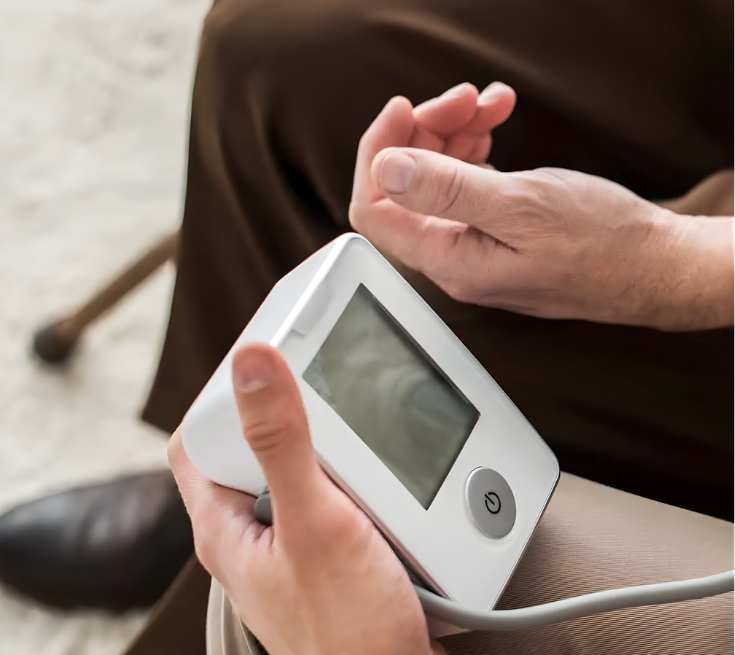
An elderly man getting his blood pressure tested

As a carer you have specific legal rights and entitlements as stated in the Care Act 2014, which came into effect in April 2015. Amongst other changes to the way care is provided, the Care Act significantly increased the rights of carers to get the support they need, at the time they need it.

Knowing your rights can help you to get the support that you need. We have summarised below some of the most important aspects that we think are useful for carers to know.

Visit the carers trust website (opens in a new tab)

Carer rights and legislation

The Care Act 2014 sets out carers’ legal rights to assessment and support. The Care Act relates mostly to adult carers – people aged 18 and over who are caring for another adult. This is because young carers (aged under 18) and adults who care for disabled children can be assessed and supported under children’s law. However, regulations under the Act allow the government to make rules about looking at family circumstances when assessing an adult’s need for care, which means, for example, making sure the position of a young carer within a family is not overlooked. The Act also contains rules about working with young carers or adult carers of disabled children to plan an effective and timely move to adult care and support.

What does the Care Act do?

Previously, carers didn’t have a legal right to receive support, although local authorities could provide support at their discretion. This meant that the ability to have an assessment and access a range of support varied depending on where you lived. The Care Act gives local authorities a responsibility to assess a carer’s need for support, where the carer appears to have such needs. This replaced the law which said the carer must be providing ‘a substantial amount of care on a regular basis’ to qualify for an assessment.

What is mental capacity?

Every person should be presumed to have capacity to make their own decisions. A person has capacity if they are able to understand the particular issue that they are making a decision about. A decision can only be made for someone else if all practical steps have been taken without success.

Making decisions for someone

If, having taken all reasonable steps to help someone, it is agreed that a decision should be made for them, that decision must be made in that person’s best interests. The Mental Capacity Act sets out a checklist of things to consider when deciding what are in a person’s best interests. This decision is made by the most appropriate professional who should, where appropriate, take the views of the carer into account.

Power of Attorney

Power of Attorney is a legal document that allows the named person (such as a carer) to deal with the affairs (usually financial) of the person who has chosen them as their attorney. The most common type of Power of Attorney is a Lasting Power of Attorney (LPA) which is drawn up while the person still has mental capacity, to give permission for the person or people to deal with their affairs after they lose mental capacity.

There are two types of LPA:

  • Property and financial affairs - gives the attorney the authority to make decisions about the person’s financial affairs.
  • Health and welfare - gives the attorney the authority to make decisions about the person’s personal welfare and healthcare. All Power of Attorney documents can be obtained from the Office of the Public Guardian or from a solicitor.

Deputyship

If the person you care for has lost the capacity to manage their finances and an LPA is not in place, you can apply to the Court of Protection to be appointed as a deputy. This is similar to LPA but the Court of Protection oversees the process much more rigorously as it is they, and not the individual, who appoints the deputy.

Nearest relative

Many people confuse the term nearest relative with ‘next of kin’. A person’s next of kin is their closest relative. Nearest relative is a specific legal term defined in the Mental Health Act (MHA). The MHA gives a patient’s nearest relative some rights and powers in relation to detention, discharge and being informed or consulted when certain actions have been taken under the MHA or when these are being proposed. The role of a nearest relative is limited to these rights and powers.

Benefits and respite

It is often the case that many carers do not recognise they have become carers and therefore do not realise their entitlement to claim a range of benefits. To enable you to ascertain your rights to financial support and benefits, it is important to arrange a carer assessment because this will identify the level of financial support and benefits you are entitled to. This is about meeting your needs and understanding how caring affects you.

This section covers two areas:

  • Benefits - government benefits that you may be entitled to
  • Respite - localised resources that support you to carry on caring

Benefits

Carer's allowance

You may be eligible for Carer’s Allowance if you meet the following conditions (2020/21):

  • You are aged 16 or over
  • You spend at least 35 hours a week caring for someone
  • You’ve been in England, Scotland or Wales for at least 2 of the last 3 years (this does not apply if you’re a refugee or have humanitarian protection status)
  • You normally live in England, Scotland or Wales, or you live abroad as a member of the armed forces (you might still be eligible if you’re moving to or already living in an EEA country or Switzerland)
  • You are not in full-time education
  • You’re not studying for 21 hours a week or more
  • You’re not subject to immigration control
  • Your earnings are £128 or less a week after tax, National Insurance and expenses

The care you provide does not have to be nursing or personal care. It can include help with shopping, cleaning, keeping someone safe and generally helping to meet someone’s needs for support. You do not have to be related to, or live in the same house as, the person you look after. You can be considered for Carer’s Allowance for looking after your partner.

Respite

Respite in the context of caring means that you receive support that provides you with some assistance or temporary relief in your caring role. This could mean that you are able to take a short break for an hour or two a week, have a day to yourself or a holiday.

Personal budgets

A personal budget allows you to arrange your own care and support, rather than the local council arranging services for you. A carer personal budget (also known as a Carer Direct Payment) is a sum of money paid by a council’s Adult Social Care department to help a carer to pay for things that will help them in their caring role.

Personal budgets for carers can be used to pay for a wide range of things and are about giving you something that is just for you and which provides you with some time out from caring, thereby helping you rest and recharge yourself. It is the responsibility of the organisation carrying out your carer assessment to assess your suitability for a carer personal budget. The money can be paid either as a one-off (direct) payment or a continuous payment.

This is something that should be explained to you as a part of your carer assessment. Contact Caring Together for more information.

Family carers' prescription service

This is a free local service to enable carers to arrange a break and it is designed to respond quickly to urgent need. To be eligible, carers must be registered with a GP surgery within the Cambridgeshire and Peterborough Clinical Commissioning Group area.

A Family Carers’ Prescription will give you access to a specialist worker at Caring Together, who will help you design a short break that works for you and they will also provide support for this break to happen. You help decide what gives you a break: it may be assistance going out with the person you care for, someone being with the person you care for whilst you do something, or it could be something else.

To obtain a Family Carers’ Prescription, you need to arrange an appointment/telephone appointment with your GP to briefly explain your circumstances. Your GP will make a decision on your request and contact Caring Together. The surgery will record that you are a family carer so that they can support you appropriately in the future. If you do not get a quick response from your GP, contact Caring Together, (opens in a new tab) which will follow up on your behalf.

Understanding the diagnosis

Caring for someone who has a physical or mental health condition or learning disability can be more difficult without the benefit of clear information about the diagnosis, treatment options and medication.

Understanding the diagnosis enables you to plan for the future and may mean other health and social needs are also identified and appropriate action taken. You may also be able to benefit from any new treatments available.

The information below is designed to signpost carers to some of the many excellent and easily available sources of information on diagnosis of mental and physical illness:

The NHS website:

The NHS website (opens in a new tab) features a searchable A-Z listing of conditions. For each condition searched there are separate pages on symptoms, causes, diagnosis, treatments and advice on ‘how to live’. There is also a very useful listing of external links to websites with more specialist information related to each disorder. The ‘Live Well’ section of the NHS Choices website (opens in a new tab) offers general help and information on diet, stopping smoking, getting enough exercise, and coping with stress.

Patient website:

The patient website is a leading independent health platform and one of the most trusted medical resources online. The patient website (opens in a new tab) offers evidence-based information on a wide range of medical and health topics to patients and health professionals and hosts hundreds of health discussion forums.

Age UK:

The health and wellbeing pages of the Age UK (opens in a new tab) website features information on age-related health conditions, tips and advice on a range of subjects such as staying fit and healthy, loneliness, end-of-life planning, as well as information on dealing with health services and leaving hospital.

Alzheimer's Society:

Alzheimer's society (opens in a new tab) provides comprehensive information on types of dementia, symptoms and treatment.

The NHS website and the websites of Age UK and the Alzheimer’s Society provide comprehensive information about the diagnosis of many physical health problems including:

  • Cardiac services
  • Chronic Fatigue Syndrome (CFS) / Myalgic Encephalomyelitis (ME)
  • Continence
  • Diabetes
  • Dietetics
  • Falls prevention
  • Memory loss
  • Neurological conditions
  • Neurological rehabilitation
  • Parkinson’s disease
  • Podiatry
  • Respiratory specialist services and tuberculosis (TB)
  • Speech and language therapy
  • Tissue viability.

Your wellbeing

A lady doing yoga

Maintaining your wellbeing

When you are focusing on the person you are caring for it is important that you do not neglect your own wellbeing. Below are some tips that many people say have helped them improve their sense of wellbeing. Some of these may seem obvious, but they can often be forgotten during the course of a busy day:

  • Make time for yourself.
  • Learn to say ‘no’: you cannot do everything.
  • Don't neglect your own health needs.
  • Find time to rest and get enough sleep.
  • Focus on the positive aspects of your life: what do you enjoy? What are you good at? Find an exercise you enjoy that gives you time for yourself.
  • Talk to someone: a friend, family member or phone support from a carer group.
  • Ask for a carer’s assessment or a review of your needs whenever you need it.
  • Keep important numbers near your phone.
  • Ask your GP to register you as a carer as this will make it easier when seeking support and benefits.

Dealing with difficult situations

The following tips have been adapted from Rethink and Carers UK. They are designed to inform you of ways to deal with difficult situations if they arise.

  • Get to know the signs of rising tension. These could be rocking, stuttering, colouring of the face, pacing, hand-wringing.
  • Let everybody win. If you can defuse a situation then you have won, and if your loved one has not lost face and has kept their pride, they have won, too.
  • Walk rather than run, lower your voice, move slowly, and avoid sudden movements.
  • Count to ten. As you do this, check your mood, assess the situation, decide on a first course of action, confirm it to yourself then do it.
  • Once you get someone talking, let them let off steam, don’t try to stop them.
  • Accept that your life has changed, at least for as long as your loved one is ill.
  • If a problem develops, be prepared to stop everything, ignore a deadline or be late for something.
  • Seek help in dealing with stress. Speak to family and friends, use carers’ discussion boards on websites such as Carer's UK (opens in a new tab) and speak to your GP and other health professionals.
  • Discuss situations with other carers for helpful feedback and support.
  • Know how to call for help in an emergency. In dangerous/violent situations, be prepared to phone the police.

Finding the right support for yourself

Below are some examples of the types of activities and therapies that may be of benefit to carers:

Exercise

There are proven links to the effects that exercise can have on your mental wellbeing. This can include sports, the gym or simply walking regularly. Alternative and complementary therapies Yoga and massage therapy, for example, help you to relax and give a sense of general wellbeing. Other benefits may include reduced stress, improved circulation and deeper sleep.

Self-help groups

Remember you are not alone and that it can be reassuring to meet and talk to other carers and discover that your feelings are similar to others in your situation.

Healthy Living

Avoid stimulants such as cigarettes, alcohol and caffeine and eat a varied and well-balanced diet because the healthier you are the better your ability to cope.

CUH Chaplaincy

Coming into hospital is often an anxious time for both patients and their families. Chaplains are available and happy to meet and spend time with anyone who needs a ‘listening ear’ or to talk things through. The Chaplaincy Team is based in the hospital and represents, or is in contact with, all the major faiths and church denominations.

The team comprises ministers, priests and volunteers in a variety of capacities, both men and women, full and part time. You do not have to be 'religious' to talk to a chaplain: the service is committed to care for each individual and to respect all people regardless of race, religion, creed, gender and culture.

Chaplains are normally on duty Monday to Friday 0800 to 1600 hrs, telephone: 01223 217 769.

At all other times, there is a chaplain on call, telephone 01223 245151 to get to switchboard, then request to be connected to the Chaplain.

CUH Dementia Team

The Dementia Care Team at CUH are available for practical advice and emotional support whilst the person you are caring for is in hospital.

Catherine Pride, Dementia Specialist Nurse - 07596 044147.

Our working hours are Mon – Fri. 0800 – 1600 but if you leave a message we will try to respond as soon as possible.

Counselling/ Cognitive Behavioural Therapy (CBT)

Talking therapies enable you to express your feelings, gain a greater level of understanding and self-awareness, and empower you to find solutions to your problems and strategies for coping.

CPFT Psychological Wellbeing Service

The Psychological Wellbeing Service (PWS) is part of the NHS initiative ‘Improving Access to Psychological Therapies’ (IAPT) which is designed to make psychological or talking therapies more accessible to people experiencing common mental health conditions.

PWS is provided by CPFT to help people aged 17 and over who are suffering from mild to moderate mental health conditions such as depression, post-traumatic stress, health anxiety, panic, phobias and obsessive compulsive disorder. All of the talking therapies offered as part of the Psychological Wellbeing Service work by helping you understand what is happening to you, help you to work through your difficult feelings and learn new ways of coping in order to improve your wellbeing.

What support does it offer?

It offers a range of support to help you make changes in your life to improve your wellbeing and to help you cope with stress, anxiety and depression. This includes self-help reading materials, guided self-help (both over the telephone and face-to-face), one-to-one therapies including Cognitive Behavioural Therapy (CBT), Interpersonal Therapy (IPT) and Eye Movement Desensitisation and Reprocessing (EMDR) and courses for groups including mindfulness.

Teams are available throughout Cambridgeshire made up of people with different skills who offer a range of ways to help. Carers can self-refer or speak to their GP for a referral. Appointments are offered throughout the day from Monday to Friday.

How to access PWS

Recommended books for carers

The books listed below can be obtained from your local library, bookshops or from online retailers.

  • Partners in Healing by William Collinge – Simple ways to offer support, comfort, and care to a loved one facing illness.
  • The Selfish Pig’s Guide to Caring by Hugh Marriott – How to cope with the emotional and practical aspects of caring for someone.
  • Dementia: The One-Stop Guide by June Andrews – Practical advice for families, professionals, and people living with dementia and Alzheimer’s Disease.
  • Keeping Mum: Caring for Someone with Dementia by Marianne Talbot
  • Skills-based Learning for Caring for a Loved One with an Eating Disorder: Janet Treasure, Grainne Smith and Anna Crane Supporting and encouraging those suffering from an eating disorder

Reading Well Books on Prescription: The Reading Well Books on Prescription scheme helps you to understand and manage your health and well-being using self-help reading. The scheme is endorsed by health professionals and supported by public libraries.

Visit the reading agency website (opens in a new tab) for more information on how to obtain these books, consult your local library or GP.

An elderly lady smiling at the camera

A -Z directory of useful organisations for carers

There are many sources of support and services for carers. Listed below are the contact details for the main local and national providers. All information is correct at the time of going to print, but we recommend checking the internet for the most up-to-date information.

Age UK

Age UK provides a range of services for older people across Cambridgeshire and Peterborough, including respite care, social clubs, local groups, support with recovery, befriending and visiting schemes as well as practical help in the home.

Alzheimer's Society

Alzheimer's Society offers information, advice and emotional support to people affected by dementia, and their carers. Advisers provide support by phone, e-mail, social media, and through the online forum Talking Point. Many services are provided locally, including carer support groups, memory cafes and art and music therapy groups.

BEAT - eating disorders website

BEAT includes a helpline for carers.

British Red Cross - Cambridgeshire

British Red Cross provides short-term loans of mobility aids to people in need, including wheelchairs, and, in some locations, commodes.

Cambridgeshire County Council

Select the ‘Residents’ link followed by the ‘Adults’ link which leads to carer information pages.

Care Network Cambridgeshire

Care Network Cambridgeshire – provides help for older, isolated and vulnerable people living in Cambridgeshire, enabling them to remain independent and maintain social contact with friends and the community. The network offers practical and emotional support and offers information about lunch clubs, community cars and more.

Carers UK

Carers UK offers a range of support services for carers to cope with the pressures of caring including online information and a telephone advice and support service. Factsheets are available such as ‘Coming out of Hospital’.

Caring together

Caring Together is a regional charity working in Cambridgeshire, Peterborough and Norfolk, providing information and advice, running services in local communities and campaigning for carers’ rights. Caring Together also provide homecare and breaks for people with care needs and support in a crisis.

Centre 33

Centre 33 – For all young people across Cambridgeshire and Peterborough. If you are a young carer they can help with assessments, one to one support, specialist carer groups, information and advice.

Citizens' Advice

Citizens’ Advice give advice on a wide range of subjects.

Cruse Bereavement Care

Cruse in Cambridge and Fenland provides support to bereaved people in the local area, including a telephone helpline, drop-in centres, one-to-one support, and bereavement support groups.

FamilyLine

Supports family members over the age of 18 through telephone calls, email, web chat and text message.

Lifecraft

A user-led organisation for adults in the Cambridgeshire, Peterborough and Newmarket area who have experience of mental health difficulties in their lives; offers a range of free mental health services to help and support members in their wellbeing and recovery, including creative activities, recovery groups, social activities, employment and volunteering opportunities, an information hub, a counselling service and Lifeline, and a free telephone helpline.

Making Space

For anyone caring for someone aged between 18 and 65 who has a mental health condition.

MIND

MIND provide advice and support to empower anyone experiencing a mental health problem, and campaign to improve services, raise awareness and promote understanding.

Local Mind services include talking therapies, crisis helplines, drop-in centres, employment and training schemes, counselling and befriending.

Money Helper

Financial support is available for carers and this service helps you to find out what help and benefits are available and how to apply for your entitlements.

NHS guide

A complete guide to conditions, symptoms and treatments, including what to do and when to get help. Also provides information for people who have care and support needs and their carers.

View NHS social care and support guide here (opens in a new tab)

Patient Advice and Liaison Service (PALS)

CUH’s Patient Advice and Liaison Service (PALS) provides information and resolves concerns about care provided by CUH (Addenbrooke’s and the Rosie Hospitals).

The service can also give information about making a complaint.

Peterborough City Council
Pinpoint Cambridgeshire

Helping Cambridgeshire parents who have children with additional needs and disabilities.

Rethink Mental Illness

Rethink Mental Illness aims to improve the lives of people severely affected by mental illness and includes information for carers.

Samaritans

Samaritans are a 24-hour confidential, listening service providing emotional support to anyone in crisis.

Silver Line Helpline for Older People

A free, confidential helpline providing information, friendship and advice to older people, available 24 hours a day, every day of the year.

Acknowledgements

This Carer's Handbook has been adapted with the kind permission of Cambridgeshire and Peterborough NHS Foundation Trust.

This guide is part of CUH's Carers' Policy 'Working with and Supporting a Patient's Carer(s)'. The information given in this booklet is believed to be correct at the time of print. We have taken every reasonable care in the preparation of the content, but cannot accept liability for any errors or omissions therein.

If you require this information in a different language or format, please: