
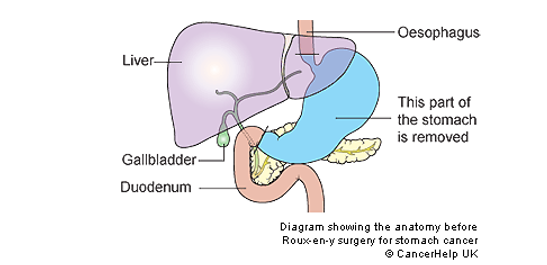
The Role of the Stomach
The stomach has two main functions:
- It stores food once it has been swallowed before gradually releasing the food into the small intestine for further digestion.
- It begins digestion by churning and mixing the food with enzymes and other factors released to aid digestion of food.
A small amount of nutrition is absorbed from the stomach itself but its main role is controlling the rate of flow of food into the duodenum, the area of small intestine that follows the stomach. This allows optimum absorption of nutrients.
After your stomach operation it is normal to find that you cannot eat as you used to. The following information will explain some of the difficulties you might experience when eating and drinking and ways to help you manage these.
Before the operation
General advice for eating after your operation:
- You will need to take food little and often throughout the day; for example 6 or more small meals per day. Due to having no stomach or just a small part of your stomach remaining you will not have the same capacity to eat the same portions as you used to. The portions may seem very small to start with but should increase in time. It varies from person to person; some people find in time their portions return to approximately 40-50% of the size they managed before surgery. Others might be able to manage up to 80%.
- Initially, you should aim to keep all portions similar in size. This will help you take on board more nutrition over the course of the day. It will also help to make eating feel more comfortable.
- Chew all food well, and take your time over meals.
- Sit upright whilst eating.
- Drinking is important; however you should avoid drinking large volumes with food (leave approximately 30 minutes before or after eating.)
- It is best not to eat too late at night as it can increase chance of reflux.
Eating after your Operation
After your operation your oral intake will be limited for 5-7 days to allow time for the surgical join to heal. During this time you will be allowed small sips of water and slowly progress to clear fluids (fruit squash, black tea/ coffee, Bovril, jelly or clear soups); to free fluids (milky drinks, hot chocolate, Ovaltine, ice cream, smooth yoghurt, soups without lumps); and then start a diet with some more texture and gradually build this up to include more solid foods day by day.
Starting to eat and drink again can be quite daunting due to the changes inside your body following your operation. For that reason we recommend you build up your oral intake gradually and take time to chew your foods well.
Upon commencing more solids into your diet look for the ‘–EC7’ symbol which denotes a softer and more easy to chew foods and ‘+’ symbol which indicates an energy dense food on the ward menu. Do not worry if you are only able to manage a small amount of your meal. Stop once you start to feel full and try a snack or dessert 1-2 hours later.
Below is a guide to gradually increasing your diet. If it feels comfortable you may be able to progress with the texture of your diet day by day. However you may need to build up slower if it feels as though foods are sticking; this will usually improve with time.
Step 1:
- Smooth soups
- Jelly
- Ice cream
- Thick and creamy yoghurts
- Custard
- Mousses/ crème caramel
- Mash potato and gravy
- Weetabix / Ready Brek/ Rice crispies soaked in milk
- Mashed banana
Step 2:
- Rice pudding
- Scrambled egg/ omelette
- Mince in a sauce/ cottage pie/ shepherd’s pie
- Fish in a sauce/ fish pie
- Sponge pudding with custard or cream
- Jacket potato mashed with cheese/ tuna mayonnaise
- Tinned fruit / hot stewed fruit
Step 3:
- Cauliflower cheese
- Cheese, mushroom and potato pie
- Minced beef casserole
- Macaroni cheese
- Pasta bake
- Toast with butter
- Jacket potato with beans- no skin
- Sandwiches with moist fillings (e.g. egg and tuna mayo)
- Quiche
- Lasagne
- Chilli con carne
- Vegetable curry/ chilli
- Cheese cake
- Fruit trifle
Following on from this if it feels comfortable to do so you can choose most foods and textures. However, remember to remain mindful of the portion size.
It is important to have a balanced diet during your recovery. This will ensure you are getting all the nutrients you need to help you heal, including enough energy to help prevent further weight loss.
Focusing on high calorie options can be beneficial, particularly during the early stages when your portion sizes are likely to be much smaller.
Choosing a variety of foods from the following groups every day can help you achieve a balanced diet.
Starchy Foods - Include one of the following at each meal: bread, breakfast cereals, pasta, rice, potatoes, noodles, crackers, crispbread, couscous, bulgur wheat or quinoa.
Meat, fish and alternatives - Aim for two or more portions per day; meat, poultry, fish, eggs, lentils, beans, nuts, tofu or soya.
Milk and Dairy products - Dairy products are good sources of energy, protein and calcium. They include milk, cheese, quark, yoghurts, fromage frais or plant based alternative milk and yoghurts such oat/ rice/ nut/ soya. Aim for two or three portions per day.
Fruit and vegetables - Aim for five portions of fruit and vegetables every day. Fresh, frozen or tinned all count.
Fatty and Sugary foods - Mayonnaise, butter, oil, cream and crème fraiche can be added to many foods to provide more energy. Sweets, chocolates, fizzy drinks and high volume of juice drinks can pass through your stomach quickly and may cause diarrhoea and cramping - “Dumping Syndrome” (see page 9 for more information).
Feeling full up quickly
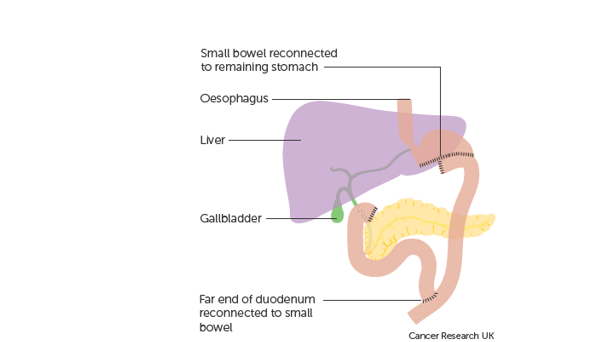
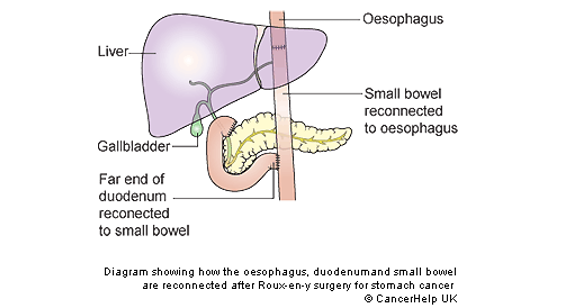
After your operation you may feel full and distended during or after eating. This is because with a partial or total gastrectomy (removal of the stomach) there is less of a ‘reservoir’ to hold food and control the rate of delivery into the small intestine. Everyone adapts differently to the changes in their gut and this can be due to the amount of their stomach that has been removed.
Suggestions:
- Eat small frequent meals
- Take liquids in between meals rather than at mealtimes
- Chew food well and eat slowly
- Sit upright when eating
Specific minerals consideration
After stomach surgery it can be difficult for your body to process and absorb all the vitamins and minerals it needs from diet alone. We would recommend taking a daily complete multivitamin and mineral supplement. Look out for ‘A-Z’ multivitamin and mineral supplements as these will be complete in both the minerals and vitamins that you require. They can be purchased from most supermarkets or pharmacies. There are chewable or effervescent multivitamin and minerals available over the counter which you may find helpful if you have trouble swallowing tablets. These may not be as complete in vitamin and minerals as those in tablet form. Speak to your dietitian for advice on suitable brands.
Calcium, vitamin D and iron are absorbed in the stomach and duodenum. Following a gastrectomy it is recommended that you have higher intakes of both calcium and vitamin D than the general population to help keep you bones and teeth strong.
Calcium is found in milk and dairy foods, canned fish where you eat the bones (e.g. sardines, pilchards and salmon), white bread, pulses (e.g. baked beans), green vegetables (e.g. broccoli, kale and cabbage) dried fruits (e.g. figs and apricots), calcium-set tofu and nuts/nut butters and seeds (e.g. almonds, hazelnuts,sesame seeds and tahini). If using plant based alternative milks and yoghurts ensure they are fortified with calcium. The ‘British Dietetic Association (BDA) Food Fact sheet: Calcium’ is a helpful resource with further information on how you can meet your calcium needs. This can be found online or your dietitian can provide you with a copy.
We get most of our Vitamin D from direct sunlight on our skin with only small amounts coming from food sources. Food sources of Vitamin D include: margarine, butter, eggs and oily fish such as sardines, herrings and mackerel and salmon.
In the UK the amount of sun light during winter months is not enough for the body to maintain adequate vitamin D stores therefore the advice for the general population is to take a supplement during these months. Following a gastrectomy it is recommended that a higher dose Vitamin D supplement containing 25 micrograms (25ug) of Vitamin D is taken all year round.
Iron is an essential mineral that has a number of important roles in the body, including helping make red blood cells that carry oxygen around the body. Many foods contain iron including red meat, liver, oily fish, soya, fortified breakfast cereals, wholemeal bread, egg yolk, leafy green vegetables, nuts, seeds and dried fruit. . You should also make sure your ‘A-Z’ supplement contains iron. The BDA Food Fact Sheet: Iron is a useful resource for additional information on iron.
Vitamin C helps the absorption of iron from plant sources. Good sources of vitamin C include peppers, citrus fruit, kiwis, strawberries, raspberries, broccoli, brussel sprouts and potatoes.
If you have had a total gastrectomy, you will need injections of vitamin B12, as you will no longer be able to absorb this from your food. Vitamin B12 is necessary to make red blood cells, and keep the nerves and digestive system healthy. These injections will be arranged with your GP and should take place every 3 months.
Feeling full up quickly
After your operation you may feel full and distended during or after eating. This is because with a partial or total gastrectomy (removal of the stomach) there is less of a ‘reservoir’ to hold food and control the rate of delivery into the small intestine. Everyone adapts differently to the changes in their gut and this can be due to the amount of their stomach that has been removed.
Suggestions:
- Eat small frequent meals
- Take liquids in between meals rather than at mealtimes
- Chew food well and eat slowly
- Sit upright when eating
Weight loss
You may have lost weight before your operation due to a reduced intake of food and the effects of illness on your body. Weight loss is common following this type of surgery and may be slow to improve.
If you have recently lost weight it is important to eat a high calorie and protein diet. A diet high in calories will provide energy and help prevent weight loss and muscle wasting. Protein is important for the growth and repair of tissues. The following suggestions will help you to make appropriate food choices to help minimise the amount of weight you lose and improve your feeling of well-being after surgery.
Meal Suggestions:
The foods that you choose after surgery do not need to be completely different to the foods you previously chose before your surgery; they will just need to be eaten in smaller quantities. Nutritious meals do not have to be hot and they need not take long to prepare. Here are a few quick and easy ideas that may help you.
Savoury Ideas:
- A bowl of cereal (e.g. 1-2 Weetabix; 3 tablespoons muesli or Cornflakes) with whole milk (blue top) and/ or thick and creamy yoghurt
- Ready Brek or Porridge made with whole milk
- A slice of toast, a crumpet or muffin with cheese, egg or baked beans
- Banana and/ or peanut butter on toast
- Eggs – poached, scrambled, boiled or fried. Or an omelette made with whole (fortified) milk and cheese and ham.
- Sandwiches, toasties or wraps: choose from a variety and combinations of fillings such as ham, cheese, tuna, egg, prawn, smoked salmon and cheese, sausage, bacon, houmous, falafel, roast beef or chicken
- Try adding the following to give calories and extra flavour: butter, mayonnaise, mustard mayonnaise, chutney, extra cheese, coleslaw and avocado
- Pitta bread, crackers or crispbreads with dips (e.g. houmous, taramasalata, tzatziki) or hard cheese, cream cheese or pate
- Vegetable crudités with dips
- Sardines or mackerel on toast
- Jacket potato with a filling e.g. cheese, beans or tuna mayonnaise
- Tinned, fresh or homemade soup (fortify with cream, crème fraiche, cheese, milk powder, pulses)
- Pancakes with cheese, ham, fried mushrooms or vegetable fritters
- Tea cakes, scones, or croissants with butter
- Ravioli or tinned spaghetti with cheese
- Pasta, couscous or potato salad; include a good source of protein, e.g. egg, cheese, meat, tuna, prawns, houmous or falafel (add a dressing, e.g. olive oil, Caesar, honey and mustard, mayonnaise, salad cream)
- Fish fingers or fish cake
- Sausage rolls, pork pie or cheese pasty
Sweet Ideas:
- Sponge cake, fruit crumble with cream, custard or ice cream
- Greek yoghurt with fruit and or granola
- Banana or stewed fruit with custard (fortify custard with milk powder or cream)
- Rice pudding (fortify with cream)
- Individual desserts such as crème caramel, tiramisu, mousse, fool
- Pancakes with fruit, sauce or ice cream
- Swiss roll, individual cake bars, flapjack
Nourishing drinks:
- Cold milk, milkshakes, iced lattes/ frappes (use whole milk and add milk powder and/ or ice cream)
- Hot milky drinks (eg latte, hot chocolate, malted drinks)
- Fruit smoothie with full fat yoghurt and/ or ice cream
- Meritene (Build Up) soups or Complan soups
Food Fortification:
Even though you may only be able to eat small amounts at each meal you can improve a meal’s nutritional content by fortifying foods.
You can fortify your food i.e. add extra calories and protein in the following ways:
Fortified milk: Add 2oz (four tablespoons) of milk powder such as Marvel or a supermarket own skimmed milk powder / dried milk to one pint of whole milk. This can be used in the usual way in drinks, on cereals, in sauces and puddings
To savoury foods add cheese, whole milk, milk powder, cream, crème fraiche, coconut milk, butter, margarine, or pesto. For example:
- Use fortified milk in porridge and with breakfast cereals
- Add beans and pulses to soups and casseroles
- Add cheese, butter/ margarine and extra milk to mashed potato/ mashed sweet potato
- Butter, cheese or white sauce on vegetables
- Add one tablespoon of milk powder to one portion of white sauce
- Add grated cheese/cream/milk powder/ coconut milk or crème fraiche to soups, casseroles or curries
- Add cheese, pesto, cream, crème fraiche to pasta sauces
- Add mayonnaise or salad cream to sandwiches or have two fillings, e.g. egg mayonnaise and bacon, cheese and ham
To sweet foods add fortified milk, cream, ice cream or evaporated milk.
For example:
- Cream/custard/ice cream/evaporated milk with pies, sponge or fruit
- Jelly made with fortified milk
- Add one tablespoon of milk powder to one portion of milk puddings, and custard
Supplement Drinks
Nutritional supplement drinks (eg Fortisip, Fortijuce, Ensure Plus, Fresubin, Complan or Meritene (Build Up) Shakes) are generally not recommended following your surgery as they can cause “dumping” symptoms. For some patients they may be suitable however speak to your Dietitian first who will advise you on the most appropriate product.
Soup style supplements are often better tolerated than the shakes. Complan soups and Meritene (Build Up) Soups can be purchased from you chemist or supermarket.
Loss of appetite
Most patients who have had a gastrectomy report loss of appetite and loss of interest in food at some point in their recovery. This can last a few weeks or years. Appetite stimulation is a complex process, but it is partly controlled by hormones produced by the stomach. As this has been removed it is possible you won’t get the same “brain messages” to say you are hungry. Just because you are not feeling hungry doesn’t mean you don’t need the calories from your food. Try to eat by the clock (every two to three hours) rather than waiting until you are hungry.
Tips to stimulate your appetite
- Try to eat small and frequent meals and snacks e.g. every two hours.
- Be positive about what you do eat – every extra mouthful helps
- Try not to get out of the habit of eating. You actually need to eat to stimulate your appetite
- Don’t worry if it isn’t ‘normal’ foods at ‘normal’ times – if you fancy cereal at midnight, enjoy it!
- Try to relax and enjoy what you eat. Eat slowly and chew your food well, try to rest before and afterwards
- Avoid drinking large amounts of fluids, particularly before or after a meal, this can leave you feeling full and reduce the capacity for food
- A short walk before a meal or some fresh air may help give you an appetite
- A small glass of wine, beer, sherry or your favourite drink taken half an hour before a meal may boost your appetite. Check with your doctor first
- Experiment with different foods. You may find that you like things you don’t usually eat
- Accept offers from friends and relatives to help with cooking and shopping
- Convenience foods are a useful standby and can be just as nourishing
- If you have a freezer, try to prepare food in advance when you feel like cooking and store it for when you are not feeling so well
- Avoid filling yourself up with large servings of vegetables, salads, and water. They provide bulk but little nourishment
- Avoid fizzy drinks as these can cause a feeling of fullness and bloating
- Tempt your appetite by making food look attractive and use small portions on a small plate
- Sometimes the smell of food will be appetising; at other times it may put you off. If this happens, try to keep away from the kitchen while food is being prepared, or eat cold foods, which often have less smell
- If food has no taste, try stronger flavours such as seasoned or marinated foods
Dumping Syndrome
The term dumping syndrome, is used to describe a group of signs and symptoms that people experience after certain types of stomach surgery, such as partial or total gastrectomy or gastric bypass surgery.
The altered digestive system affects the rate that food passes through, i.e. it may pass through more quickly, causing a number of possible symptoms. These can include, bloating, nausea, palpitations, flushing, sweating, faintness, tiredness, loose stools or diarrhoea. The signs and symptoms of dumping are often experienced soon after a meal (within 15 to 30 minutes). However they may occur later (1 to 3 hours after eating).
Not everyone will experience dumping syndrome. For those who do, the type and intensity of symptoms can vary. They may be unpleasant and distressing initially, however by following simple dietary measures and learning how to manage symptoms people often find episodes become less problematic or less frequent over time.
Dietary measures can help reduce occurrences of symptoms. These include:
- Eating small, frequent meals of equal sizes 2-3 hours
- Eating slowly and chewing foods thoroughly
- Limiting fluid consumption during meals. Have drinks at least 30-60 minutes before or after meals, instead of with meals.
- Avoiding foods and drinks that are high in sugars (such as sweets, sugary cakes, sugary breakfast cereals, jams and conserves, sugary fizzy drinks and nutritional supplement drinks eg. Fortisip and Fortijuce).
- Base meals around starchy foods such as whole grains, pastas, potatoes, rice, breads, unsweetened cereals, etc.
- Including good sources of protein and/or fats with meals
- Choosing more foods that are high in soluble fibre (such as pulses, oats, fruits and vegetables)
- Lying down after eating can help if you experience these symptoms however it is generally not recommended as a preventative measure as it may increase your risk of reflux
If you experience these symptoms contact your dietitian who will be able to give you further advice.
Nausea
Don’t force yourself to eat when you feel sick. It is important to maintain a good fluid intake to prevent dehydration.
- Clear, cold drinks may be better tolerated
- Try sipping fizzy drinks such as soda water, ginger beer or lemonade. Sugary drinks may pass through your stomach quickly and may cause diarrhoea and cramping. Choose diet or sugar-free drinks (for e.g. diet cola, lemonade and unsweetened fruit juice)
- Sip these slowly, using a straw may help
- Solid fluids such as sorbet or jelly may be easier to manage
- Herbal, ginger or peppermint tea may soothe an upset stomach
- Start with small frequent meals and snacks and build up to your more normal diet as the sickness subsides.
- If nausea is an ongoing problem speak with your doctor or specialist nurse. Anti-emetics (anti-nausea medication) may be prescribed to help.
Acid Regurgitation/Heartburn
Some patients may experience bile reflux following the removal of their stomach. The symptoms can be a burning feeling in your gullet or throat, pain, nausea or an unpleasant taste or coughing on waking. If you still have a portion of your stomach remaining you may experience acid reflux.
- Eat small meals, ‘little and often’- five to six times a day rather than trying to have big meals
- Sit upright to eat and try not to bend down or rush around until your meal has settled
- Take small mouthfuls of food, eat slowly and chew food well
- Avoid tight fitting belts and clothing
- Sleeping with extra pillows or raising the bed head is often beneficial.
- If you are experiencing some of these symptoms, avoid eating too late in the evening. Aim to have your last meal or snack two to three hours before going to bed.
If your symptoms persist, discuss this with your Doctor.
Taste changes
You may find that some foods/drinks do not taste the same and you do not like things that were favourites before the operation. Do not worry, this is usually temporary and the problem should resolve with time. Here are some suggestions to try until your taste sensations return:
- Eat the foods that you do like the taste of and avoid those that you don't. Re-try any 'problem' foods after a few weeks as your taste may have returned to normal.
- If sweet foods taste too sweet - try a selection of savoury foods instead.
- Using stronger seasonings may help or try adding lemon juice.
- Sharp tasting foods e.g. grapefruit, lemon, and drinks such as bitter lemon may help stimulate your taste buds, increase the flow of saliva and get rid of any unpleasant taste in your mouth.
- If meat tastes bitter or metallic try marinating it before cooking e.g. in fruit juice, wine, barbecue or sweet and sour sauce.
- Avoid cooking in metallic containers and use plastic or wooden utensils.
- Cold meats may taste better served with pickle or chutney.
- If meat tastes unpleasant, don't worry, fish, milk, cheese, eggs and pulses e.g. lentils, beans can all provide the same nourishment as meat.
- Some people find cold or warm foods easier to manage and more palatable than hot.
- If foods taste bland, try adding strong tasting herbs, spices e.g. oregano, rosemary or sauces e.g. soy, Worcester, barbecue.
- If tea and coffee taste strange, try milky drinks or diluted fruit (avoid drinks containing artificial sweeteners as these sometimes leave a metallic taste in the mouth.)
- Try to drink plenty of fluids and keep your mouth and tongue clean. Brush your teeth regularly, and use a soft toothbrush to clean your tongue if necessary.
- If your mouth is sore, ask your doctor to advise on an appropriate mouthwash/medication to help.
Change in Bowel habit
It is common to have changes in your bowel function after this surgery. You can experience diarrhoea, constipation, increased wind or a change in the appearance of your stools. It is important to talk to your team about it. Often it can be improved by dietary changes and /or medication. In some cases we may do additional tests to identify the cause of symptoms.
Information and Support
This leaflet is intended to give you basic information following your operation. If you have any questions or anxieties, do not hesitate to discuss them with your Dietitian, Clinical Nurse Specialist, or Doctor.
Contacts
The Oesophageal Patients Association
The Oesophageal Patients Association was founded to provide support and reassurance to patients with oesophageal disease. All members are patients, and many have had an oesophageal tube inserted. Contact details are outlined below:
Oesophageal Patients Association (opens in a new tab)
Registered Office 22 Vulcan House,
Vulcan Road,
Solihull,
West Midlands
B91 2JY
Chairman: Professor Robert Mason | Registered Charity No. 1062461
Telephone: 0121 407 9860 (09.00am – 15.00 Monday – Friday)
Answerphone for out of hours callers
Oesophageal Patients Association (opens in a new tab)
Macmillan Cancer Support
Macmillan Cancer Support (opens in a new tab)
Call us free * on 0808 808 00 00 (Monday to Friday, 9am–8pm).
Privacy & dignity
Same sex bays and bathrooms are offered in all wards except critical care and theatre recovery areas where the use of high-tech equipment and/or specialist one to one care is required.
We are smoke-free
Smoking is not allowed anywhere on the hospital campus. For advice and support in quitting, contact your GP or the free NHS stop smoking helpline on 0800 169 0 169.
Other formats
Help accessing this information in other formats is available. To find out more about the services we provide, please visit our patient information help page (see link below) or telephone 01223 256998. www.cuh.nhs.uk/contact-us/accessible-information/
Contact us
Cambridge University Hospitals
NHS Foundation Trust
Hills Road, Cambridge
CB2 0QQ
Telephone +44 (0)1223 245151
https://www.cuh.nhs.uk/contact-us/contact-enquiries/