
Imaging (Radiology)
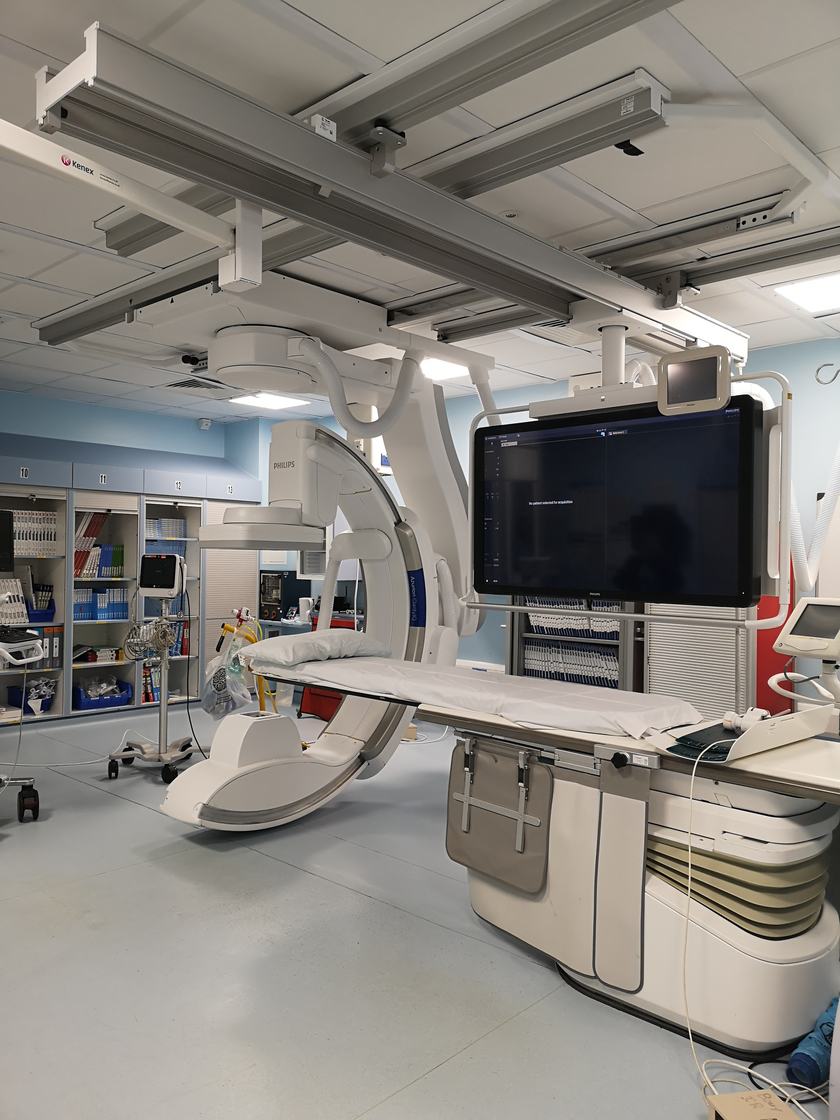
Interventional Radiology (IR) is a medical specialty that uses advanced real-time imaging - such as X-rays, Ultrasound, CT, or MRI - to guide minimally invasive procedures inside the body.
IR is performed by specially trained doctors called Interventional Radiologists, who combine expertise in imaging with minimally invasive treatment techniques to provide safe and effective care.
IR enables doctors to diagnose and treat a wide range of conditions without the need for traditional open surgery. Instead of large incisions, IR procedures are performed through very small cuts in the skin, often using thin tubes called catheters. These minimally invasive procedures can result in less pain, shorter recovery times and shorter hospital stays, when compared with open surgery. Most IR procedures can be performed under local anaesthetic or sedation with only a very few complex cases requiring a general anaesthetic.
Different Procedures
What types of procedures do we do in IR?
Interventional Radiology (IR) offers a wide range of treatments using minimally invasive techniques. These procedures are carefully guided using imaging to make them as safe and precise as possible.
Some of the most common procedures we perform include:
Treatment of blood vessel problems
We can help improve blood flow by opening narrowed or blocked blood vessels.
Cancer care and biopsies
We carry out image-guided biopsies (taking small samples) to help diagnose conditions. We also provide treatments that target tumours directly, and procedures to help relieve symptoms.
Kidney and bladder treatments
We can help if urine is not draining properly from the kidneys by placing a small tube into the kidneys (Nephrostomy) or a stent to the bladder, to relieve the blockage.
Digestive system procedures
This includes placing feeding tubes (if patients are unable to eat normally) and treating certain liver or bile duct conditions.
Women’s health treatments
We offer minimally invasive treatments for conditions such as fibroids, which can help avoid surgery.
Emergency treatments
In urgent situations, we can quickly treat internal bleeding or blocked blood vessels, which can be lifesaving.
Our aim is to provide effective treatment with smaller incisions, less pain, and faster recovery times, helping you return to your normal activities as soon as possible.
How long will you be in the department?
This will depend on the procedure. See links to the individual procedure leaflets below.
What to do when you arrive
On arrival, please check in at the Radiology Day Unit (RDU) reception or as advised in your letter.
Staff you are likely to meet
When you come for an interventional radiology (IR) procedure, you will be cared for by a team of specially trained staff.
This may include:
- Interventional Radiologists - These are specialist doctors who perform your procedure. They use imaging (such as x-rays or ultrasound) to guide instruments inside the body safely and accurately.
- Radiographers - Radiographers are experts in medical imaging. They operate the imaging equipment during your procedure and work closely with the doctor to ensure everything runs smoothly.
- Imaging Nurses - Our nurses will look after you before, during and after your procedure. They will check your observations, administer medications if required, and make sure you are comfortable.
- Healthcare Support Workers (HCSW) - The HCSWs assist the team with your care and will also support you through your visit.
Preparation for procedure
For each procedure there are different preparations, please see the link below for your specific procedure leaflet.
Benefits
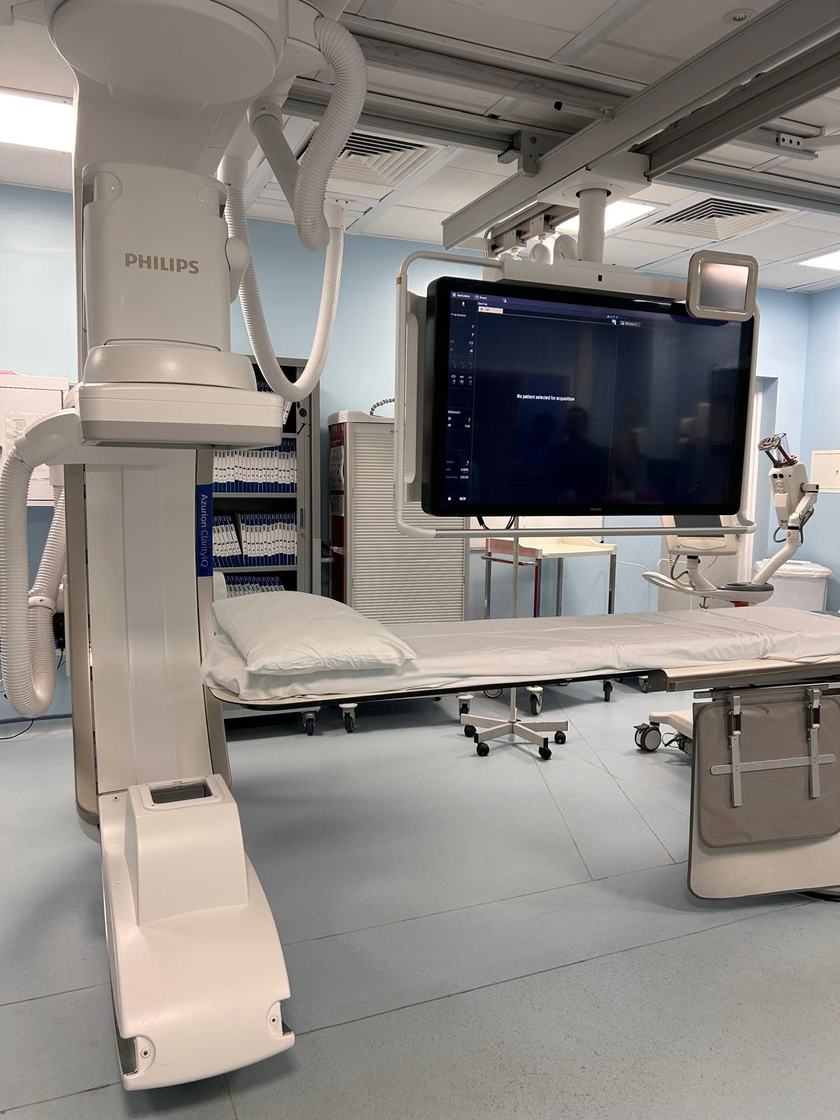
IR procedures are designed to be as safe as possible, while still providing effective diagnosis and treatment. Our aim is to provide treatment in the least invasive way possible, helping you to feel better with minimal disruption to your daily life.
Some of the main benefits include:
- Minimally invasive - Most procedures are done through a very small cut in the skin, rather than large surgical incisions.
- Faster recovery - Because the procedures are less invasive, many patients recover more quickly and can return to normal activities sooner.
- Shorter hospital stay - Many IR procedures are done as a day case or require a much shorter stay in hospital compared to surgery.
- Targeted treatment - Using imaging guidance allows doctors to treat the exact area needed, which can improve outcomes and reduce damage to surrounding healthy tissue.
Risks
IR procedures are generally very safe. However, as with any medical procedure, there are some risks involved. The Interventional Radiologist will explain these to you and answer any questions before your procedure.
Possible risks include:
- Bleeding or bruising - A small amount of bleeding or bruising can occur where the procedure is performed. This is usually minor and settles on it's own.
- Infection - There is a small risk of infection, although great care is taken to keep everything sterile.
- Pain or discomfort - You may feel some discomfort during or after the procedure, but this is usually mild and can be managed with pain relief if necessary.
- Reaction to contrast (dye) - Some procedures use a special dye (contrast) to help us see blood vessels or organs. Rarely , this can cause an allergic reaction or affect kidney function.
- Procedure specific risks - There can be other risks which depend on the type of procedure you are having. These will be discussed with you beforehand.
Radiation Risks
You have been referred for an Interventional Radiology procedure to help deliver your treatment. A specialist in radiology agrees that this is the best procedure to treat your clinical condition and that the benefit of the examination is greater than the risk.
- The x-ray involves a dose of ionising radiation equivalent to a few months or years of natural background radiation which we are all exposed to every day.
- Ionising radiation can cause cell damage that may turn cancerous, however the risk of this happening from your examination is considered low.
- Depending on the length of the procedure there may also be a small risk of an excess radiation dose to the skin leading to short term and long-term effects (e.g. reddening of the skin and burns).
What will happen the day of the procedure?
Accessibility requirements
If you require support for your appointment, for example if you find it hard to hear, see or be understood by others, or have any physical needs for example use a wheelchair or need a hoist for transfer - please let the receptionist or healthcare professional know on arrival. You can Contact the accessibility team by email or telephone: 01223 256998.
Pregnancy status
We have a legal responsibility to enquire if you are pregnant if we are imaging above the knees and below the diaphragm. Any patient aged between 12-55 years will be asked if there is a possibility, they could be pregnant. This is important for us to know before you have your examination involving ionising radiation. You can discuss this with a healthcare professional in private if you wish.
Bringing someone with you
Those accompanying you will usually be asked to wait in RDU or the waiting area during the procedure. Exceptions may apply, such as for paediatric patients or if you have a full-time carer.
Childcare whilst in the department
Staff are unable to look after or supervise children whilst your procedure/examination is taking place. Please make alternative arrangements for the care of your children whilst you attend for your procedure/examination. If you attend an appointment with children with no one to look after them whilst you have your examination/procedure, then your appointment will unfortunately have to be cancelled and rescheduled.
Personal belongings
Patients are advised to bring minimal belongings and not to bring valuable items. Any valuable belongings (mobile phone, wallet etc.) will go with the patient while having their procedure and can be secured in a locked box/safe.
After your appointment
For each procedure there are different recovery / bed rest periods, please see the link below for your specific procedure leaflet.
Key clinical staff
- Dr Nadeem Shaida – Consultant Interventional Radiologist, Clinical Lead Interventional Radiology
- Katie Reid – Imaging Service Manager Fluoroscopy, Interventional Radiology & Theatre
- Rui Viegas – Lead Interventional Radiographer, Body Angiography and Endovascular Theatre
- Renganaden Pyneeandee – Imaging Matron
- Grace Macabenta – Imaging Senior Nurse
Useful documents
- How safe are x-rays in Interventional Radiology (IR)?
- Interventional Radiology (IR) and cardiology: possible radiation side effects.
Further resources can be found on our patient information A-Z.