
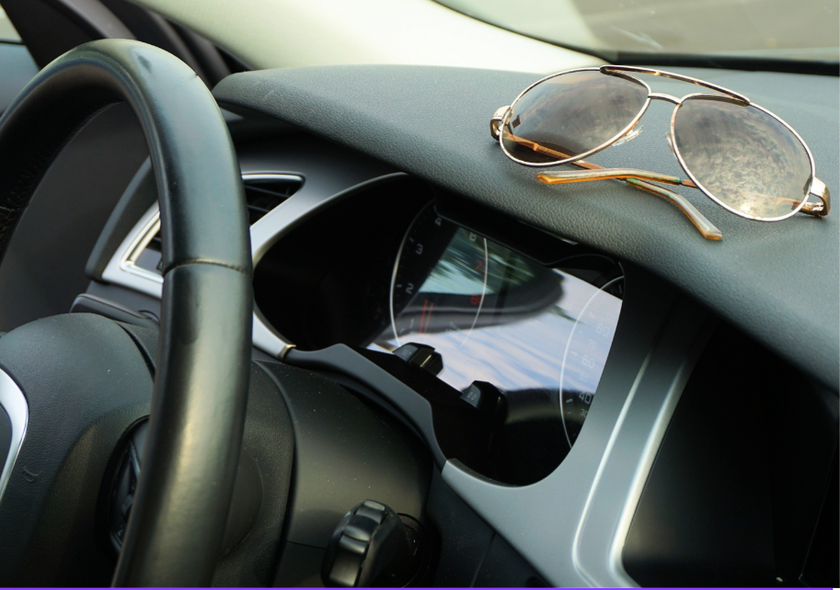
A team at Addenbrooke’s Hospital has published a study exploring whether there is a link between skin cancer found on the right side of the face and head – and the side of the road on which this nation drives.
The results build a case for even more research at a time when UK temperatures, sunshine hours and UV radiation are rising year-on-year, and studies in hotter countries suggest there is a connection between driver position and commonly found skin cancers.
Parents with young children in the back are advised to take particular note, along with anyone who spends long hours behind the wheel, such as lorry, bus and delivery drivers.
The study was carried out by two School of Clinical Medicine students, Emma Guenther and Catharina Tao (both now qualified doctors), under the supervision of consultant plastic and reconstructive surgeon, Mr Animesh Patel. It is published in the Journal of Plastic, Reconstructive and Aesthetic Surgery and is called ‘Lateralisation of Basal Cell and Squamous Cell Carcinomas: A UK Retrospective Cross-Sectional Study (opens in a new tab)’.
The paper says: “Non-melanoma skin cancers (NMSC) including basal cell carcinoma (BCC) and squamous cell carcinoma (SCC) are among the most common skin malignancies worldwide. Ultraviolet (UV) radiation is a key environmental risk factor.
“Studies from countries where car drivers sit on the left-hand side of the car have shown a higher prevalence of left-sided lesions, while an Australian study (right-sided drivers) found that solar keratoses (non-malignant lesions related to sun exposure) were more prevalent on the right side in male patients. Whether similar patterns exist in the UK, where drivers also sit on the right, has been unclear.”
This lack of UK data prompted the team to explore any patterns in our local population.
They reviewed thousands of patient records from 2018-2019, including only those Basal Cell Carcinomas (BCCs) and Squamous Cell Carcinomas (SCCs) found specifically on the face or head and confirmed by biopsy.
They discovered that of the 2,908 BCC cases included, 52 per cent were on the right-hand side, and of the 832 more serious SCCs included, 54 per cent were on the right.
They concluded: “In this UK cohort, both BCC and SCC showed a modest but statistically significant right-sided predominance. While the reasons for this asymmetry are unclear, the findings contribute to the emerging literature on skin cancer laterality.”
Although the study could not collect data on potential “confounders” including driving behaviour, sunroof or window characteristics, cumulative UV exposure or skin type, the authors theorise that right-sided driving may be a contributory factor to skin cancer development in this local population cohort.
On what the findings mean for the general public, Mr Animesh Patel, consultant plastic and reconstructive surgeon at CUH, said:
Sun safety is not just important when outside, but also when in the vehicle. Drivers and front passengers may get some UV protection from the front windscreen (most likely made of laminated glass), but side windows (often made from tempered glass) may not offer the same level of protection.
So, drivers and passengers in the front and rear still need to think about sun protection, and adults and children should take sun safety precautions. This is not only true for long car journeys, but also something parents need to bear in mind when on the school run on sunny days. We know that childhood UV exposure is linked to the development of skin cancers in later life, so this is another area for parents to be aware of, to help reduce future risks.
It is hoped emerging results and future research will better inform advice to motorists and their passengers, in the same way people spending prolonged time outside are encouraged to wear sun cream, protective clothing, wide-brimmed hats and to stay well-hydrated.
Mr Animesh Patel, consultant plastic and reconstructive surgeon

To learn more about skin safety visit https://www.nhs.uk/live-well/seasonal-health/sunscreen-and-sun-safety (opens in a new tab) (opens in a new tab) (opens in a new tab). More information is available at Melanoma UK (opens in a new tab) (opens in a new tab) and Melanoma Focus (https://melanomafocus.org) (opens in a new tab) (opens in a new tab) (opens in a new tab)
Learn more about the Trust’s new Cancer Hospital (opens in a new tab) (opens in a new tab) and new Children’s Hospital (opens in a new tab) (opens in a new tab).