Every day, across our hospital, extraordinary people go above and beyond – not for recognition, but because they care. The You Made a Difference Awards shine a light on those moments of compassion, courage and commitment that truly change lives.
We’re proud to share two remarkable stories:
Dr Peter Pugh - Consultant Cardiologist
Rachel Hatherley - Brainbow Activity Coordinator
You Made a Difference – Dr Peter Pugh - Consultant Cardiologist
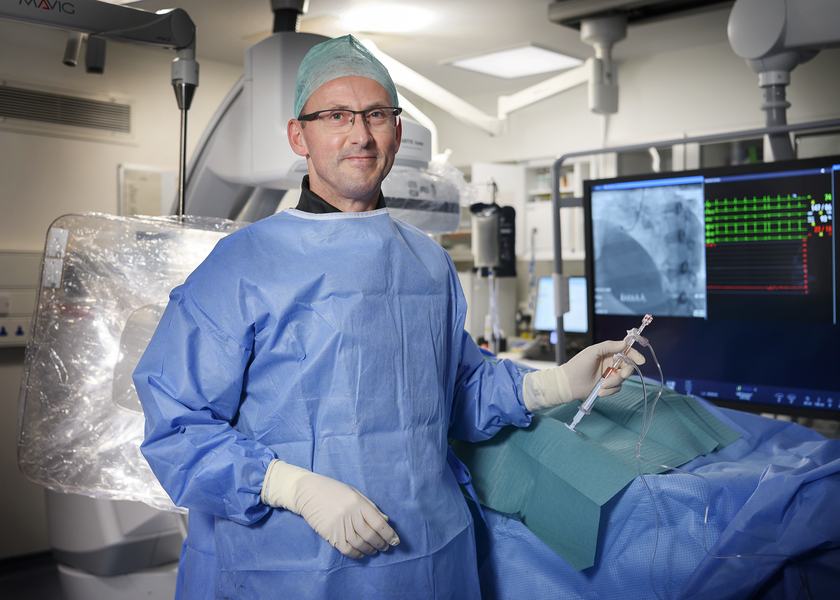
Peter Pugh joined CUH as a Consultant Cardiologist in 2008. He became Specialty Lead for Cardiology in 2016 and has held that role for nearly a decade. This award marks the moment he steps back from that leadership position to focus on his clinical work. Fourteen colleagues nominated him.
That number matters. Nominations for this award come from people who have chosen, on their own time, to write down what someone has meant to them. Fourteen people did that for Peter. The nominations cover his clinical work, his leadership, his research, the way he treats his team and the way he treats his patients. They cover a lot of ground, but they keep coming back to the same things.
When Peter took on the Specialty Lead role, cardiology at CUH was already a strong department. Over the years that followed, it grew significantly, keeping pace with a rising local population and increasingly complex cardiac conditions.
Peter set up and developed the advanced Pacing Service at CUH, introducing new techniques and technologies that gave patients access to more advanced treatment options. He brought the department into national and international research trials. He made sure that when new approaches became available, CUH was in a position to offer them.
He has dedicated his time to driving innovation within our service, not only by involving our department in the latest research trials, nationally and internationally, but also by delivering new implant techniques, ensuring our patients receive the most advanced treatment options.
That work has a direct and practical benefit for patients. For someone coming in for a pacemaker implant, it means being treated by a team with up-to-date skills, using current techniques, in a department that has not stood still.
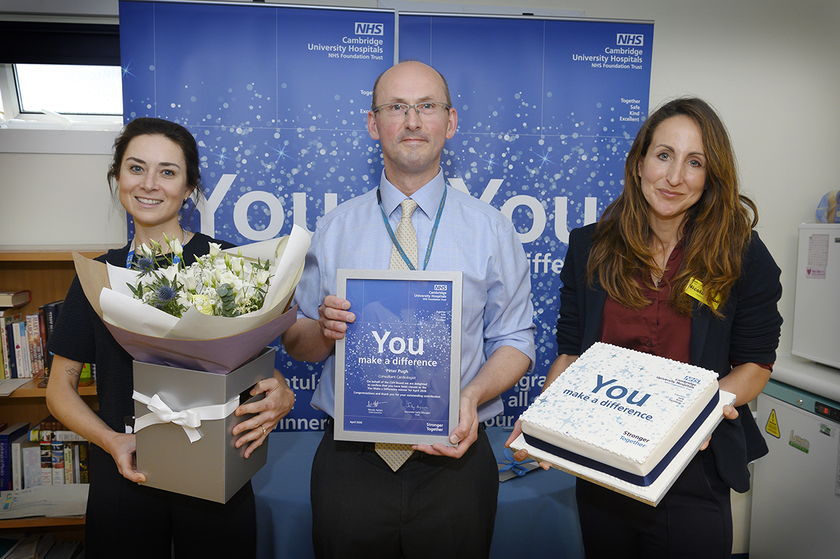
Fourteen people nominated Peter, and almost all of them mentioned the same thing: he is kind. That word appears again and again, in nominations from consultants, nurses and allied health professionals.
Colleagues describe an environment where people feel listened to and supported. Where staff at every level feel they can knock on his door. Where the team has grown in confidence because Peter invested time in developing them.
Dr Pugh is incredibly kind in his leadership style and definitely has one of the most knocked on doors in the hospital!
His colleague Dr Paul Cacciottolo sums it up simply: Peter has shown resilience in his support of the service, and kindness in the mentoring and development of his colleagues. Those two things together, over nearly ten years in the lead role, have shaped the department into what it is today.
His kind and considerate nature makes him highly approachable, fostering an environment where patients and staff alike feel genuinely valued, supported and listened to.
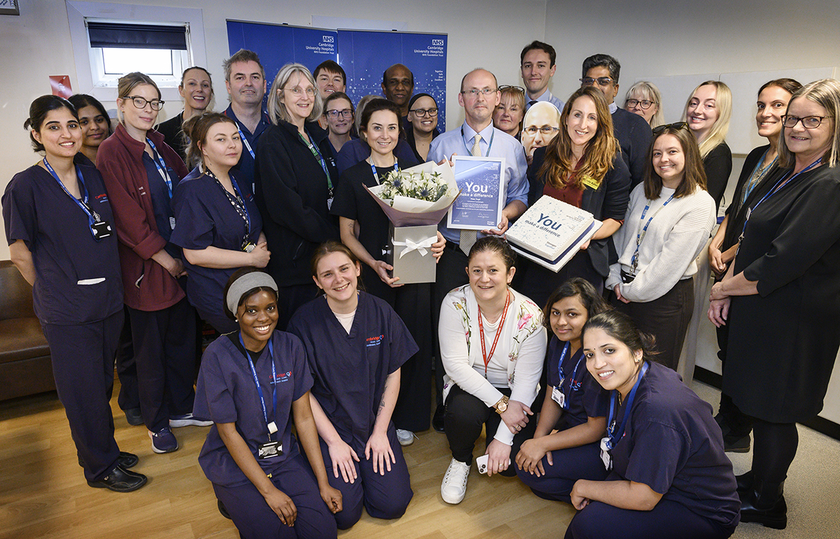
Peter's reputation with patients is just as strong as it is with colleagues. Staff report that patients regularly tell them how good he is, particularly during pacemaker procedures, which can be a stressful experience for anyone going through them.
Patients regularly tell me how wonderful he is, most often from during their pacemaker implant. He has a way of putting people at ease which makes a difficult experience much easier to cope with.
A pacemaker implant is carried out under local anaesthetic, with the patient awake throughout. The way a consultant communicates during that procedure makes a real difference to how the patient experiences it. Peter has clearly made that a priority.
Peter is stepping back from the Specialty Lead role, but nobody who has worked with him expects his influence on the department to fade quickly. The systems he has built, the training he has delivered, the culture he has helped create: those things outlast any job title.
He is the glue that holds the cardiology department together. It has been a joy to work with someone so dedicated to cardiology.
Fourteen colleagues thought it was worth saying that out loud. We think so too.
You Made a Difference - Rachel Hatherley - Brainbow Activity Coordinator
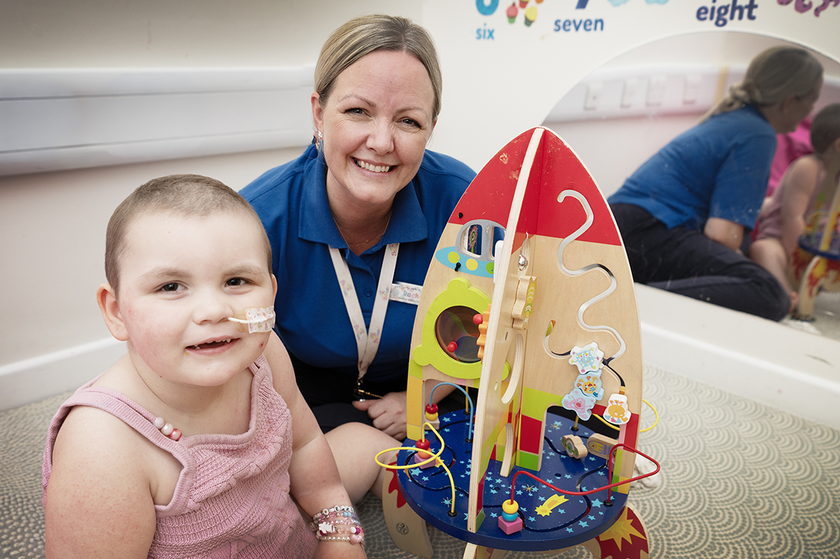
Rachel Hatherley's role did not exist until last year. The Brainbow Activity Coordinator post was created in response to patient feedback and funded through charitable support. The idea behind it is straightforward: children with brain tumours often become physically inactive during treatment, which has real consequences for their recovery and quality of life. The role exists to change that.
Rachel was appointed to take it on. She has been in post for just under a year, and the difference she has made in that time is hard to overstate.
Children being treated for brain tumours on the Brainbow ward often find movement difficult, painful or frightening. Many have had surgery, and their relationship with their own bodies can change significantly during treatment. Some are wary of healthcare staff. Encouraging a child in that situation to get up, move around and take part in activities is not straightforward.
Rachel works with patients one-to-one and in groups, adapting to what each child needs. She coordinates volunteers, runs activities, and works alongside the clinical team to support both physical and mental health throughout treatment. Service Delivery Manager Jessica MacFadyen describes someone who is hardworking, dedicated and genuinely passionate about improving patients' quality of life, both during their time on the ward and beyond it.
Rachel builds incredible relationships with patients who are generally fearful of healthcare professionals.
Jessica MacFadyen, Service Delivery Manager, Brainbow
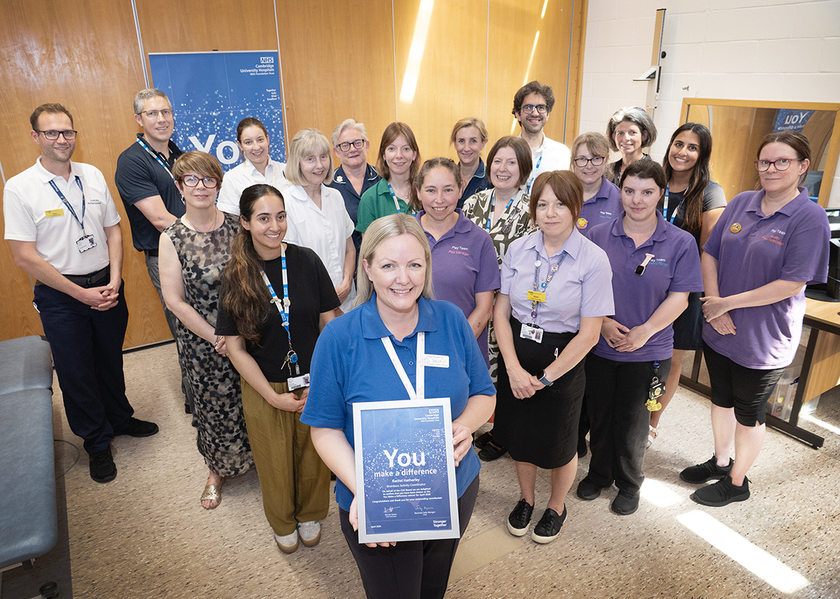
One of Rachel's most visible contributions has been Wiggle Wednesday, a weekly disco she launched in collaboration with the hospital's dance therapist. It runs in the corridor. Children of all ages and abilities take part, alongside parents and staff. For patients who have been on the ward for weeks, it has become the highlight of their week and, for some, the motivation to get out of bed at all.
Over the summer, she organised a Cycling Challenge using static bikes and a hand-pedal option, so that children with different physical abilities could all take part. Patients, families and staff virtually cycled the East Coast together. It gave the ward a shared focus and a sense of energy that long admissions can easily lack.
She has also brought in themed volunteer visits, covering everything from magic to football, that draw children off their wards and into activities they would not otherwise have access to.
For many long-term patients, this has become the highlight of their week and a brilliant motivator to get out of bed and join in.
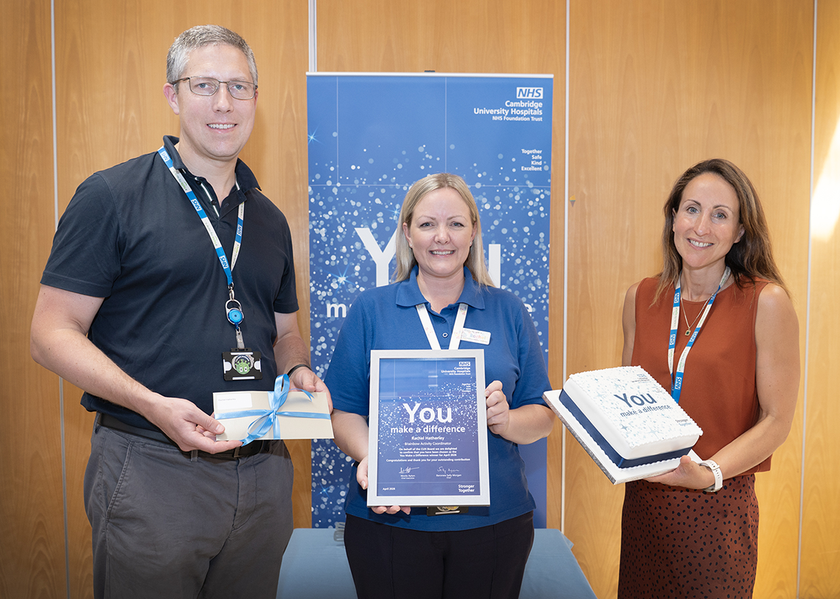
What Rachel has achieved is not just about enjoyment, though that matters too. Children who previously would not engage with formal therapy are now taking part in activity, building strength, confidence and independence through sessions that feel like fun rather than treatment.
That shift has a direct effect on therapy outcomes. A child who is moving more, sleeping better and more willing to engage is a child who recovers faster. Rachel's work sits alongside clinical care, reinforcing it.
Children who were previously reluctant to participate in more formal therapy are now actively involved, building confidence, strength and independence through her sessions. This has had a direct and positive impact on therapy outcomes.
Her colleague puts it simply: the ward experience and rehabilitation outcomes would not be the same without her. Rachel came into a brand-new role, with no template to follow, and built something that works. The children on the ward, and the families going through one of the hardest experiences of their lives, are better for it.