
A service pioneered at Addenbrooke’s Hospital that could help up to three times more cancer patients benefit from whole genome sequencing (WGS) has won a national award and been accredited for use across the UK.
WGS is a cutting-edge genetic test that is available on the NHS to inform diagnosis and treatment for many cancers, particularly those that are complex or hard to treat. The results can identify patients who will benefit from targeted treatments and access to clinical trials.
Until now, tumour samples for WGS needed to be collected and rapidly frozen, which requires specialist facilities that are not available at all hospitals. Samples also had to be kept frozen for transport, increasing financial and environmental costs.
The service provides clinicians across the region with easy access to a liquid preservative that means tumour samples can be collected at any hospital in the region at any time and sent to Cambridge University Hospitals NHS Foundation Trust (CUH) without the need for freezing.
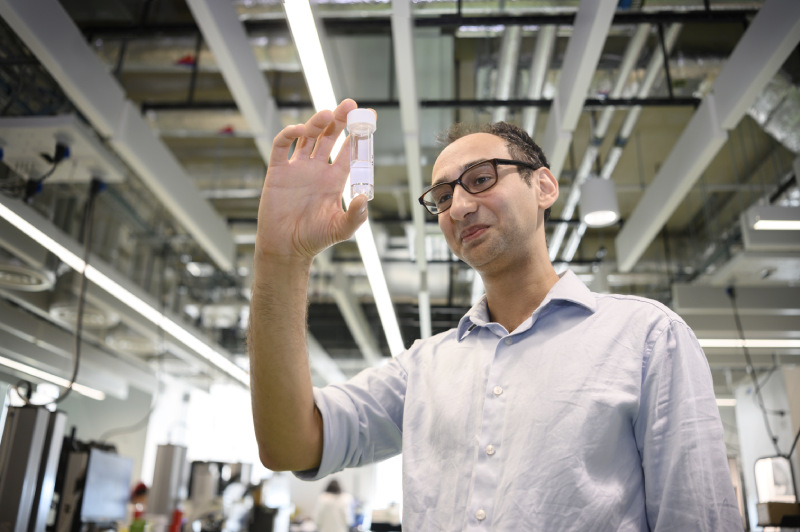
Launched across the East of England at the end of 2025, this change makes it easier for patients at hospitals such as Queen Elizabeth Hospital King’s Lynn, Peterborough City Hospital and Ipswich Hospital to benefit from testing.
The process has been rigorously tested, is now nationally accredited, and will soon be rolled out in other regions across England.
Whole genome sequencing can make a huge difference to a person’s cancer journey, and it’s vital that we remove barriers to testing so as many people as possible can benefit. Our teams have worked closely together to deliver this change, which will improve diagnosis and treatment for many more people.
Dr John Tadross, a consultant molecular pathologist at CUH and molecular pathology clinical lead for East Genomics, who pioneered the change
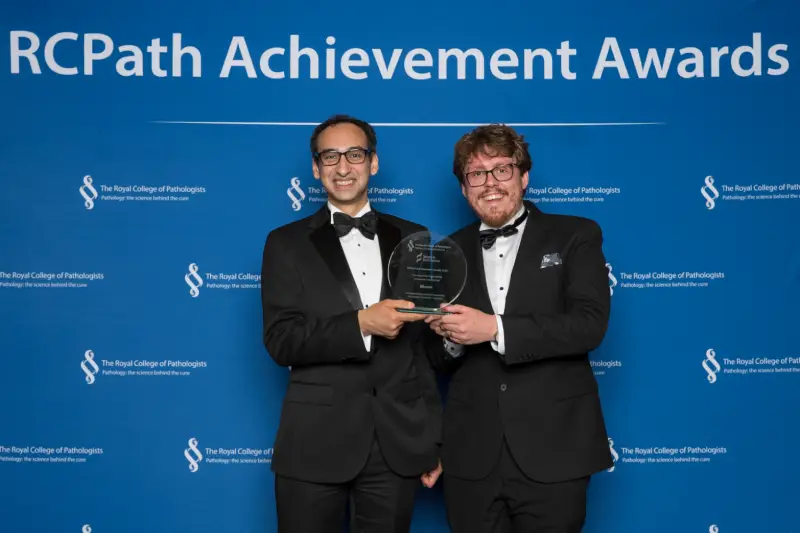
Dr Tadross and colleagues that led this innovation were presented with the Royal College of Pathologists Achievement Award 2026 for Sustainability at a ceremony in London on 17th June, in recognition of the environmental benefits of transporting samples without the need for freezing.
Access to genomics transforms patient care
Whole genome sequencing is uniquely able to identify different types of cancer with high specificity. It can provide vital information that directly impacts patient care.
Laraine Chung, age 63, a professional carer from Peterborough, received whole genome sequencing on the NHS at Addenbrooke’s Hospital shortly before the new pathway launched.
Laraine, a grandmother of four, feels WGS made a huge difference for her and believes wider access to testing could help many others.
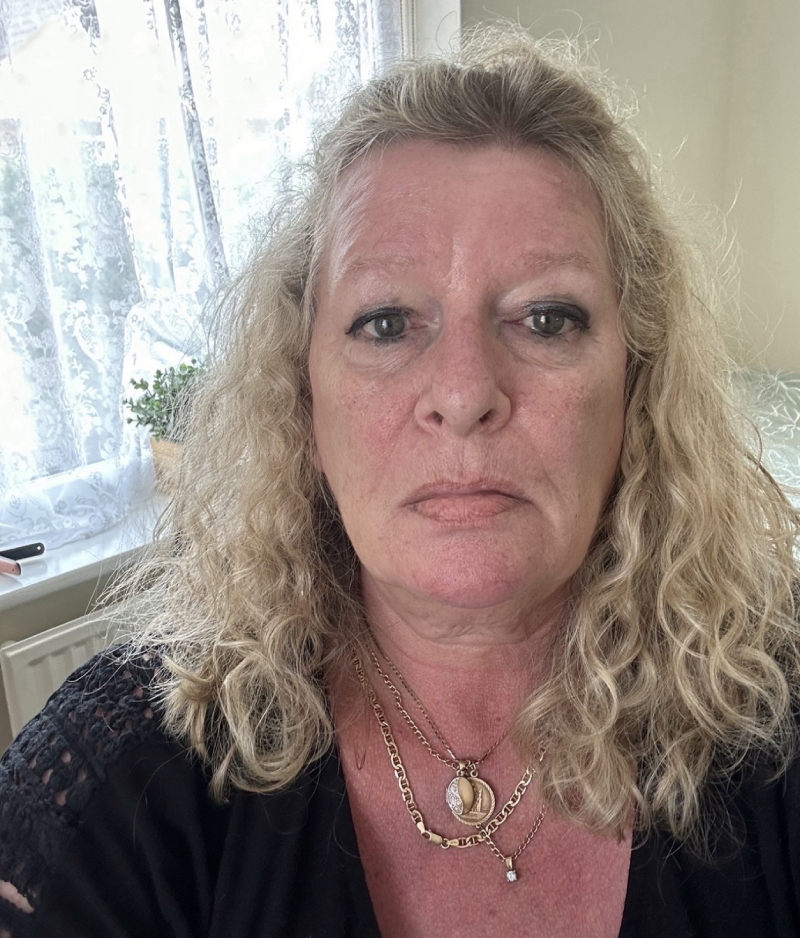
Without the test, I would have needed much more complex and extensive surgery and it would have taken even more time to recover. Making tests like this easier to access can only be a good thing if it can make such a big difference to treatment.
Laraine
Laraine was referred to Addenbrooke’s in 2025 with a tumour behind her left eye. She needed surgery to remove the tumour but doctors first needed to know what the tumour was. A more aggressive tumour would mean more extensive surgery that would affect Laraine’s brain, face and could mean losing her eye.
Initial tests of Laraine’s cancer were inconclusive but she was able to have WGS on the NHS. The genomic test clearly which showed she had a meningioma, a slow-growing tumour that could be removed with less invasive surgery.
Getting the genetic results made everything clear and meant they could get on with the surgery. It was a long, anxious wait for the results but it was a huge relief for me any my family when they rang to say they knew what it was and that I wouldn’t lose my eye.
Laraine had surgery to remove most of the tumour earlier this year and is recovering at home. She will soon begin radiotherapy to treat any remaining tumour cells and to stop it coming back.
Collecting tumour samples anywhere, anytime
Freezing tumour samples protects genetic information in the sample so that it can be read using WGS. Without freezing, the information in the sample degrades within hours and WGS will fail.
Under the new process, NHS clinicians in the region can request pre-prepared sample collection tubes from CUH. The tubes contain a stabilising solution that protects genetic material in the tumour sample, allowing it to be stored and transported at room temperature before processing.

This is truly game-changing for our patients and for clinical practice, removing the need for −80 °C sample freezing and specialised transport. Whole-genome sequencing offers powerful insights into a person’s cancer and can identify actionable genetic changes, opening the door to cutting-edge trial therapies when standard treatment options have been exhausted.
Dr Jeffrey Rubasingham, a consultant clinical oncologist, was one of the first to use the new approach at King’s Lynn Hospital.
The new pathway also means that tumour samples can be collected for testing at any time of day including during late nights and weekends.
Mr Pubudu Pathiraja, a consultant gynaecology surgeon at CUH was able to collect tumour samples during a surgery on a Sunday. He said: “We use WGS to tell us what further treatments are needed following surgery. With these advanced cancers, we always want to move quickly to remove the cancer. Sometimes this meant we’d have to miss out on WGS testing because we’d be doing the surgery late at night or over the weekend. With the new process, there’s no need for compromise, we can operate as quickly as possible and still get the WGS results too.”
WGS is one of the most advanced tools we have to inform diagnosis and treatment of cancer. By searching the genome we can learn about the causes of a person’s cancer and identify some of the best ways to treat it. Particularly in advanced or complex cases it can provide answers and clarity, helping more people to benefit from groundbreaking therapies and avoid less specific, harsh or invasive treatments.
Jamie Trotman, a principal genomic clinical scientist at NHS East Genomics responsible for WGS testing in the region
NHS East Genomics (opens in a new tab), hosted by CUH, provides NHS genetic testing across the East of England and East Midlands as one of seven regional NHS Genomic Medicine Services. The innovation is the result of close collaboration between the Histopathology and East Genomics laboratories at CUH.